Finland’s decision to join France’s Forward Deterrence initiative marks one of the clearest signs yet that Europe’s response to the war in Ukraine is moving beyond conventional rearmament and into the politically sensitive territory of nuclear strategy. Announced jointly by Helsinki and Paris on September 14, the move creates a formal channel through which a country sharing NATO’s longest direct land frontier with Russia will participate in consultations, exercises and strategic signalling linked to France’s independent nuclear deterrent. The arrangement does not place French nuclear weapons under Finnish control, does not create a common European arsenal, and does not replace NATO’s U.S.-backed nuclear posture. But it does add another layer to Europe’s security architecture at a moment when governments are trying to make deterrence more credible against a Russia that has repeatedly used nuclear rhetoric alongside its war against Ukraine.

A new step in Europe’s deterrence debate
The French and Finnish presidents said in a joint statement that Finland had decided to join the framework first unveiled by President Emmanuel Macron in March. The statement described the decision as an important step for European security and bilateral cooperation and said the two countries would establish a Nuclear Steering Group in the coming months. That body is expected to begin translating the political decision into practical cooperation, including strategic dialogue, signalling and work on managing escalation below the nuclear threshold.
The significance lies less in any immediate change to deployed forces than in the institutional link being created. France has long guarded its nuclear force as a sovereign instrument whose employment remains the exclusive responsibility of the French president. Macron has been equally explicit that his new European concept does not share the ultimate decision to use nuclear weapons, the planning of such use or the definition of France’s vital interests. In other words, Finland is not receiving a treaty-style French nuclear guarantee comparable to NATO’s Article 5, and Paris is not creating a multinational launch authority.
What Finland is joining is a process intended to make France’s deterrent more visible in a European setting. Macron has said partners may take part in deterrence exercises, contribute conventional forces to activities associated with the nuclear mission, participate in consultations and, where appropriate, host temporary deployments of elements of France’s strategic air forces. The concept is deliberately graduated. Its purpose is to complicate an adversary’s calculations by linking French nuclear capabilities more closely to the security of participating European states without surrendering French command authority.
Reuters reported that Finland becomes the tenth participating country, following other Nordic states including Sweden, Denmark and Norway. Finnish President Alexander Stubb said the initiative is intended to strengthen European security, increase Europe’s responsibility for its own defence and help prevent escalation. Defence Minister Antti Häkkänen described Finland’s participation as a natural step after similar decisions by its Nordic neighbours.
Why Finland matters more than its size suggests
Finland’s entry carries particular strategic weight because geography makes the country central to any serious discussion of deterrence on NATO’s northern flank. Finland joined NATO on April 4, 2023, ending decades of military non-alignment after Russia’s full-scale invasion of Ukraine transformed the country’s security calculations. Its eastern border with Russia stretches roughly 1,340 kilometres, running from the Gulf of Finland toward the Arctic. That frontier is now both a NATO boundary and an external border of the European Union.
For Moscow, the change since 2022 has been profound. Before Finland and Sweden entered NATO, Russia faced a northern European security environment in which two capable Nordic militaries remained outside the alliance’s collective-defence structure. Finland’s accession and Sweden’s subsequent membership turned most of the Nordic region into an integrated NATO space. The addition of a French-led deterrence dialogue brings another strategic dimension to that transformation.
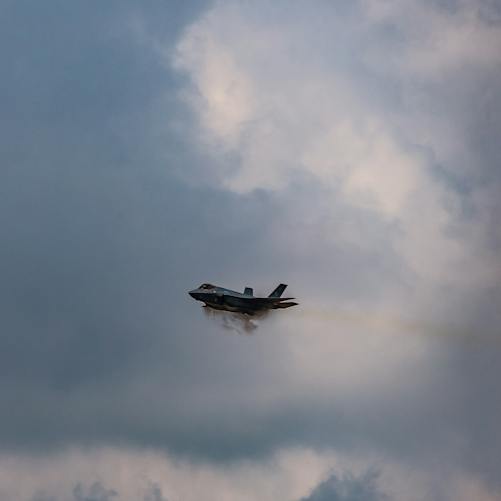
Finland also brings military credibility. Its defence model is built around conscription, reserves, territorial defence and the assumption that the country must be able to sustain high-intensity operations close to its own borders. At the same time, Helsinki is modernising its air power through the acquisition of 64 F-35A fighters. Finland received its first F-35A in the United States in early 2026 for training, while the first aircraft are expected to arrive on Finnish soil later in the year. Finnish defence company Patria announced this month that it had completed assembly of the first F135 engine in Finland, part of a long-term plan to build domestic maintenance and sustainment capacity for the fleet.
None of those aircraft is being described by Helsinki as part of a French nuclear mission. It would be inaccurate to assume that Finland’s F-35s are automatically being assigned a nuclear role under the new initiative. But the broader modernisation of Finnish air power matters because forward deterrence is not purely about warheads. It depends on conventional aviation, air defence, intelligence, early warning, communications, dispersal, base resilience and the ability to operate in a contested environment. Those are precisely the capabilities Finland has been strengthening since joining NATO.
France’s concept stops short of a European nuclear umbrella
The language surrounding the French initiative is important. Political shorthand often describes Paris as extending a “nuclear umbrella” over European partners, but Macron’s own doctrine is more cautious. In his March 2 speech at the Île Longue submarine base, he said France would retain complete responsibility for any deliberate crossing of the nuclear threshold. He also said there would be no automatic guarantee in the strict sense of the term, arguing that strategic ambiguity and sovereign decision-making are integral to deterrence.
That distinction protects the core principle of the French force de frappe: the arsenal exists first to defend France’s vital interests as defined by the president. At the same time, French leaders have for years insisted that those vital interests have a European dimension. The new framework attempts to make that proposition operational by giving partners a structured role in exercises and strategic consultation while leaving the weapon itself under national command.
France’s deterrent rests on submarine-launched ballistic missiles and air-launched nuclear-capable systems. Open-source organisations such as the Federation of American Scientists and the Arms Control Association estimated earlier in 2026 that France maintained a military stockpile of roughly 290 nuclear warheads, although Macron announced in March that France would increase its arsenal and would no longer publish an official total. Any current number therefore remains an outside estimate rather than a confirmed French government figure.
Macron also described a model in which the strategic air forces could, if required, be temporarily dispersed to allied countries. Such deployments would serve a signalling function and increase the geographic depth of the deterrent. They would not necessarily involve the permanent stationing of nuclear weapons abroad. For Finland, that distinction is especially politically important because Stubb has repeatedly said the country does not intend to host nuclear weapons on its territory in peacetime.
Finland’s nuclear policy has already shifted
Helsinki’s decision did not emerge from nowhere. Finland has spent much of 2026 revisiting legal and political restrictions inherited from the era of military non-alignment. Its 1987 Nuclear Energy Act contained a broad prohibition covering the import, manufacture, possession and detonation of nuclear explosives. Earlier this year, the government moved to remove the blanket statutory ban, arguing that NATO membership required Finnish law to be compatible with the alliance’s full deterrence posture.
Parliament backed legislation in June supporting the removal of the old absolute ban. The debate was sensitive precisely because legal permissibility and political policy are not the same thing. Finnish leaders have sought to preserve that distinction: the country can remove a legal obstacle that might constrain allied planning in a crisis while still declaring that it does not intend to station nuclear weapons on Finnish territory in peacetime.
That approach broadly resembles the political practice of several Nordic allies that have historically placed restrictions on peacetime nuclear basing while remaining protected by NATO’s deterrence system. The purpose is to retain strategic flexibility without presenting routine nuclear deployment as a normal feature of national defence. For a country with Finland’s geography, that balance is particularly delicate. Any decision touching nuclear posture is read not only in Helsinki and allied capitals but also in Moscow and St. Petersburg.
Russia has already warned that a nuclear-related shift in Finland would increase tensions. In March, Kremlin spokesman Dmitry Peskov said the possible presence of nuclear weapons in Finland would lead to an escalation and make the country more vulnerable. Those remarks represented the Russian government’s position, not an independent assessment of what the French-Finnish initiative will produce. Finland, for its part, argues that deterrence is intended to prevent war by reducing the chance that an adversary could believe coercion or attack would succeed.
How the French track differs from NATO
The most important institutional question is how the French arrangement fits with NATO. The alliance already has a formal Nuclear Planning Group, the senior body responsible for consultation and decision-making on nuclear policy, doctrine, planning, force posture, capabilities and exercises. All NATO members participate except France, which has chosen to keep its independent nuclear force outside the alliance’s nuclear planning machinery.
Finland, by contrast, is a full member of NATO’s nuclear consultation structures. That means Helsinki will now be involved in two related but distinct frameworks: NATO’s established collective nuclear posture and a bilateral or minilateral French-led process centred on France’s sovereign deterrent. Finnish officials have stressed that the second does not replace or overlap with the first. Stubb said Finland’s primary security framework remains NATO and the European Union.
For NATO, the U.S. nuclear commitment remains central. The alliance’s deterrence posture is anchored in the strategic forces of the United States, with contributions from the independent nuclear forces of Britain and France, while NATO nuclear-sharing arrangements involve U.S. weapons and allied aircraft in Europe. France does not participate in the Nuclear Planning Group and does not place its arsenal under NATO command.
The new French initiative therefore creates something unusual: a European deterrence network that is politically connected to NATO states but institutionally separate from NATO’s nuclear-planning system. Paris says that separation is a feature, not a contradiction. France can offer additional strategic depth, European political ownership and a second centre of nuclear decision-making while the United States continues to provide the alliance’s principal extended deterrence.
The American question without an American rupture
The push for a stronger European nuclear role has intensified as European governments debate the durability of U.S. security commitments. Reuters reported that France’s March initiative was announced amid concern generated by President Donald Trump’s questioning of aspects of the transatlantic security relationship, as well as by the continuing war in Ukraine. European leaders have responded by increasing defence spending and seeking greater capacity to act without assuming that Washington will always carry the dominant share of the burden.
Yet it would be wrong to describe Finland’s move as a break with the United States. Stubb said discussions on the French initiative had taken place with both Washington and NATO. Macron, when presenting forward deterrence in March, said France had developed the concept transparently with the United States and in close coordination with Britain. The strategy is being presented as reinforcement rather than substitution.
That distinction reflects military reality. Europe cannot rapidly reproduce the scale of U.S. strategic forces, intelligence, missile warning, command networks, conventional reinforcement and logistical capacity. Nor is there a political consensus to do so. The French project instead addresses a narrower question: whether Europe should have a more visible nuclear layer of its own, capable of complicating Russian calculations even if transatlantic politics become uncertain.
Finland’s participation makes that debate less theoretical. It brings into the initiative a state whose defence planning is directly shaped by proximity to Russia and whose NATO membership was itself a reaction to the invasion of Ukraine. If Helsinki judges that a French strategic dialogue adds value on top of NATO, other European governments will study closely how the arrangement develops in practice.
Ukraine is the strategic backdrop
The war in Ukraine is not the only reason Europe is reconsidering deterrence, but it is the dominant background. Russia’s invasion demonstrated that major interstate war had returned to Europe, while repeated Russian nuclear signalling exposed the difficulty Western governments face when supporting a non-nuclear partner against a nuclear-armed adversary. Moscow has used nuclear exercises, doctrinal statements and public warnings as part of its broader strategic messaging during the conflict.
European governments have therefore had to think simultaneously about two risks: deterring direct aggression against NATO territory and preventing escalation beyond the alliance’s borders. Those objectives can pull in opposite directions. Stronger deterrence is designed to persuade an adversary that attack would be futile or too costly, but visible nuclear changes can also be interpreted by the other side as threatening, producing new countermeasures.
The French concept tries to operate in that space by linking nuclear deterrence to escalation management below the nuclear threshold. The joint French-Finnish statement explicitly referred to opportunities for strategic signalling and the ability to manage escalation before it reaches the nuclear level. That wording matters because most real crises would begin with conventional military pressure, sabotage, cyber operations, airspace violations, coercive deployments or attacks on infrastructure rather than an immediate nuclear exchange.
For Finland, the lesson from Ukraine is also that legal neutrality does not by itself reduce exposure to coercion. The country concluded in 2022 that NATO membership offered stronger security than military non-alignment. Joining the French initiative follows the same logic of layered deterrence: national defence first, NATO collective defence as the central guarantee, and additional European mechanisms intended to reduce uncertainty for a potential adversary.
A northern flank becoming more integrated
Finland’s decision also fits a wider pattern of Nordic defence integration. Sweden, Denmark and Norway are already participating in the French initiative, according to Reuters and Finnish officials. All four Nordic countries are now NATO members, creating new opportunities for common air operations, logistics, surveillance and planning across a region that stretches from the Baltic Sea to the Arctic.
This northern geography has become more important as Russia invests in military infrastructure and strategic forces in the Arctic and as NATO pays greater attention to sea lanes, northern airspace and reinforcement routes. Finland’s Lapland region is strategically close to Russia’s Kola Peninsula, an area central to Moscow’s Northern Fleet and its sea-based nuclear deterrent. That does not mean the French-Finnish initiative is designed for a specific operation around Kola. It does mean that nuclear strategy in northern Europe cannot be separated from the wider military balance in the Arctic.
The timing is notable. On September 14, European leaders meeting in Rovaniemi called for the European Union to take a more strategic role in the Arctic. The nuclear initiative and the Arctic debate are separate policy tracks, but they reflect the same change in assumptions: the High North is no longer treated as a peripheral security theatre insulated from the confrontation between Russia and the West.
For European planners, a more integrated Nordic region can strengthen deterrence by improving mobility and reducing the number of seams between national defence plans. For Russia, however, the same integration may be portrayed as evidence of NATO encroachment. That competing interpretation is likely to shape the information battle surrounding every exercise or deployment connected with the French initiative.
What the new Nuclear Steering Group may actually do
The joint statement offers only limited operational detail, and that uncertainty should be preserved rather than filled with speculation. The announced Nuclear Steering Group will be established in the coming months. Based on France’s earlier agreements with partners, such bodies can provide a venue for doctrinal discussion, planning of exercises, strategic-site visits and coordination between nuclear and conventional capabilities.
France and Germany created a high-level nuclear steering group earlier this year that includes discussion of conventional participation in French nuclear exercises and the relationship between deterrence, missile defence, early warning and deep precision strike. France and Sweden also held a first nuclear steering group meeting in Paris in April. Those precedents suggest that the Finnish track may begin with consultation and education before moving toward more visible military activities.
That gradual approach has practical advantages. Nuclear deterrence relies heavily on procedures, secure communications, political decision-making and shared understanding of escalation. Exercises can therefore be meaningful even if no nuclear weapon is present. A partner may practise protecting bases, supplying aircraft, defending airspace, maintaining communications, providing escorts or conducting conventional operations that support the credibility of a wider deterrence mission.
The exact Finnish role has not yet been defined publicly. Any claim that French nuclear weapons will be deployed to Finland as a result of Monday’s announcement would go beyond the available evidence. The confirmed development is political and institutional: Finland has joined the initiative, a bilateral steering mechanism will be created, and future cooperation may include planning, exercises and strategic signalling.
Deterrence works partly through ambiguity
One reason details are likely to remain limited is that nuclear deterrence depends partly on uncertainty. If an adversary can calculate precisely when, where and how a response would occur, it may search for ways to operate below that threshold. France has traditionally resisted overly rigid definitions of its vital interests for this reason. Macron’s new concept preserves that ambiguity while stating more clearly that the security of European partners enters French strategic calculations.
For participating states, the value may lie as much in political signalling as in hardware. A Russian planner assessing pressure against a European country would have to consider not only NATO’s established mechanisms but also the possibility that a crisis could engage a separate French chain of decision. Two nuclear decision centres — Washington and Paris, alongside Britain’s independent force — can create additional uncertainty about escalation.
Critics of expanded nuclear roles argue that multiplying such signals can also increase complexity and the risk of miscalculation. They question whether national initiatives can be coordinated cleanly with NATO in a fast-moving crisis and whether greater visibility for nuclear-capable forces might encourage reciprocal Russian deployments. Those concerns are not hypothetical; deterrence always involves a balance between clarity about resolve and restraint about posture.
Supporters answer that ambiguity already exists because Russia is itself a major nuclear power and because Europe’s security ultimately depends on convincing Moscow that coercion cannot split allied governments. In that view, a stronger French role does not create the nuclear problem; it responds to a security environment in which nuclear weapons already shape conventional decisions.
The domestic politics of nuclear alignment
Finland’s nuclear debate is likely to remain politically sensitive even if the immediate initiative is limited to consultation and exercises. NATO membership was approved with broad support after the shock of Russia’s invasion, but questions about the physical presence, transit or potential wartime role of nuclear weapons have always carried a different emotional and historical weight.
The government’s approach attempts to separate deterrence policy from peacetime basing. Removing legal obstacles gives Finland freedom to operate fully within alliance structures, while the public commitment not to station nuclear weapons in peacetime reassures voters who do not want permanent nuclear deployment. Whether that distinction remains politically stable will depend on how the security environment evolves and on what France eventually asks participants to do.
There is also a sovereignty question in the opposite direction. Because the French president alone would retain authority to use France’s arsenal, a partner country might contribute bases, aircraft support or conventional forces without sharing the final decision. That is not unusual in alliance deterrence, but it requires trust. The Steering Group will therefore have a political purpose as well as a military one: creating enough consultation that Finland understands how its interests are considered even though it cannot control French nuclear employment.
Macron has sought to address that concern by saying France would fully factor allied interests into any strategic decision and by expanding structured consultation. But he has also refused to dilute national command. The resulting model offers participation without co-ownership, which may be precisely why it can move faster than proposals for a genuinely common European nuclear force.
Russia’s likely response will matter
Moscow has consistently opposed NATO’s enlargement and Western military infrastructure near Russia’s borders. After Finland joined NATO, Russian officials said they would take military-technical measures in response. Earlier this year, the Kremlin similarly warned about any prospect of nuclear weapons being stationed in Finland. Those statements indicate that Russia is likely to frame the French initiative as another escalation by the West.
The specific Russian response to Finland’s September decision will need to be judged from confirmed measures rather than rhetoric alone. Possible political statements, exercises or force adjustments should not be treated as equivalent unless evidence shows an actual change in posture. Russia already maintains substantial conventional and strategic forces in its northwestern regions, and distinguishing routine activity from a direct response can be difficult.
For that reason, claims from either side about nuclear or military moves require careful verification. The French-Finnish announcement itself contains no evidence of a weapon transfer, permanent basing arrangement or change in launch authority. The confirmed change is the creation of a new partnership framework. Any future deployment would be a separate development requiring its own reporting.
That caution is especially important in wartime Europe, where nuclear language can move markets, public opinion and military expectations even when the underlying posture has not changed. Strategic signalling is designed to be noticed, but journalism must separate the signal from the capability actually deployed.
Arms control is weakening as deterrence expands
The expansion of European deterrence discussions is occurring against a broader deterioration in arms-control confidence. The United States and Russia retain by far the world’s largest nuclear arsenals, while China is expanding its force and European governments are spending more on conventional and strategic capabilities. France’s decision to increase its own warhead stockpile, while ending publication of an official total, reflects that harder environment.
Open-source estimates should be treated cautiously. The Federation of American Scientists lists roughly 290 warheads in France’s military stockpile for 2026, but that estimate predates the full effect of Macron’s announced increase and is not a substitute for official disclosure. France remains a recognised nuclear-weapon state under the Nuclear Non-Proliferation Treaty and says its forward-deterrence arrangements will comply with international obligations.
The central policy tension is clear. European governments argue that credible deterrence is necessary to prevent aggression, particularly after Russia’s attack on Ukraine. Arms-control advocates warn that expanding arsenals, reducing transparency and normalising nuclear planning can weaken crisis stability and make future restraint harder to negotiate. Both dynamics can occur at the same time: states can seek security through stronger deterrence while collectively producing a more dangerous strategic environment.
Finland’s decision does not itself add a warhead to Europe. It does, however, add political weight to the idea that nuclear deterrence should become more explicitly European. That shift could shape future debates over doctrine, basing, procurement and arms control long after the immediate French-Finnish steering group begins work.
A test of Europe’s ability to add, not duplicate
France’s answer is that sovereign nuclear independence is itself an advantage. Because Paris is not inside NATO’s Nuclear Planning Group, its deterrent offers a separate decision-making path. In a crisis, an adversary cannot assume that pressure on Washington would automatically neutralise French choices. Supporters see that as strategic resilience.
For Finland, the test will be whether participation produces better understanding of escalation, stronger exercises and more credible links between conventional defence and strategic deterrence. The country already has strong national defence institutions and full NATO membership. The French initiative must therefore provide something additional rather than symbolic membership in another forum.
The coming Nuclear Steering Group will be the first place to look for evidence. Its agenda, exercise programme and degree of military integration will show whether Monday’s announcement remains primarily a political signal or develops into a durable operational partnership.
The immediate meaning: another layer around Europe’s frontline states
For now, Finland’s decision should be read as part of a broader European effort to build multiple layers of deterrence around states closest to Russia. National forces remain the first layer. NATO’s collective defence and U.S. extended deterrence remain the central alliance layer. France is now offering an additional European strategic layer, controlled from Paris but increasingly connected to partner governments through formal consultation and exercises.
That architecture reflects a security environment in which European leaders no longer assume that conventional superiority alone is enough to shape Russian behaviour. The war in Ukraine has shown how nuclear risk can influence decisions far below the threshold of nuclear use. It has also exposed how questions about American political commitment can affect European planning even when U.S. forces remain deeply embedded in the continent’s defence.
Finland is a particularly consequential participant because it has moved farther, faster than almost any other European state from military non-alignment to layered alliance integration. In 2022 it applied for NATO membership. In 2023 it became an ally. In 2026 it has revised legal restrictions associated with its old nuclear policy and now joined a French deterrence framework designed to give Europe more strategic responsibility.
None of that means a French nuclear weapon is heading to Finland. Stubb has said the opposite regarding peacetime basing, and no deployment was announced. The strategic change is subtler but still substantial: Helsinki now wants a place in the room where France discusses how its independent nuclear force can contribute to European security.
What comes next
The next milestones will be procedural rather than dramatic. France and Finland are expected to establish their Nuclear Steering Group within months. Officials will then have to define the scope of consultations, decide what kinds of exercises Finland may join and determine how conventional Finnish capabilities could support deterrence activities without blurring national command responsibilities.
Observers will also watch whether the initiative broadens further. France began with a core group of European partners and has gradually added participants. If more NATO states seek parallel consultation with Paris, forward deterrence could evolve from a series of bilateral relationships into a recognisable European strategic network. If participation remains limited to occasional exercises, its impact will be more political than operational.
Another question is how Washington responds over time. So far, French and Finnish leaders insist the process is coordinated with allies and complementary to NATO. That coexistence is easiest when transatlantic relations are stable. If disputes over U.S. commitments deepen, the political meaning of a European nuclear track would change even if its military structure did not.
Russia’s response will be the other critical variable. Moscow can condemn the initiative rhetorically, adjust force posture, increase exercises or use the decision in domestic and international messaging. Each development will need to be assessed on evidence. Escalatory claims from any government should not be accepted without corroboration.
A strategic shift measured in institutions before weapons
The most important fact about Finland’s move is what has actually changed: a frontline NATO member and France have formally agreed to connect their security planning around the concept of French forward deterrence. They will establish a steering mechanism, explore strategic signalling and deepen cooperation on escalation management. France retains sole control of its nuclear force. Finland says it will not host nuclear weapons in peacetime. NATO remains Finland’s primary collective-defence framework.
Those limits do not make the decision insignificant. Nuclear strategy is built not only on weapons but on political commitments, consultation, exercises, uncertainty and the adversary’s perception of resolve. By joining the French framework, Finland is adding another relationship that Moscow must consider when judging the risks of pressure against northern Europe.
The move also captures the direction of European security policy in 2026. Governments are trying to strengthen the continent’s capacity to deter Russia without dismantling the transatlantic alliance, to assume more responsibility without pretending they can rapidly replace the United States, and to increase strategic credibility without triggering uncontrolled escalation. Those objectives are difficult to reconcile, which is why the design of the French initiative matters as much as its headline.
For Finland, the choice is consistent with the transformation that began after Russia’s invasion of Ukraine: security through deeper integration rather than distance from military blocs. For France, Finland’s participation gives forward deterrence greater geographic and political relevance. And for Europe, it turns a long-running debate about strategic autonomy into something more concrete — a set of institutions linking an independent European nuclear power to states that stand closest to the continent’s most dangerous military confrontation.