L’Oréal’s move above LVMH in French stock-market value is, on one level, a narrow ranking change measured in billions of euros and capable of reversing with the next trading session. On another, it is a remarkably concise summary of the pressure reshaping the global luxury economy. At the close on September 15, the beauty group was worth about €203 billion, according to LSEG data cited by Reuters, compared with roughly €201 billion for LVMH. It was the first time since 2017 that a company outside the traditional high-end luxury sector ended a session as France’s most valuable listed group. The significance lies less in the precision of the league table than in what investors appear to be rewarding: repeatable demand, broad price ladders, global distribution and products that can still feel indulgent without requiring a four-figure commitment.

A ranking that captures a change in luxury economics
For much of the past decade, the emblem of European consumer power was the luxury megabrand. LVMH, owner of Louis Vuitton, Dior, Fendi, Tiffany & Co., Bulgari, Hennessy and dozens of other houses, became Europe’s most valuable company during the post-pandemic spending boom. Scarcity, brand mythology and rapid price increases pushed the economics of handbags, jewellery, watches and couture to heights few other consumer businesses could match. The sector’s leaders also benefited from an extraordinary expansion of affluent demand in China, stronger tourism flows and a willingness among aspirational customers in the United States and Europe to stretch toward signature products.
That model has not disappeared, and LVMH remains one of the world’s largest and most profitable consumer groups. Its own first-half results underline the point. The company reported €38.6 billion in revenue for the first six months of 2026, with organic revenue growth accelerating to 3% in the second quarter, or 4% excluding the impact of the Middle East conflict. Profit from recurring operations reached €8.7 billion and the operating margin remained 22.5%, while operating free cash flow stood at €4.1 billion. Fashion and Leather Goods returned to organic growth in the second quarter, the United States improved, Asia excluding Japan strengthened, and jewellery at Tiffany and Bulgari performed well.
Yet stock markets price not only current earnings but confidence in the shape of future demand. That is where the comparison with L’Oréal has become uncomfortable for luxury investors. Reuters reported that L’Oréal shares were up around 5% in 2026 by September 15, while LVMH had lost about 35% year to date. The gap reflects very different investor perceptions of resilience. Beauty can serve consumers from mass-market skincare and haircare to prestige fragrance and high-end cosmetics. A luxury leather-goods house, by contrast, is more dependent on discretionary purchases that are infrequent, conspicuous and increasingly expensive. In a world of softer consumer confidence, geopolitical disruption and uneven Chinese spending, breadth has become a premium in its own right.
Why beauty looks resilient when big-ticket luxury does not
L’Oréal’s latest financial performance helps explain why that breadth is receiving a higher valuation. The French group reported first-half 2026 sales of €23.78 billion, up 6.8% like for like, with an adjusted like-for-like growth rate of 6.5%. It said all divisions and all geographic regions grew, e-commerce expanded at a double-digit pace and growth came from both volume and value. Gross margin edged up to 74.8%, operating margin reached a record 21.3%, and net profit excluding non-recurring items rose 4.7% to just under €4 billion.
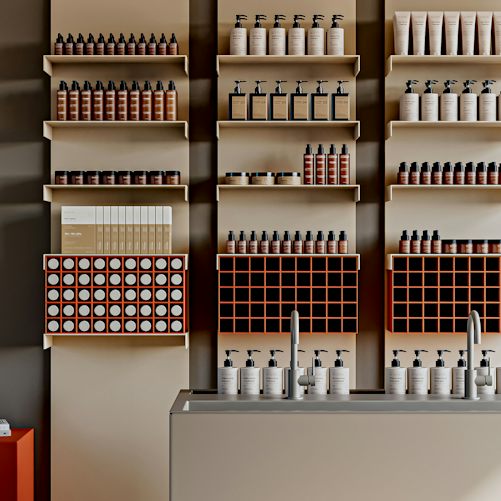
Those figures matter because the beauty business has become unusually good at straddling categories that consumers themselves may not regard in the same way. A premium serum, salon hair product or prestige lipstick can be marketed with the cultural language of luxury while sitting at a fraction of the absolute price of a handbag, watch or tailored coat. For shoppers who still want a sense of indulgence but are more cautious about large purchases, beauty offers a manageable entry point. It can also be replenished, which creates a frequency of purchase that leather goods and jewellery cannot replicate.
This is the familiar logic behind the so-called lipstick effect: when confidence weakens, consumers may cut back on large discretionary purchases while preserving smaller treats. The effect should not be treated as a mechanical economic law. High-end beauty can also be vulnerable to downturns, and prestige cosmetics depend heavily on marketing, innovation and distribution. But the current market contrast illustrates why the idea has regained attention. Berenberg analyst Nick Anderson, quoted by Reuters, argued that consumers under economic strain may find it easier to justify small luxuries than expensive fashion items.
The deeper advantage is portfolio architecture. L’Oréal can recruit a customer at many income levels, across pharmacies, department stores, travel retail, specialist beauty chains, salons and direct digital channels. It can move the same consumer upward through increasingly premium propositions without requiring that customer to make a radical leap in spending. That makes the company both a beauty leader and, increasingly, an important operator in the luxury ecosystem.
The price-elevation strategy meets its limit
The pressure on the traditional luxury model has been building for several years. Bain & Company’s work on the personal luxury goods market documented a contraction in the sector’s customer base after a long period in which brands relied heavily on price increases and ‘elevation’ strategies. Bain estimated that roughly 50 million consumers left the luxury market between 2022 and 2024, reducing the customer base from around 400 million to about 350 million. More recent industry discussion cited by Reuters on September 15 put the cumulative loss at around 60 million consumers.
The exact count is less important than the direction. Many brands deliberately pursued higher average selling prices, reduced entry-level products and concentrated attention on very important clients who could absorb steep increases. The strategy protected margins and reinforced exclusivity during the boom. It also changed the value equation for younger and middle-income consumers who had previously treated an occasional luxury purchase as an attainable reward.
Bain’s earlier analysis found that the top tier of clients was taking a growing share of global luxury spending, while more than half of consumers surveyed regarded luxury brands as overpriced. Younger buyers in Western markets showed particular signs of disengagement, with stronger interest in second-hand platforms and more price-sensitive alternatives. At the same time, spending on luxury experiences such as hospitality and dining proved more resilient than spending on personal goods. That divergence has become one of the most important strategic questions in the industry: can a brand raise prices, narrow its customer base and still preserve cultural relevance?
For houses whose identity depends on desirability far beyond the tiny population of people who can regularly buy five-figure products, the answer is complicated. Luxury brands require aspiration among non-buyers because that aspiration gives social meaning to the purchase made by buyers. If too many people conclude that prices no longer correspond to product, creativity or service, scarcity can begin to look less like prestige and more like exclusion. Investors appear increasingly sensitive to that risk.
Beauty has not escaped premiumisation. Prestige skincare, fragrance and cosmetics have all moved upward in price. But the category still offers more rungs on the ladder. A consumer who will not spend €3,000 on a handbag may still spend €80 on fragrance or €45 on lipstick. That difference is small in absolute luxury economics, yet enormous in terms of keeping consumers inside a brand’s orbit.
China is recovering, but not necessarily returning to the old model
China remains central to the story. For more than a decade, Chinese consumers were the growth engine of European luxury, buying at home and during travel in Paris, Milan, London, Tokyo and other global shopping capitals. The sector built store networks, merchandising strategies and investor expectations around the assumption that rising Chinese wealth would continue to broaden the market.
That assumption has become less reliable. A prolonged property downturn, weaker consumer confidence, uneven employment prospects and changing travel patterns have all altered spending behaviour. The effect is not a simple collapse. LVMH said Asia excluding Japan showed strong growth in the first half of 2026, confirming an improvement that had begun in the second half of 2025. L’Oréal likewise reported that North Asia continued its recovery. The region therefore remains critical for both companies.
The difference lies in exposure and the range of products available to meet a cautious consumer. Beauty can benefit from consumers trading down within prestige rather than abandoning the category completely. It can also capture demand from shoppers who are experimenting with domestic brands, new routines and digital retail channels. High-end fashion and leather goods have fewer ways to reduce the financial threshold without weakening the very exclusivity that supports their pricing power.
Chinese consumers have also become more sophisticated in how they assess value. Resale prices, craftsmanship, service quality and the gap between European and domestic retail prices are easier to compare than ever. Social media accelerates both enthusiasm and scepticism. A price rise that once reinforced status can now generate online debate about whether a product is materially improved. That scrutiny raises the burden on brands to justify every increase with creativity, quality, scarcity or experience.
For the biggest European groups, China’s recovery therefore matters not only in volume but in composition. A return to spending dominated by a narrow group of wealthy clients would support profits but would not necessarily recreate the broad aspirational market of the 2010s. A wider recovery would be more powerful. Until that becomes clear, companies with lower entry points and replenishable products have a structural advantage.
L’Oréal is moving further inside the luxury value chain
L’Oréal’s rise is also tied to a strategic expansion deeper into luxury itself. The company is not merely benefiting from consumers choosing inexpensive cosmetics over expensive handbags. It is becoming an increasingly important partner to fashion houses that want global scale in fragrance and beauty without building every capability internally.
The most consequential example is its alliance with Kering. In March 2026, L’Oréal completed the acquisition of Kering Beauté, including the Creed fragrance house, and signed long-term licences covering Bottega Veneta and Balenciaga beauty. The broader agreement, announced in 2025, was valued at €4 billion and also included a planned 50-50 venture to explore opportunities at the intersection of luxury, wellness and longevity.
In July, Kering and L’Oréal accelerated the next stage by signing a 50-year exclusive worldwide licence for Gucci beauty, due to take effect on July 1, 2027, subject to regulatory approvals. The arrangement replaced the timetable under Gucci’s existing Coty licence and involved an early-redemption payment to Coty of roughly $400 million, with L’Oréal covering about 70% of the transition costs and related inventories paid by Kering.
These deals show why the boundary between beauty and luxury is increasingly porous. For a fashion house, fragrance and cosmetics can widen the customer base, increase purchase frequency and create a global presence in markets where the core fashion business may remain selective. For L’Oréal, licensing an iconic fashion name brings cultural prestige, pricing power and access to a customer who may later move across categories. The economics are complementary.
The arrangement also reveals a strategic reality for fashion groups under pressure. Beauty can be a way to monetise brand equity without over-expanding the supply of handbags or ready-to-wear. It can preserve the aura of the house while creating lower-priced touchpoints. L’Oréal’s ability to industrialise product development, marketing and distribution at global scale makes it a natural partner. The stock-market ranking therefore reflects more than a consumer substitution from bags to lipstick; it reflects the growing power of the company that sits behind many of the beauty products carrying luxury names.
Luxury’s counterattack is experiential
At the same time, traditional luxury is responding to the downturn by changing the experience around the product rather than simply lowering prices. Prada’s newly expanded flagship complex in Milan’s Galleria Vittorio Emanuele II is one of the clearest current examples. Unveiled this week, the project connects menswear and womenswear spaces, incorporates exhibitions, private shopping areas, hospitality and access to the Marchesi patisserie, and uses the brand’s historic location as a cultural destination rather than a conventional store.
Reuters reported that Prada expects the eight-level complex eventually to generate about €100 million in annual revenue, while chief executive Andrea Guerra said the group plans to reproduce the private-apartment concept in major global capitals. The underlying strategy is important. If luxury products have become harder to justify on price alone, stores must supply a reason to visit that cannot be replicated by e-commerce. Heritage, art, food, architecture and access become part of what the customer is buying.
That approach also addresses a weakness identified by Bain: even top clients can feel that luxury service has become more transactional. When brands concentrated spending in a smaller group of high-value customers, they raised expectations for personalisation at the same time. A shopper spending tens of thousands of euros a year is unlikely to be impressed by the same experience offered to everyone else. The result is an arms race in private salons, appointments, destination events, bespoke services and cultural programming.
The risk is that experiential investment can become expensive theatre if the underlying product lacks novelty. A lavish flagship cannot solve weak design, over-distribution or a loss of relevance. But the direction is telling. Luxury groups are recognising that the object itself is no longer enough to defend repeated price increases. The experience around the object must carry more of the value.
L’Oréal participates in the same shift from another angle. Beauty retail increasingly combines diagnostics, personalisation, digital tools, services and experiential discovery. The difference is that beauty can deliver those experiences at far lower transaction values. That makes it easier to keep the entry door open while reserving more exclusive services for top clients.
This is a valuation reset, not the end of high luxury
The contrast between L’Oréal and LVMH should not be reduced to a morality tale in which beauty has discovered value while luxury fashion has simply become too expensive. Both groups operate premium brands, both depend on marketing and desirability, and both have benefited from pricing power. LVMH also owns Sephora, one of the world’s most important beauty retailers, and its portfolio spans categories from jewellery to hotels where demand behaves very differently.
Nor does a lower market capitalisation mean that LVMH’s brands have lost their cultural power. Louis Vuitton and Dior remain among the most recognised luxury names in the world. Tiffany and Bulgari occupy strong positions in jewellery. Loro Piana has continued to expand while emphasising scarcity and product quality. The group’s scale, real estate, craftsmanship networks and marketing capacity create formidable barriers to entry.
The current problem is the market’s intolerance for uncertainty. Investors became accustomed to extraordinary luxury growth after the pandemic, when affluent consumers accumulated savings and redirected spending from travel toward goods. As economies reopened, the comparison base became more demanding. Then came China’s slowdown, inflation, higher interest rates, geopolitical shocks and pressure on aspirational consumers. What had looked like a secular growth story began to resemble a cyclical sector again.
LVMH’s first-half figures suggest stabilisation rather than crisis. But a recovery that is slower than investors once expected can still justify a much lower valuation. The same is true for market share: a brand can be healthy and profitable while the stock underperforms because the future cash flows investors had priced in were too optimistic.
L’Oréal, by contrast, is being rewarded for consistency. Beauty has its own competitive threats, from fast-moving independent brands to digital marketing costs and shifting consumer tastes. Yet its category is habitual, replenishable and scientifically renewable. New formulations, ingredients, claims and routines create reasons to purchase without requiring a complete change in wardrobe or a once-in-a-decade accessory. In uncertain periods, that combination is powerful.
The battle for the next generation is a battle over entry points
There is also a generational dimension. Younger consumers helped fuel luxury’s expansion through social media, celebrity culture and the globalisation of fashion imagery, but their relationship with ownership is more fluid. Resale platforms made second-hand products normal. Rental, vintage and archive fashion turned previous seasons into discovery rather than obsolescence. Beauty, meanwhile, became a form of constant experimentation shaped by creators, dermatology content and short product cycles.
For a twenty-something consumer, the decision between a €3,000 bag and a portfolio of smaller beauty purchases is not purely economic. It is also about frequency, novelty and the social reward of participation. A lipstick, fragrance or skincare product can generate a moment of luxury without demanding years of saving. The consumer can move between brands rather than locking into one house. That creates intense competition, but it also expands the addressable market.
Luxury houses are trying to retain younger shoppers through fragrance, eyewear, beauty, small leather goods and experiences. The danger is that entry products become so expensive that the first step onto the ladder disappears. Once that happens, brands may preserve short-term margin while weakening the pipeline of future core customers.
The broader trend is visible in the strategic behaviour of fashion groups. Licensing beauty to L’Oréal, investing in hospitality, expanding restaurants and cafés, and building immersive flagships all serve the same purpose: widen the relationship without necessarily producing more flagship handbags. The brand becomes a world the consumer can enter at different price points.
That is why the market-capitalisation shift in Paris has symbolic force. L’Oréal’s business model is built around many entrances. LVMH’s strongest fashion houses have spent years making some entrances narrower. Both strategies can work, but they respond differently when the middle of the market feels squeezed.
Beauty is becoming luxury’s recurring-revenue engine
The rise of beauty also changes how the industry thinks about prestige. Traditional luxury rested heavily on scarcity, craftsmanship, physical materials and controlled distribution. Beauty adds science, routine and performance claims to the mix. The prestige of a cream or serum can come from formulation, clinical testing, packaging, brand mythology or association with a fashion house. The product is consumed and replaced rather than preserved.
This creates a different relationship with price. A luxury handbag can be framed as a durable object, sometimes with resale value, while cosmetics are consumables. Yet consumers may still accept premium pricing because each purchase is smaller and because the category is tied to self-care, identity and daily use. A consumer who rejects a €500 price increase on a bag may barely notice a €5 rise on a prestige lipstick, even if repeated purchases accumulate over time.
For companies, that makes beauty a powerful source of recurring revenue. It also makes innovation essential. Brand names alone are not enough in skincare, where customers increasingly compare ingredients, efficacy claims and expert recommendations. L’Oréal’s scale in research and development, digital marketing and distribution gives it tools that many fashion groups lack. Its alliance with Kering effectively allows fashion houses to plug into those capabilities.
This does not mean beauty is cheap or democratic. Prestige cosmetics have their own hierarchy, and some fragrance and skincare products occupy very high price points. But the category can stretch further downward without necessarily damaging the top. That flexibility is strategically valuable in a period when the luxury customer base has narrowed.
It also helps explain why the distinction between ‘luxury’ and ‘beauty’ is becoming less useful for investors. L’Oréal may not be classified as a traditional luxury group, yet it earns from Lancôme, Yves Saint Laurent Beauté, Armani beauty and other prestige franchises, while adding Gucci and other Kering names to its future portfolio. The company that displaced LVMH at the top of the Paris market is not an outsider to luxury. It is increasingly one of the infrastructure providers of luxury’s most accessible category.
What the luxury groups may need to change
The question for LVMH and its peers is not whether to imitate L’Oréal. Their economics depend on maintaining scarcity and distinction, and excessive democratisation can damage a house faster than short-term sales weakness. The challenge is to rebuild the connection between price and perceived value.
That may require more product innovation, better service, more selective price increases and a clearer distinction between pieces designed for top clients and products intended to recruit new customers. It may also mean accepting that some categories should grow slowly in order to preserve desirability. Loro Piana, for example, has emphasised controlled supply and long-term brand building rather than maximising near-term volume.
The most successful luxury groups are likely to combine several models. They can keep core leather goods and high jewellery exclusive while using fragrance, beauty, hospitality and cultural experiences to maintain a wider audience. They can deepen relationships with top clients without making every store feel inaccessible to a curious first-time visitor. And they can invest in craftsmanship and creativity so that higher prices are accompanied by visible reasons to pay them.
The strategic significance of L’Oréal’s Kering partnership is therefore hard to overstate. It allows Kering’s fashion houses to pursue precisely that layered model while outsourcing much of the beauty infrastructure to a specialist. Other groups already operate similar licensing relationships across the sector. What is changing is the scale and strategic importance of those arrangements.
For investors, the lesson is equally clear: category boundaries matter less than cash-flow quality. A company associated with cosmetics can command a luxury-like valuation if its products are desirable, margins are high and demand is recurring. A company filled with the world’s most famous luxury brands can see its valuation compress if investors doubt the breadth of future growth. The prestige hierarchy on the stock exchange is becoming less about labels and more about resilience.
A new symbol at the top of the Paris market
The milestone also says something about Europe’s corporate landscape. LVMH’s ascent to become Europe’s most valuable company during the pandemic-era luxury boom was a source of French pride and a sign that intangible assets such as brand, heritage and craftsmanship could rival technology and pharmaceuticals in market value. Its retreat from Europe’s top ten by market capitalisation, reported by Reuters on September 15, shows how quickly sector leadership can change.
L’Oréal’s accession to the top of the French market is different in tone. The group is still a consumer company rooted in brands, but its business combines research, manufacturing, mass distribution, luxury licensing and digital commerce. In that sense it resembles a diversified platform more than a classic fashion house. Its strength comes from being able to sell across economic cycles without abandoning premium positioning.
The ranking remains fluid. A stronger luxury recovery in China, a successful creative cycle at major LVMH houses or a change in global markets could reverse the order. LVMH’s scale means that even modest improvements in organic growth can have a large effect on earnings and sentiment. L’Oréal faces its own risks, including high expectations embedded in the share price and the challenge of integrating new luxury beauty assets without diluting returns.
Still, the symbolism is difficult to ignore. The company now sitting at the top of the French market sells aspiration in smaller units. It reaches more consumers, more often, through more channels. It can participate in luxury without depending entirely on the customer who buys a luxury handbag or watch.
That is the strategic advantage the wider fashion industry is now trying to recreate: not lower prestige, but more ways to enter the brand universe.
Geopolitics and inflation are amplifying the divide
The timing of the valuation change is also inseparable from a difficult macroeconomic backdrop. European equities fell on September 15 as higher oil prices and bond yields revived inflation concerns, with luxury shares among the sectors under pressure. LVMH fell more than 2% that day, helping create the narrow gap through which L’Oréal moved into first place in France. That market context is a reminder that the ranking was not produced by retail trends alone; it also reflects how investors are reassessing interest-rate risk, geopolitical exposure and the sensitivity of discretionary spending to renewed inflation.
The Middle East conflict has become particularly relevant for global luxury because it affects several channels at once. It can disrupt travel, reduce spending in important Gulf markets, raise transport and energy costs and weaken confidence far beyond the region. LVMH itself quantified the effect when it said second-quarter organic growth would have been one percentage point higher without the conflict. Hospitality groups have likewise reported pressure on Middle Eastern demand even as leisure travel elsewhere remained resilient.
For beauty, the same shocks are not harmless, but the category can be less exposed to the postponement of a single large purchase. Consumers replenish shampoo, skincare and cosmetics in ways they do not replenish a €4,000 bag. That distinction becomes more valuable when households are absorbing higher fuel, food or borrowing costs.
The interest-rate environment matters for valuation as well. Consumer companies with reliable recurring demand can command a premium when investors fear slower growth, while cyclical discretionary companies are punished more heavily for uncertainty. L’Oréal’s promotion to the top of the French market therefore reflects both a change in what shoppers buy and a change in what investors are willing to pay for predictability.
That dual shift helps explain why the comparison is likely to remain closely watched even if the two companies exchange places again. It has become a real-time measure of whether markets believe the next phase of European prestige consumption will be led by concentrated high luxury or by broader, more frequent forms of indulgence.
The bigger shift: aspiration is being repriced
What happens next will depend less on one day’s market capitalisation than on whether the demand patterns behind it persist. If inflation concerns, geopolitical uncertainty and uneven Chinese confidence continue to constrain discretionary spending, beauty and other relatively accessible prestige categories may remain better positioned than high-ticket fashion. If consumer confidence rebounds sharply, luxury groups could recover faster because their profit pools are concentrated in categories with exceptional margins.
The most likely outcome is not a permanent victory of lipstick over handbags. It is a more fragmented luxury market in which consumers demand stronger justification for every purchase. Some will spend heavily on jewellery, travel and hospitality while cutting back on logo-driven fashion. Others will trade vintage, buy fewer but better pieces, or move their discretionary budget toward beauty and wellness. The old assumption that rising income automatically creates a ladder from entry products to ever more expensive fashion goods is becoming less dependable.
For brands, that means desirability must be earned repeatedly. Heritage still matters, but so do product quality, service, price discipline and cultural relevance. The firms that prosper will be those able to keep top clients feeling genuinely privileged while leaving enough doors open for the next generation to enter.
L’Oréal’s move above LVMH is therefore best read as a signal rather than a verdict. It does not say that French luxury has lost its power. It says that the market is placing a higher value on a different form of prestige: one that is frequent, scalable, scientifically refreshed and available at multiple price points.
In the years after luxury’s extraordinary post-pandemic boom, that may prove to be the most important shift of all. The future of high-end consumption is unlikely to be defined by a retreat from aspiration. It will be defined by who can make aspiration feel worth the price.