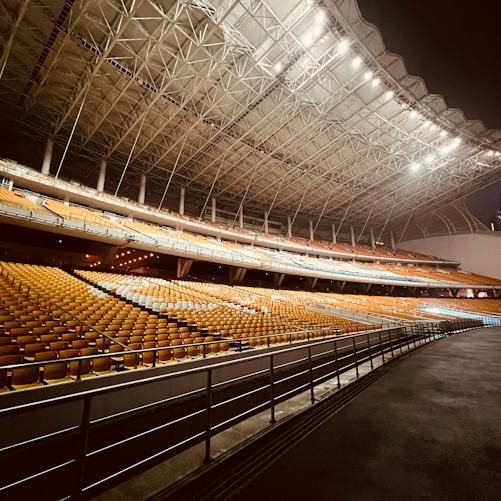
UEFA has chosen Munich’s Allianz Arena to host the 2028 Champions League final and Barcelona’s rebuilt Camp Nou for the 2029 showpiece, handing two of European football’s most recognisable stadiums the continent’s biggest annual club match while setting out a broader map of finals that reaches from Cardiff to Astana. The decisions, approved by UEFA’s Executive Committee in Thessaloniki on September 15, place the 2028 men’s final in Munich only three years after the same venue staged the 2025 decider and send the competition back to Camp Nou for the first time since Manchester United’s famous comeback against Bayern Munich in 1999. They also underline how elite football is increasingly treating stadium infrastructure, transport capacity, hospitality, security and city-scale event planning as central competitive assets alongside sporting history.

UEFA locks in the next chapter of its biggest club match
The headline decision gives Munich the Champions League final in 2028 and Barcelona the final in 2029. UEFA had already assigned the 2027 final to Atlético Madrid’s Estadio Metropolitano, so the governing body now has the next three men’s finals fixed in Madrid, Munich and Barcelona. For clubs, sponsors, broadcasters and travelling supporters, the certainty matters. A Champions League final is not simply a ninety-minute football match. It is a multi-day international event that requires airport capacity, rail links, policing, ticketing systems, fan zones, corporate hospitality, broadcast compounds, security planning and thousands of hotel rooms. The host city becomes part of the spectacle and, increasingly, part of the commercial product.
UEFA’s selection also reveals a preference for venues with proven experience at the top level. Munich’s stadium hosted the Champions League final in 2012, when Chelsea defeated Bayern on penalties, and again in 2025. It also staged six matches at Euro 2024 and the 2025 UEFA Nations League final. Camp Nou, meanwhile, hosted European Cup or Champions League finals in 1989 and 1999. The 1989 match ended with Arrigo Sacchi’s AC Milan beating Steaua Bucharest 4-0, while the 1999 final became one of the most replayed endings in the competition’s history when United scored twice in added time to overturn Bayern’s 1-0 lead.
Those precedents give both cities a ready-made football narrative, but UEFA’s decision is not an exercise in nostalgia. The stadiums chosen for modern finals must satisfy technical, commercial and operational requirements that are far more demanding than they were a generation ago. The modern Champions League final is built around digital ticketing, extensive television production, sponsor activations, controlled supporter movement and hospitality programmes that occupy significant parts of the venue. That helps explain why established arenas that have already handled major tournaments and finals retain an advantage in the bidding process.
Munich gets the final again after only three years
The 2028 assignment is especially striking because Munich will host the final just three years after doing so in 2025. Bayern Munich said the planned match date is May 27, 2028, subject to the competition calendar, and described a four-day event programme running from May 25 to May 28. The club said the concept includes two fan meeting points in the city centre and a centrally located Champions Festival. That detail is significant because it shows how the host-city model has expanded. UEFA finals are no longer organised only inside stadium perimeters; they depend on urban planning that separates rival supporter flows while also creating public areas for fans without tickets.
Bayern chief executive Jan-Christian Dreesen said the choice reflected the international appeal, hospitality and organisational quality associated with the Allianz Arena and Munich. That is naturally the host club’s interpretation, but it aligns with the venue’s recent record. Munich was one of the central German host cities at Euro 2024, and the arena’s repeated use for major UEFA events gives organisers a large body of operational experience. The city also has a mature transport network and a long-established tourism and convention sector, attributes that reduce some of the uncertainty attached to a one-off event drawing supporters, media and commercial guests from around the world.
There is another layer to Munich’s selection. By bringing the final back so quickly, UEFA is signalling that frequency alone is not a disqualifying factor when a stadium continues to meet the required standards. In earlier eras, there was often an informal expectation that major finals should rotate widely. Rotation still matters, as the wider list of venues shows, but the 2028 decision suggests that proven delivery can outweigh concerns about repetition. The question for UEFA is not merely whether a city has hosted before; it is whether the venue, local authorities and transport system can execute a complex event reliably at the scale now demanded.
Camp Nou’s return carries a different kind of significance
Barcelona’s 2029 assignment has a different character because it is tied to the transformation of Camp Nou. The stadium has been undergoing a major redevelopment as part of the Espai Barça project. FC Barcelona’s plans describe a future capacity of about 105,000 and a venue redesigned around improved accessibility, hospitality, technology and sustainability. The club has reopened the stadium progressively rather than waiting for every phase of work to finish, with capacity increasing in stages as licensing and construction milestones have been reached.
By March 2026, Barcelona said the Phase 1C occupancy licence had raised available capacity to 62,652 and opened the North Goal along with additional hospitality areas. That staged reopening matters in the context of the 2029 final because UEFA is making a forward-looking commitment. The final is being awarded not simply to the historic Camp Nou people remember from previous decades, but to the rebuilt version of the venue that Barcelona expects to function as one of the largest and most technologically advanced football stadiums in Europe.
The project’s size gives the 2029 final symbolic weight for both the club and the city. Camp Nou has long been one of football’s best-known addresses, but its infrastructure had fallen behind newer venues in areas such as hospitality, circulation, accessibility and roof coverage. The redevelopment is designed to change that. Barcelona’s own project material describes a stadium with approximately 105,000 seats, expanded premium areas, state-of-the-art technology and a roof covering the crowd. Those are club plans rather than guarantees about the final configuration on a particular date, but they explain why UEFA sees the venue as suitable for a showpiece three years from now.
A stadium that already owns two defining European finals
Camp Nou’s history gives UEFA an unusually powerful promotional backdrop. The 1989 European Cup final was a demonstration of AC Milan’s dominance under Sacchi. Ruud Gullit and Marco van Basten scored twice each in a 4-0 victory over Steaua, a performance that remains one of the defining displays by a European champion. Ten years later the same stadium produced an entirely different kind of memory. Bayern led Manchester United through Mario Basler’s early free-kick and remained ahead until added time, when Teddy Sheringham equalised and Ole Gunnar Solskjær scored the winner from another corner.
That 1999 finish has become part of Champions League mythology, but the relevance of history to the 2029 decision should not be overstated. UEFA awards finals through a formal host-selection process, not because a venue once produced drama. Still, the governing body benefits from placing its biggest match in stadiums that audiences immediately recognise. The visual identity of a final matters to broadcasters and sponsors, and a rebuilt Camp Nou offers a combination of heritage and novelty that few venues can match.
For Barcelona, the event can also function as a global showcase for the redevelopment. Major stadium projects are frequently justified by the promise of year-round commercial growth: more hospitality, more premium seating, stronger sponsorship inventory, museum and retail income, and the ability to stage concerts or other events. A Champions League final does not prove that those economics will succeed, but it offers an extraordinary marketing platform. By 2029, the club will have the opportunity to present the renovated ground to one of the largest live sports audiences of the year.
The wider map of European finals is just as revealing
The Executive Committee did much more in Thessaloniki than choose two Champions League hosts. UEFA awarded the 2028 Europa League final to the National Arena in Bucharest and the 2029 edition to the National Stadium Serbia in Belgrade. The 2028 Conference League final will be played at Juventus Stadium in Turin, with Budapest’s Puskás Aréna taking the 2029 edition. The Women’s Champions League final goes to Lyon in 2028 and Cardiff in 2029. The 2027 Super Cup will be held at the Johan Cruyff ArenA in Amsterdam, while Astana Arena in Kazakhstan will stage the 2028 Super Cup. The 2027 Futsal Champions League finals were assigned to Biel/Bienne in Switzerland.
Taken together, those choices illustrate UEFA’s balancing act. The men’s Champions League final remains concentrated in major western European football cities with very large stadiums and extensive visitor infrastructure, while other competitions spread high-profile matches more widely across the continent. Bucharest has hosted a Europa League final before, in 2012, but Belgrade’s new national stadium is still under construction. Turin has an established modern club ground, Budapest has become a regular host of international football events, and Astana will take the Super Cup to Kazakhstan for the first time.
That geographical spread serves several purposes. It gives national associations and governments a tangible reward for investing in stadiums. It brings UEFA-branded events to markets that do not often receive the Champions League final. It also helps the organisation demonstrate that its competitions belong to a continent-wide system rather than a narrow group of western European capitals. There is an obvious commercial hierarchy between the Champions League final and the Conference League or Super Cup, but the distribution of events still has political and developmental importance inside European football.
Women’s finals underline a separate growth strategy
The Women’s Champions League selections deserve separate attention because UEFA is trying to increase the scale and visibility of the women’s club game rather than simply attach it to the men’s calendar. Lyon’s Parc Olympique Lyonnais will host the 2028 final and Cardiff’s National Stadium of Wales the 2029 final. Lyon is one of the central cities in European women’s football and the home of OL Lyonnes, while Cardiff offers a national stadium with experience of major UEFA occasions.
The choice of large, recognisable venues reflects the expectation that leading women’s matches can support bigger crowds and more ambitious event presentation. It also creates a different test from placing a final in a smaller club stadium where filling the seats is easier. UEFA’s challenge is to match venue scale with demand, ticket pricing, marketing and travel accessibility. A large stadium can create a powerful image when full, but it can also expose the gap between aspiration and attendance if promotion is weak.
The sequence — Warsaw in 2027, Lyon in 2028 and Cardiff in 2029 — gives UEFA three distinct markets and allows the women’s final to develop its own geography. That matters as the organisation seeks stronger broadcast value and commercial partnerships for women’s competitions. The selection of Cardiff, in particular, brings a major women’s club final to a stadium that has previously staged elite men’s football, reinforcing the message that the women’s event should be treated as a major standalone property rather than an add-on.
Why finals matter so much to cities
Cities compete for major football finals because the benefits extend beyond the stadium, although headline economic-impact claims should always be treated carefully. Visiting supporters spend on accommodation, restaurants, bars, local transport and retail. Corporate guests and sponsors tend to stay in higher-priced hotels and use premium hospitality. Media organisations bring production crews and technical staff. Fan festivals can create additional spending and international exposure. At the same time, hosting creates costs for policing, traffic management, public transport, sanitation and security, and the balance between benefit and public expense varies from city to city.
The strongest value may be reputational rather than purely financial. A successfully delivered Champions League final can show that a city is capable of managing one of sport’s most logistically demanding one-day events. That is useful when bidding for future tournaments, concerts, conventions or other global spectacles. Munich already has that reputation, which is precisely why another final can be staged there with relatively low organisational risk. Barcelona, by contrast, will use 2029 partly to demonstrate the capabilities of its renovated stadium and the wider Espai Barça development.
The downside is that major-event hosting can put pressure on local accommodation and transport. Champions League final weekends routinely produce intense demand for hotel rooms and flights, and supporters without match tickets may travel simply to be in the host city. UEFA and local authorities therefore increasingly emphasise fan zones and planned gathering points. Bayern’s reference to two central fan meeting points for 2028 indicates how early that process now begins. Crowd separation, public transport scheduling and communication become part of the sporting event long before kickoff.
The final is increasingly a test of infrastructure, not just capacity
Stadium capacity remains important, but the number of seats is only one part of the calculation. A modern final requires robust telecommunications, media tribunes, mixed zones, dressing-room standards, medical facilities, secure perimeters, accessible seating, hospitality kitchens, sponsor areas, broadcast platforms and spaces for ceremonies. Outside the venue, organisers need contingency routes, emergency planning and an effective way to process large numbers of supporters arriving within a relatively short period.
This is one reason renovated and recently built stadiums appear so frequently in UEFA’s final rotation. Older grounds may have greater atmosphere or history, but retrofitting them to modern event specifications can be expensive and disruptive. Camp Nou is a case study in that tension. Its scale and identity were never in doubt, yet Barcelona concluded that the stadium needed a fundamental rebuild to support the club’s long-term sporting and commercial ambitions. The 2029 final will be an early global test of whether that investment has produced the kind of venue UEFA wants for its flagship match.
Munich represents the opposite end of the spectrum: an arena already embedded in UEFA’s event system. Its recent use at Euro 2024, the Nations League and the Champions League gives planners detailed knowledge of transport flows, security zones, broadcast infrastructure and spectator behaviour. That familiarity has measurable operational value even if it is less visible to fans than architecture or atmosphere.
UEFA is also managing risk after difficult final experiences
Major football finals have repeatedly shown how quickly logistics can become part of the story. Across European competitions, problems with ticket access, crowd control, transport bottlenecks or supporter treatment have at times overshadowed the football itself. That history has made venue selection and host-city coordination more sensitive. A spectacular stadium is not enough if the surrounding system cannot safely move and process tens of thousands of people.
The preference for experienced hosts can therefore be read partly as risk management. Munich has recent evidence of successful delivery. Barcelona has extensive experience with major matches and a transport network accustomed to very large crowds, while the redevelopment is intended to modernise internal circulation and access. UEFA will still need to validate the finished configuration and operational plans closer to 2029, but assigning the final now gives all sides a long runway for preparation.
That planning period is important because the demands of finals continue to evolve. Digital tickets create new opportunities but also new failure points. Security threats require close coordination between national and local authorities. Fans expect more information in real time, from gate access to public transport. Broadcasters require ever more complex production infrastructure. Sponsors expect premium spaces and city-centre visibility. Each additional layer makes the event more valuable but also more complicated.
A commercial decision as much as a sporting one
UEFA does not publish its venue choices as simple commercial calculations, but the economics of the Champions League are inseparable from where its final is staged. The final is the competition’s most visible single match, carrying global broadcast audiences and major sponsorship exposure. The stadium backdrop appears in every rights-holder feed, every trophy ceremony and every sponsor activation. A recognisable city can add to the event’s marketability, especially for international visitors who treat the final weekend as a premium travel experience.
Munich and Barcelona both fit that model. They are major tourism destinations with strong air connectivity, established hotel markets and football identities known far beyond their domestic leagues. From UEFA’s perspective, that reduces commercial friction. Sponsors can host guests easily, broadcasters can base large crews in cities with developed infrastructure, and travelling supporters can access the venue through multiple transport channels.
At the same time, the broader list of finals prevents UEFA from concentrating every major event in the same handful of destinations. Bucharest, Belgrade, Turin, Budapest, Lyon, Cardiff, Amsterdam, Astana and Biel/Bienne all receive events at different levels. That distribution reflects both sporting politics and commercial strategy. UEFA is a federation of national associations, and event allocation is one of the most visible ways it can spread opportunity across its territory.
The rebuilt Camp Nou becomes part of Barcelona’s financial story
For FC Barcelona, the 2029 final will intersect with the financial logic behind the stadium redevelopment. The club has presented the new Camp Nou as a platform for higher matchday and hospitality revenue, with more premium areas and improved services around a capacity of roughly 105,000. Those ambitions matter because top European clubs increasingly treat stadium income as a strategic tool in the race to fund wages, transfers and sporting operations under financial sustainability rules.
A larger stadium alone does not guarantee higher profitability. Construction financing, operating costs, pricing, attendance and the balance between general admission and premium inventory all affect the outcome. Barcelona’s phased reopening has already shown how complex a project of this scale can be. Licensing, safety approvals and construction sequencing have determined how many supporters could enter at different stages. By awarding the 2029 final, UEFA is expressing confidence that the venue will be capable of operating at the required standard by then, but the club still has to complete the work and demonstrate that the finished stadium functions as intended.
The final also gives Barcelona a deadline with reputational consequences. A major international event focuses attention on every aspect of a stadium, from sightlines and hospitality to queues and transport. If the redevelopment performs well, the final can validate the project to sponsors, supporters and potential event partners. If problems remain, they will be visible on a global stage. That makes the 2029 assignment both an opportunity and a test.
Munich’s repeat hosting shows the value of reliability
Munich does not need the 2028 final to introduce the Allianz Arena to the world. The stadium has already hosted a World Cup, European Championship matches and multiple UEFA finals. Its selection therefore illustrates another principle: reliability has become a premium asset. Organisers know the venue, local government knows the event model, police and transport operators have recent experience, and the commercial infrastructure is established.
That does not make the event routine. A Champions League final can bring different supporter bases, security assessments and travel patterns every year. The identity of the finalists is unknown until days before many final operational decisions must be made. A match involving clubs from neighbouring countries creates different transport pressures from one involving teams whose supporters arrive largely by air. Organisers therefore build plans that can be adapted rapidly after the semi-finals.
Bayern’s announcement of a four-day festival framework more than a year and a half before the match shows how much of the final can be planned independently of the finalists. The city can reserve public spaces, design fan routes and coordinate transport, while UEFA can prepare sponsor and media facilities. The sporting uncertainty sits inside an increasingly standardised event structure.
The 2028 and 2029 choices also say something about football geography
European club football is global in audience but remains deeply tied to place. The Champions League’s commercial reach extends across Asia, Africa, the Americas and the Middle East, yet its final still derives much of its identity from the city and stadium that host it. Munich and Barcelona are useful to UEFA because they communicate both European tradition and contemporary scale. They are instantly identifiable football cities, but their stadiums also satisfy the requirements of a global entertainment product.
That balance is harder to achieve than it appears. A final staged only in the largest western European markets risks making the competition feel geographically narrow. A final assigned solely for rotation, however, can create operational or commercial challenges if local infrastructure is insufficient. UEFA’s wider allocation strategy attempts to split the difference: the Champions League goes to cities with very high capacity and proven international reach, while Europa League, Conference League, Women’s Champions League and Super Cup hosts provide a broader continental spread.
The inclusion of Belgrade’s still-unfinished national stadium in the 2029 Europa League plan is particularly notable because it uses future event rights to validate new infrastructure. Astana’s 2028 Super Cup extends UEFA’s showpiece calendar deeper into Central Asia. Turin and Budapest remain established event cities, while Lyon and Cardiff offer proven large-stadium platforms for the women’s game. The map is therefore not random; it reflects different strategic goals for different competitions.
A final before 100,000 spectators would change the visual scale
If Camp Nou reaches its planned capacity of roughly 105,000 and UEFA uses a substantial share of that for the 2029 final, the event could have a visual scale unlike most recent Champions League deciders. Final capacities are always reduced by operational requirements, media positions, security segregation and hospitality allocations, so the nominal stadium figure should not be confused with the number of tickets that would actually be available. Even so, the rebuilt Camp Nou gives UEFA room to stage the match in one of Europe’s largest football venues.
That creates both opportunity and pressure. More seats can mean more supporters inside the stadium, but the final ticket allocation is divided among finalists, the general public, UEFA partners, hospitality and other stakeholders. Demand for Champions League final tickets routinely exceeds supply regardless of venue size. Increasing capacity can ease the shortage at the margins but will not eliminate it. The bigger challenge is moving a crowd of that scale safely through the surrounding district and transport network, particularly when large numbers of ticketless fans may also be present in the city.
Barcelona and its city authorities have already developed mobility planning around the stadium’s phased reopening, with emphasis on walking, metro, tram and bus access. Those systems will face a different test during a Champions League final, when the audience is less familiar with local routes and arrives in concentrated waves. The 2029 event will therefore be as much a test of urban mobility as of stadium design.
The venue race is becoming part of Europe’s stadium investment cycle
Across Europe, clubs and governments are investing in new or renovated stadiums partly because elite events create prestige and commercial opportunities. UEFA finals can strengthen the case for those projects by offering international exposure, but they can also intensify debate over public spending, financing and local disruption. The benefits are most credible when a stadium has a viable long-term use beyond occasional finals.
Munich’s arena is already a mature example of that model: a heavily used club stadium with major-event capability. Barcelona is attempting to create a similar long-term platform on a larger scale, while Belgrade’s new national stadium represents a state-led infrastructure bet whose full operating record has yet to be established. UEFA’s decisions sit inside that broader European competition to build venues capable of hosting premium sport, concerts and hospitality businesses throughout the year.
For supporters, much of this can feel distant from the game itself. Finals are remembered for goals, saves and celebrations, not for loading docks, fibre connections or crowd-flow models. Yet those invisible systems determine whether the event works. The governing body’s venue strategy reflects a recognition that football’s most valuable nights depend on infrastructure as much as atmosphere.
What happens next
The immediate sporting calendar remains focused on the current season, not on finals several years away. UEFA’s 2026-27 club competitions are only beginning, and the 2027 Champions League final in Madrid will arrive long before Munich and Barcelona take their turns. Still, host-city planning for 2028 and 2029 begins well in advance because contracts, public spaces, transport arrangements and commercial programmes require long lead times.
Munich now has a defined target date and event concept around May 27, 2028. Barcelona has longer to complete and stabilise the rebuilt Camp Nou before the 2029 final. UEFA will continue to work with host associations, clubs and local authorities on technical requirements, while the stadiums themselves will keep operating through domestic and European competition. Any major change in construction, licensing or infrastructure would need to be managed before the final arrives.
The broader host list will develop in parallel. Bucharest can build on existing major-event experience, Belgrade must bring a new stadium from construction into proven operation, Turin and Budapest will prepare for Conference League finals, Lyon and Cardiff will focus on the growth of the Women’s Champions League, and Amsterdam and Astana will shape contrasting Super Cup events. Each assignment has a different scale, but together they form UEFA’s event map for the end of the decade.
European football’s biggest night returns to familiar ground — in changed surroundings
UEFA’s latest decisions combine continuity with transformation. Munich is familiar because the Allianz Arena has become one of the governing body’s most trusted major-event venues. Barcelona is familiar because Camp Nou has been central to European football history for generations, yet the stadium that will host in 2029 is being rebuilt for a new commercial and technological era. The contrast between the two choices captures the direction of elite football: history remains valuable, but history must now be supported by modern infrastructure.
For the Champions League, the selections offer strong narratives well before the finalists are known. Munich in 2028 brings a recent and proven host back into the spotlight. Barcelona in 2029 restores the final to a stadium associated with two unforgettable European Cup nights and gives UEFA one of the world’s largest football venues as a stage. Around them, the distribution of other finals widens the geographical footprint and gives emerging or renovated stadiums their own international moments.
The matches themselves remain years away, and no venue can guarantee sporting drama. What UEFA can control is the stage. By choosing Munich and Camp Nou, it has opted for two cities where football heritage, global recognition and event infrastructure converge. The 2028 and 2029 finals will ultimately be judged by what happens on the pitch, but the decisions taken in Thessaloniki show that the contest to host European football’s biggest nights is increasingly decided by what a city can deliver long before the teams arrive.