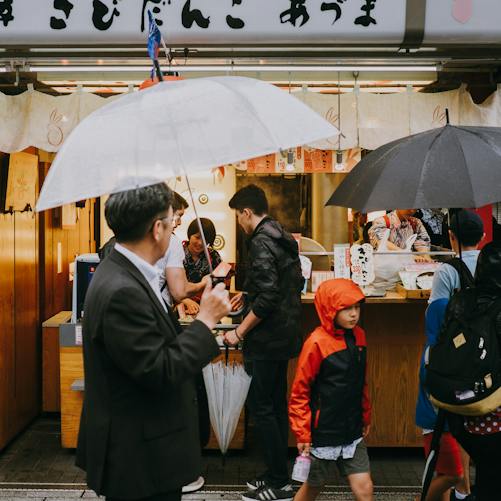
More than 1.6 million people were urged to evacuate as torrential rain, landslides and power cuts spread across the Tokyo region, disrupting flights, rail services and Asian Games events.

A major storm test for eastern Japan
Typhoon Dujuan swept along Japan’s Pacific coast on Monday, September 21, bringing a punishing combination of heavy rain, strong winds and landslide risk to the country’s most densely populated region. The storm’s center remained offshore for much of the day, but its broad circulation pushed moisture into the Kanto region and the Izu island chain, exposing millions of people to dangerous rainfall even without a direct strike on central Tokyo. By late Monday and early Tuesday, authorities were still warning that the hazard would not end simply because the storm’s core had moved away.
The Japan Meteorological Agency issued a Level 5 landslide special warning for Oshima in the northern Izu Islands, its highest category in the country’s newly reorganized five-level disaster warning system. The agency said conditions were sufficiently dangerous that a disaster might already have occurred in designated landslide zones and instructed residents to take immediate steps to protect life. Other parts of the Izu chain and areas of Tokyo, Chiba, Kanagawa and neighboring prefectures were placed under lower but still serious warnings for landslides, flooding and swollen rivers.
More than 1.6 million residents in and around the capital were urged to evacuate, according to Japan’s Fire and Disaster Management Agency as reported by Reuters and other international news organizations. Evacuation instructions in Japan are generally not enforced as mandatory orders in the way some countries use compulsory evacuation powers, but the scale of the advisories reflected the seriousness with which local authorities viewed the threat. In the most exposed locations, officials told residents who could no longer safely reach a shelter to move to higher floors or otherwise place distance between themselves and slopes, rivers and low-lying ground.
The developing human toll remained fluid into the night. AFP, citing Japanese media and local governments, reported that two people had been confirmed dead after landslides in Chiba and Kanagawa prefectures. Earlier official and media updates had carried lower casualty counts, illustrating how quickly information was changing as emergency crews worked through damaged areas. Authorities also reported injuries and residential damage in parts of Chiba, where landslides and floodwater affected roads, houses and local infrastructure.
Record rainfall on the Izu Islands
Oshima, an island south of Tokyo, became one of the clearest symbols of Dujuan’s rainfall threat. Government situation reports and Japanese weather data indicated that roughly 600 millimeters of rain fell there in a 24-hour period ending Monday afternoon, a September record for the observation point. That amount is significant not simply because of the headline total, but because repeated downpours saturate soil, increase pressure on slopes and raise the possibility that landslides can occur after the heaviest rain has already passed.
The warning was especially resonant on Oshima because island communities often have fewer evacuation routes and less redundancy in transport and emergency access than mainland urban areas. When roads are blocked by debris, ports become unsafe or flights are disrupted by wind, authorities can lose some of the flexibility available in a large metropolitan area. Japan’s disaster agencies therefore place heavy emphasis on early movement in such locations, particularly for older residents and people who may need assistance.
Japan’s weather agency warned that bands of intense rain could develop around the storm and produce sharp local differences in rainfall. Such bands can repeatedly pass over the same district, delivering extreme totals in a short period even while nearby areas experience less severe conditions. That pattern complicates both forecasting and public communication: a broad regional forecast can appear less alarming than the conditions actually experienced in the narrow zone under the heaviest rain.
The agency also stressed that landslide risk can remain elevated after rainfall weakens. Water that has already entered soil and fractured rock continues to move through slopes, and streams can remain swollen well after the storm center has shifted away. For residents and emergency managers, that means the practical end of a typhoon is not defined by the moment satellite images show the circulation departing. The recovery phase begins while residual hazards are still active.
Tokyo’s scale magnifies disruption
The Tokyo metropolitan area is one of the largest and most interconnected urban systems in the world. That density creates resilience in some respects: the region has extensive drainage works, sophisticated forecasting, strong building standards and multiple transport alternatives. But it also means that even geographically limited disruption can propagate quickly through commuting networks, airports, supply chains and public services. A suspended rail line can affect hundreds of thousands of journeys; a closed expressway segment can divert traffic into already crowded local streets; a disrupted airport can create delays far beyond Japan.
Dujuan arrived during Japan’s Silver Week holiday period, when leisure travel and family visits add pressure to the transport system. Hundreds of flights were cancelled. Japan Airlines and All Nippon Airways together scrapped at least 275 services in early tallies, while later government situation reports put the overall number of cancellations higher as conditions deteriorated. Haneda and Narita, the two principal airports serving the capital, faced widespread delays and disruption, leaving travelers to rebook or wait for improving weather.
Rail operators in Tokyo and surrounding prefectures suspended or reduced services on several routes as rain and wind intensified. Road closures were also reported where flooding, high waves or rainfall thresholds made travel unsafe. Japan’s transport companies are accustomed to pre-emptive suspensions during typhoons, a practice intended to reduce the risk of passengers and vehicles becoming stranded in dangerous locations. The approach can be frustrating for travelers, but it reflects a wider shift in Japanese disaster management toward acting before infrastructure fails rather than after.
Power outages added another layer of strain. Tens of thousands of customer accounts in the Tokyo Electric Power Company service area were without electricity at points during the storm, according to outage and situation reporting cited by Japanese and international media. Even relatively short outages can create serious difficulties during heavy rain, affecting pumps, communications, traffic signals, refrigeration and medical equipment. Utilities typically pre-position repair crews before a typhoon, but wind, flooding and landslide risk can delay access to damaged lines.
Events, business and daily life interrupted
The storm also disrupted major public events. The Tokyo Game Show, one of the world’s largest video game industry gatherings, cancelled its final day as organizers prioritized the safety of visitors, exhibitors and staff. The decision underscored how quickly severe weather can impose economic costs beyond immediate physical damage. Hotels, restaurants, retail businesses and transport providers all absorb losses when visitors change plans, while organizers face refunds, logistical expenses and reputational pressure to make safety decisions early.
Sport was affected as well. Organizers of the 20th Asian Games, being held in Aichi and Nagoya, altered the equestrian eventing schedule because rainfall from Typhoon No. 25 — Japan’s designation for Dujuan — left the cross-country course needing additional preparation. The official organizing committee said the cross-country and show-jumping components scheduled for September 22 and 23 would be rearranged, with starting times adjusted. The change came after weather had already complicated other competition planning around the Games.
The disruption is notable because mega-events operate on tightly compressed timetables involving athletes, broadcasters, security teams, volunteers, spectators and transport systems. Moving one competition can affect training schedules, venue staffing and television production. The Asian Games organizers had been preparing for severe weather before Dujuan’s arrival, but the episode demonstrates the growing operational importance of weather contingencies for major sporting events across Asia.
Prime Minister Sanae Takaichi’s planned departure for the United Nations General Assembly in New York was also delayed by several hours, according to Reuters. The delay was not itself a major national disruption, but it symbolized how the storm intruded into Japan’s diplomatic calendar at a moment when world leaders were converging on New York. It also illustrated the practical challenge leaders face during emergencies: maintaining international commitments while ensuring that domestic authorities remain visibly engaged with a developing crisis.
Why a storm offshore can still be dangerous
Dujuan’s impact is a reminder that typhoon risk is not determined solely by whether the center of a storm crosses land. The most destructive element can be rain generated far from the eye, particularly when moist air is forced upward by local terrain or interacts with other weather systems. A storm passing parallel to the coast may therefore trigger deadly flooding and landslides without producing the kind of dramatic landfall associated with the strongest tropical cyclones.
Eastern Japan is especially vulnerable to that combination. Mountainous terrain rises close to heavily populated coastal plains, while urban development places homes, roads and railways in narrow valleys and along river systems. Intense rainfall can move rapidly from hillsides into channels and drainage networks. In cities, paved surfaces reduce the amount of water absorbed into the ground, increasing runoff and the risk of flash flooding in underpasses, basements and low-lying neighborhoods.
Japan has spent decades building flood-control infrastructure, from river levees and diversion channels to underground reservoirs and enormous stormwater facilities beneath the Tokyo region. These systems have substantially reduced risk, but no infrastructure is limitless. The objective is therefore not to eliminate floods — an impossible standard in a country exposed to typhoons and steep terrain — but to lower the probability that extreme rainfall becomes a mass-casualty event.
That philosophy also explains the increasingly detailed warning system. In 2026, Japan reorganized several weather warnings so that the alert level is integrated more directly into the name of the warning. Level 4 signals that all residents in dangerous areas should evacuate, while Level 5 indicates a life-threatening situation in which immediate safety measures are required. The system is designed to make the expected response clearer than technical meteorological terminology alone.
The challenge of evacuation in a megacity
Large evacuation figures can be misleading if interpreted as meaning that every person covered by an advisory physically leaves home. Japanese authorities often issue warnings to broad administrative areas that contain both high-risk and relatively safe zones. Residents are expected to use hazard maps, municipal instructions and local knowledge to determine whether they need to move to a shelter, relocate vertically within a building or remain in a structure outside the danger zone.
That approach reflects the reality that moving millions of people at once can itself create danger. Roads can become congested, shelters can be overwhelmed and residents may expose themselves to wind, floodwater or landslides while trying to travel. The safest action depends on the hazard and the timing. A person in a low-lying wooden home beside a river faces different risks from someone on an upper floor of a modern reinforced building away from slopes.
Japan’s public guidance therefore places increasing emphasis on “evacuation” as a broader concept than simply entering a public shelter. Staying with relatives in a safer district, using a hotel, moving to a higher floor or leaving an area before severe weather begins can all be valid protective actions. The goal is to reduce exposure rather than to maximize the number of people inside designated evacuation centers.
The approach depends heavily on communication. Mobile alerts, television, local loudspeakers, municipal websites and social media all carry warnings, but the system must reach people with different languages, disabilities and levels of digital access. Tokyo’s international population and the presence of tourists create an additional challenge. During a storm, clear multilingual messaging becomes part of the critical infrastructure of a global city.
Transport resilience under pressure
Japan’s rail network is often cited as a model of reliability, yet extreme weather exposes the trade-off between punctuality and safety. Operators monitor wind speeds, rainfall totals, river levels and slope conditions, and services can be slowed or suspended when thresholds are crossed. A train may be physically capable of running in heavy rain while still being halted because the risk of a landslide or flooded track ahead is judged unacceptable.
The same logic applies to aviation. Typhoons affect not only aircraft in the air but also ground operations. Baggage handling, fueling, catering and maintenance all require personnel to work outside. Strong crosswinds can exceed safe limits for takeoff or landing, while lightning and standing water can slow airport operations. Airlines therefore cancel flights before conditions peak, both to protect passengers and to prevent aircraft and crews from being stranded in the wrong place after the storm.
The recovery can take longer than the weather event itself. Aircraft schedules are tightly linked, and one cancellation can leave a plane unavailable for the next planned route. Rail operators must inspect tracks, slopes, bridges and electrical systems before reopening. Roads affected by debris may require geotechnical checks. The practical economic impact of Dujuan will therefore extend beyond the hours of the heaviest rainfall.
For international travelers, the episode also highlights the importance of redundancy. Tokyo is served by two major airports and an extensive rail network, but a regional weather event can affect several modes simultaneously. Airlines, hotels and travel insurers often activate special policies during typhoons, allowing changes without normal penalties. The scale of Monday’s disruption meant those contingency systems were being tested across a large number of passengers at once.
A familiar hazard, but never a routine one
Japan experiences typhoons every year, especially from late summer into autumn. Familiarity, however, does not make the threat routine. Each storm interacts differently with sea temperatures, atmospheric steering currents, terrain and existing soil conditions. A weaker storm can produce catastrophic rain if it moves slowly or channels moisture into the same area for hours, while a stronger typhoon can cause less damage if it passes quickly or affects sparsely populated regions.
Dujuan also arrived in a year when Japan had already experienced significant severe-weather events. Earlier storms brought flooding, transport paralysis and power outages to several regions. Repeated events matter because recovery capacity is not infinite. Local governments, utilities and emergency services must replenish equipment, repair infrastructure and manage fatigue among personnel. Households and small businesses can face repeated insurance deductibles, cleanup costs and lost income.
The Izu Islands are particularly accustomed to tropical weather, but their geography increases the consequences of infrastructure damage. Ports and airports are lifelines for food, fuel, medical supplies and visitors. A slope failure that blocks a road can isolate communities within an island, while rough seas can delay ferry operations. Disaster planning therefore requires supplies and shelter capacity to be positioned before conditions make transport impossible.
On the mainland, the challenge is different: scale rather than isolation. Chiba, Kanagawa and Tokyo contain dense residential districts, industrial zones, major ports, airports and some of the world’s busiest transport corridors. Even localized flooding can produce nationwide consequences if it affects logistics hubs, distribution centers or rail lines connecting the capital to other regions.
Climate change and the rainfall question
Dujuan will inevitably become part of the wider debate over climate change and extreme weather, but attribution requires care. No rapid scientific study available at the time of writing has established how much human-caused warming affected this particular storm. Tropical cyclone behavior depends on multiple factors, including ocean heat, atmospheric moisture, wind shear and large-scale circulation, and the relationship between warming and the frequency of storms is not as simple as saying that every typhoon is caused by climate change.
What is clearer is that Japan’s own climate assessments show an increase in the frequency and intensity of extreme heavy-rain events. The Japan Meteorological Agency and the Ministry of Education, Culture, Sports, Science and Technology highlighted that trend in their Climate Change in Japan 2025 assessment. Research on previous storms has also found that historical warming increased the rainfall associated with some individual events, including Typhoon Hagibis in 2019.
Those findings matter for infrastructure planning. Flood-control systems are often designed using assumptions based on historical rainfall statistics. If the probability distribution changes, an event once treated as exceptionally rare can become more plausible within the lifetime of a bridge, drainage tunnel or housing development. Engineers and local governments then have to reconsider design standards, maintenance schedules and land-use policies.
Adaptation does not depend on knowing precisely how climate change altered one storm. Authorities can respond to the observed rise in intense rainfall by improving drainage, slope stabilization, forecasting, evacuation planning and building resilience. Dujuan’s record or near-record rainfall in parts of eastern Japan reinforces the practical importance of that work, regardless of the eventual scientific assessment of the storm’s climate signal.
The economic cost is broader than damage estimates
Early disaster reporting tends to focus on visible destruction: flooded houses, landslides, damaged roads and broken power lines. But the economic impact of a typhoon is much wider. Lost working hours, cancelled events, disrupted tourism, delayed freight, spoiled inventory and supply-chain interruptions can add significantly to the final cost. Businesses outside the directly affected area may also suffer if employees cannot commute or deliveries fail to arrive.
Tokyo’s role in Japan’s economy magnifies those indirect effects. The metropolitan area is a center for finance, corporate headquarters, technology, media and consumption. A short disruption does not threaten the national economy on its own, but repeated weather shocks can accumulate into higher operating costs. Companies invest in backup power, distributed data centers, remote-work capability and alternative logistics partly because extreme weather is an operational risk rather than only a humanitarian one.
Insurance is another important part of the picture. Japan has a mature property and catastrophe insurance market, but severe weather can generate large claims for homes, vehicles and businesses. Insurers respond by adjusting pricing and risk models, which in turn affects household and corporate costs. If intense rainfall becomes more common, the question shifts from whether insurance is available to whether coverage remains affordable in the most exposed areas.
Public finances also absorb a share of the burden. Local and national governments fund emergency response, infrastructure repair and support for affected residents. Japan’s extensive disaster-management system reduces losses but requires continuous investment. The recurring choice is whether to spend more before disasters on resilience or more after disasters on reconstruction. Dujuan adds another data point to that policy calculation.
Urban water systems and the next resilience test
Heavy rain in a metropolitan area is ultimately a problem of capacity: how quickly water arrives, how much space rivers and drains can absorb, and whether pumps and storage systems continue functioning when the weather is at its worst. Tokyo’s flood-control architecture is unusually sophisticated, including underground diversion tunnels, reservoirs and river-improvement projects designed to keep extreme rainfall away from densely built districts. Those systems reduce risk substantially, but the engineering challenge changes when rainfall exceeds historical design assumptions or falls intensely across multiple neighboring catchments at once.
The same is true of smaller municipalities in Chiba and Kanagawa, where local drainage networks may face a different set of constraints. Floodwater can overwhelm culverts, back up through streets or combine with debris from slopes. Maintenance therefore matters as much as headline infrastructure. Drainage channels have to be cleared, pumps tested and emergency generators maintained before typhoon season. A single blocked watercourse or failed pumping station can transform a manageable downpour into a neighborhood-scale emergency.
Urban planning also determines who bears the greatest risk. New development in flood plains, on steep slopes or near small rivers can increase exposure even if buildings themselves meet modern standards. Japan uses hazard maps extensively, but maps do not automatically move existing homes, businesses or transport corridors out of dangerous locations. Local governments have to balance housing needs, land values and economic activity against the cost of long-term adaptation.
Dujuan therefore offers a useful distinction between resilience and immunity. Resilience means the system can absorb disruption, protect lives and recover quickly. It does not mean every train runs, every flight departs or every neighborhood remains dry. In some cases, the most resilient decision is to close infrastructure before it is damaged, even when that closure creates short-term inconvenience and economic loss.
Supply chains beyond the storm zone
The international consequences of a storm around Tokyo are also shaped by Japan’s role in high-value manufacturing and regional logistics. Factories producing electronics, precision components, chemicals and automotive parts depend on tightly timed deliveries. Even when plants are not physically damaged, interrupted road or rail access can delay inputs and outbound shipments. Modern supply chains are efficient partly because they minimize inventories, but that efficiency leaves less room for prolonged transport disruption.
Air freight is especially sensitive to airport delays. Electronics, pharmaceuticals and time-critical industrial parts often move through passenger aircraft as belly cargo as well as dedicated freighters. When hundreds of flights are cancelled, the effect is not limited to stranded travelers. Cargo is rebooked, warehouse space tightens and delivery schedules can shift across international routes linking Japan with Southeast Asia, Europe and North America.
Ports face their own weather restrictions. High waves and strong winds can halt vessel movements, crane operations and pilot transfers even when port facilities themselves remain undamaged. Shipping lines may slow vessels or adjust arrival times to avoid the worst conditions, producing knock-on congestion after the storm passes. The disruption is usually temporary, but its cost rises when severe-weather events occur repeatedly within a short period.
For multinational companies, the lesson is not to predict the exact path of every typhoon but to design operations that can tolerate uncertainty. That can mean alternative suppliers, flexible inventories, backup transport routes, distributed data systems and clearer communication with customers. Dujuan’s passage through one of Asia’s most economically important regions shows why disaster planning has become a core business function rather than a specialist exercise reserved for emergency teams.
Lessons from Japan’s disaster culture
Japan’s approach to natural hazards has been shaped by repeated exposure to earthquakes, tsunamis, volcanic activity, floods and typhoons. Schools conduct disaster drills, municipalities publish detailed hazard maps and broadcasters devote extensive airtime to warnings. That culture can improve preparedness, but officials also worry about warning fatigue. When residents receive frequent alerts that do not result in catastrophic local damage, some may become less likely to act the next time.
The move toward clearer alert levels is intended partly to address that problem. A Level 5 warning is designed to communicate that ordinary caution is no longer enough. In Oshima, the JMA said the possibility that a landslide disaster had already occurred was extremely high. That wording is deliberately stark because officials want residents to understand that waiting for visual confirmation can be fatal.
At the same time, Japan’s experience shows why trust is crucial. Residents must believe that warnings are based on credible data and that authorities are not exaggerating risk unnecessarily. Meteorological agencies therefore publish detailed forecasts, radar imagery and explanations, allowing people to see how the threat is evolving. Transparency is as important as urgency in maintaining public cooperation over many storm seasons.
The system is not perfect. Older people living alone, migrants who do not read Japanese, people with disabilities and households without private transport can still face disproportionate risk. Local governments increasingly map those vulnerabilities and organize assistance, but a rapidly developing storm can expose gaps. The large evacuation advisories surrounding Dujuan will provide another test of how effectively those plans worked in practice.
What authorities will watch next
As Dujuan moves northeast and weakens or transitions away from a tropical system, the immediate focus will remain on residual rainfall, unstable slopes and swollen waterways. Emergency crews will assess damaged homes and roads, utilities will restore power, and transport operators will inspect infrastructure before returning to normal schedules. Officials will also refine casualty and damage figures as information from local governments becomes more complete.
The weather agency’s warnings will be especially important in areas where the rain has stopped but soil remains saturated. Landslides often occur after the most dramatic phase of a storm, when residents may feel that the danger has passed. River flooding can also peak downstream after local rainfall has eased, depending on the size of the catchment and the timing of runoff from upstream areas.
Attention will also turn to the Asian Games schedule and other large events. Organizers will need to determine whether venues, transport routes and outdoor facilities can safely resume normal operations. For athletes, postponements can affect preparation and recovery. For spectators, the bigger question is whether travel networks are fully restored and whether local authorities consider conditions stable enough for large crowds.
International travel will take time to normalize as airlines reposition aircraft and crews. Passengers displaced by cancellations may compete for limited seats on subsequent flights. That is a familiar pattern after major weather disruptions and one reason airlines often warn customers that operations have resumed does not mean all schedules have returned to normal.
A regional reminder of shared vulnerability
Dujuan is primarily a Japanese disaster, but its implications extend across East Asia. Typhoons regularly cross national boundaries, and the same storm system can threaten the Philippines, Taiwan, China, Japan or the Korean Peninsula at different stages of its life. Meteorological agencies share observations, satellite data and forecast information because no country can monitor the western Pacific in isolation.
The storm also demonstrates the economic interconnectedness of the region. Japan is a major hub for aviation, manufacturing, tourism and finance. Disruption around Tokyo can affect travelers and businesses across Asia, while shipping and supply chains are sensitive to high waves and port closures. Severe weather has therefore become part of the risk planning not only of emergency agencies but also of multinational companies.
For governments, the policy challenge is to strengthen resilience without assuming that engineering alone can control nature. Forecasting, land-use planning, infrastructure, public education and social support all play complementary roles. The most effective system is one in which residents receive reliable information early enough to act and have realistic options for reaching safety.
Japan has developed one of the world’s most sophisticated disaster-management frameworks precisely because it has learned, repeatedly and sometimes painfully, that preparation must be continuous. Dujuan’s passage along the Pacific coast is another test of that framework: not a single dramatic landfall, but a sprawling emergency in which rain, landslides, transport disruption and power failures interact across a huge metropolitan region.
The central lesson from Dujuan
The immediate story of Typhoon Dujuan is about rainfall and the danger it created for communities around Tokyo and the Izu Islands. But the wider lesson is about how modern societies manage low-frequency, high-impact risk. Japan’s warning systems, transport shutdowns and evacuation advisories can look excessive when viewed before the worst conditions arrive. Their purpose, however, is precisely to ensure that a storm does not have to become catastrophic before action begins.
By early Tuesday, the full scale of the damage was still being established. The confirmed human toll remained limited compared with some of Japan’s historic typhoons, but authorities had not declared the danger over. Landslides, flooding and infrastructure inspections would continue to shape the hours ahead, and casualty figures could change as isolated areas were checked.
For the millions of people who spent Monday monitoring alerts, changing travel plans, moving to safer locations or waiting through transport suspensions, Dujuan was already more than a weather forecast. It was a reminder that one of the world’s most technologically advanced and disaster-prepared countries remains exposed to the basic force of water, wind and unstable ground.
That exposure is unlikely to disappear. The practical question is whether each storm leaves behind better warnings, stronger infrastructure and clearer public understanding before the next one arrives. In Japan, where typhoon season is a recurring feature of life, the answer will shape not only disaster policy but also the resilience of cities, transport networks and communities across one of Asia’s most important economic regions.