John Healey’s Liverpool pitch links shipyards, procurement and domestic supply chains to a new growth strategy, but a £4.7 billion funding gap, high borrowing costs and costly energy will test whether rearmament can become a durable industrial revival.

Britain is trying to turn a security imperative into an economic strategy. At the Labour Party conference in Liverpool on Monday, Chancellor of the Exchequer John Healey is expected to place defence investment near the centre of the government’s attempt to revive growth, rebuild industrial capacity and create higher-value employment in regions that have struggled to attract large-scale private investment. The approach reflects a wider shift across Europe: military budgets that were once treated largely as a cost of national security are increasingly being framed as instruments of industrial policy, technology development and regional renewal.
The timing is significant. The United Kingdom is entering a period of sharply higher planned defence spending just as the public finances are under renewed pressure. Official data released last week showed that public sector borrowing reached £18.3 billion in August, £3.5 billion above the Office for Budget Responsibility’s forecast for the month. Borrowing in the financial year to August stood at £77.3 billion, £8.1 billion above the official forecast. Government debt remained just below £3 trillion, equivalent to 93.8% of gross domestic product. That leaves ministers trying to reconcile an ambitious reindustrialisation agenda with a fiscal position that provides little margin for policy error.
Defence is being presented as one of the few areas where those objectives might reinforce each other. The government argues that money committed to submarines, aircraft, drones, munitions, digital systems and military infrastructure can strengthen deterrence while also supporting domestic manufacturing, research, engineering and exports. The Ministry of Defence says its spending with UK industry rose by 3.2% in real terms to a record £34.1 billion in 2025/26. Direct spending with smaller companies reached £1.3 billion, while government estimates suggest defence expenditure with UK industry supported 274,000 jobs in 2024/25.
Whether that spending becomes the foundation of a broader industrial revival is a more difficult question. Defence procurement can sustain long production runs, specialist skills and capital-intensive plants, but it can also concentrate spending in a limited number of large contractors and regions. It can crowd in private investment when governments provide credible multi-year orders, yet it can also crowd out other public investment if budgets are financed by cuts elsewhere. The economic case will therefore depend less on headline spending totals than on procurement design, supply-chain depth, workforce capacity, productivity gains and the government’s ability to convert military demand into wider commercial capability.
Defence moves from security budget to growth policy
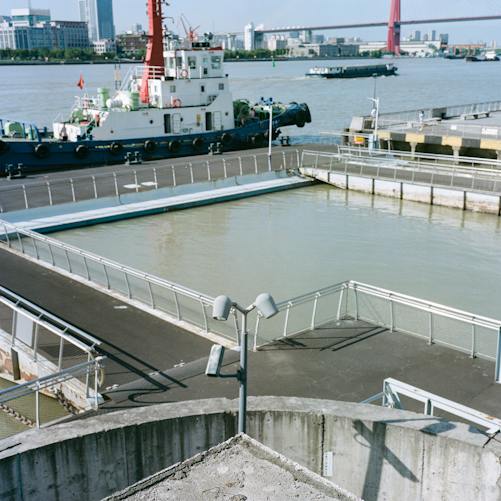
Healey’s conference message marks a deliberate change in the way the Treasury is talking about defence. Reuters reported that he will back companies investing in the sector and describe a new industrialisation drive in which British firms deliver major military projects. Among the examples is a plan for three new floating docks for submarines on the Clyde in Scotland. Such projects are intended to demonstrate that defence spending can anchor long-term investment in shipbuilding, advanced engineering and supporting services rather than functioning only as a transfer from the Treasury to the armed forces.
The political logic is clear. Britain’s growth performance has been weak enough for successive governments to search for sectors capable of generating investment at scale outside the most prosperous parts of London and the South East. Defence has several characteristics that make it attractive for that purpose. It is research-intensive, often requires highly skilled labour, depends on complex domestic supply networks and is supported by demand that can be more stable than many consumer markets. It is also an area in which the state is not merely a regulator but the principal customer, allowing ministers to influence where contracts are placed and how supply chains are structured.
The government’s language also reflects the changing security environment. NATO members are under pressure to devote a larger share of national output to defence, while Russia’s war against Ukraine and instability in the Middle East have exposed shortages in ammunition, air defence, drones and industrial surge capacity. Britain has committed alongside other NATO allies to reach 3.5% of GDP in core defence expenditure by 2035. The Defence Investment Plan says core NATO defence spending will rise to 2.7% of GDP from 2027/28, with the government committed to 3% in the next parliament. A rising spending trajectory creates a powerful incentive to ensure that as much of the additional demand as possible generates domestic economic value.
That does not mean every pound spent on defence automatically raises productivity or living standards. The value of the strategy depends on what is purchased, where it is produced and whether the investments generate capabilities that can be used elsewhere in the economy. Advanced materials, robotics, artificial intelligence, cyber security, precision manufacturing, aerospace engineering and power systems all have potential civilian applications. But spillovers are not guaranteed. They require links between prime contractors, smaller suppliers, universities, technical colleges and private investors, as well as procurement rules that reward innovation rather than merely reinforcing established incumbents.
A £298 billion investment programme creates industrial scale
The scale of the planned defence programme is substantial. The government’s Defence Investment Plan sets out nearly £298 billion of Ministry of Defence spending over the four years from 2026/27 to 2029/30. The annual departmental budget is projected to rise from £68.3 billion in 2026/27 to £79.1 billion by 2029/30. Within that framework, an additional £15 billion has been allocated to the investment plan, taking planned defence spending more than £60 billion above the baseline implied by the previous government’s 2024 budget assumptions.
The programme covers a broad range of sectors. More than £8 billion is allocated to the Global Combat Air Programme, the next-generation fighter project being developed with Italy and Japan. More than £63 billion is planned for the nuclear deterrent and related submarine programmes over four years. Around £11 billion is earmarked for munitions and weapons, including new production capacity and at least six energetics factories by 2030. More than £5 billion is designated for drones and autonomous systems, while nearly £2 billion is intended for a digital targeting network designed to integrate sensors, software and military decision-making.
For industry, the most important feature may be the duration rather than the total. Capital-intensive manufacturers are reluctant to invest in new factories, machine tools or training if government demand is episodic. A credible multi-year order book can change that calculation. It allows firms to justify expanding capacity, recruiting apprentices and developing new suppliers. In sectors such as shipbuilding, missile production and aerospace, where lead times stretch across years or decades, certainty is itself a form of economic support.
That is why the Clyde announcement carries symbolic weight. Floating docks for submarine work are not simply military infrastructure. They require large-scale steel fabrication, marine engineering, specialist maintenance, safety systems, project management and a network of subcontractors. If procurement is structured to maximise domestic participation, the spending can support activity far beyond the shipyard gates. Scotland already receives more than £2.5 billion a year in defence spending with industry, according to government figures, and the new dock programme is designed to reinforce the long-term role of the Clyde in Britain’s naval and submarine economy.
The government is also trying to connect defence procurement to exports. A £50 billion defence export facility announced earlier this year is intended to help British companies compete for overseas contracts. Export success matters because domestic military demand alone may not be sufficient to sustain efficient production at scale. If British firms can use government-backed orders as a platform to win international business, the economic effects could extend beyond the budget cycle and improve the trade balance. The challenge is that export markets are intensely political and competitive, with France, Germany, Italy, the United States, South Korea and other producers pursuing similar strategies.
Regional reindustrialisation is the core political promise
The strongest economic argument for defence-led industrial policy may be regional. The distribution of defence activity is markedly different from that of many high-value service industries. Shipyards, aerospace plants, electronics facilities and military bases are often located in towns and regions that have experienced decades of industrial restructuring. A government seeking to spread investment beyond London therefore sees defence as a potential mechanism for directing capital towards places where manufacturing capacity and technical skills still exist but where private investment has often lagged.
The latest Ministry of Defence figures show how unevenly the gains can be distributed. Northern Ireland recorded a 63% increase in defence spending with local industry in 2025/26. The East of England saw an increase of almost 25%, while the East Midlands rose by 21%. The South East remained the largest recipient in absolute terms, reflecting its concentration of major contractors and research activity, but the acceleration in other regions illustrates why ministers believe rising defence budgets can serve a broader economic purpose.
The employment argument is equally central. Government estimates indicate that defence spending with UK industry supported 274,000 jobs in 2024/25, up by 26,000 from the previous year. The wider Defence Investment Plan is forecast by ministers to generate nearly 60,000 additional direct and indirect industry jobs by the end of the decade, taking the number of jobs associated with defence spending above half a million. Those projections should be treated as forecasts rather than guaranteed outcomes, but they explain why the government is presenting defence not only as a response to geopolitical risk but as a labour-market policy.
For the strategy to deliver lasting regional gains, however, the jobs must be more than temporary construction positions attached to individual projects. The bigger prize is the creation of industrial ecosystems in which suppliers, training institutions and research centres develop around long-term programmes. Britain’s post-war aerospace and nuclear industries demonstrate how public procurement can sustain clusters for generations. The danger is that modern procurement, with globally dispersed supply chains and heavy reliance on a small group of prime contractors, may produce a thinner domestic multiplier than ministers expect.
Small and medium-sized companies will therefore be an important test. Direct Ministry of Defence spending with SMEs increased by £100 million to £1.3 billion last year, but that still represented only about 4% of direct spending with UK industry. Increasing the absolute value is positive, yet a defence-led industrial revival will be more convincing if smaller firms gain a larger role in electronics, software, autonomous systems, components and maintenance. SMEs are often where new technology enters a supply chain, but they can struggle with slow procurement cycles, security requirements and the financial burden of bidding for large government contracts.
The fiscal arithmetic is much less comfortable
The industrial ambition collides with an immediate Treasury problem. The public finances have deteriorated relative to official forecasts. August borrowing of £18.3 billion was 19% higher than a year earlier and the second-highest August figure on record in cash terms outside the pandemic period. The cumulative deficit for the first five months of the financial year exceeded the OBR forecast by £8.1 billion. The current budget deficit, which measures the gap between day-to-day spending and receipts, reached £51.9 billion over the same period, also above forecast.
Those numbers matter because the government has committed itself to fiscal rules that restrict how much it can borrow over the medium term. Rising gilt yields increase the cost of servicing existing and new debt, while inflation-linked spending pushes up welfare payments and some public-service costs. Reuters reported last week that economists estimate the government’s fiscal headroom has fallen markedly since the spring. Healey’s first budget on October 28 will therefore have to fund new priorities while persuading investors that the debt trajectory remains under control.
Defence is already part of that tension. The funding plan for the additional £15 billion of defence investment identifies £10.3 billion through departmental capital reductions, asset sales, Treasury support and other savings. A further £4.7 billion is explicitly left to be funded at the 2026 Budget. That unresolved amount is not large compared with the entire defence programme, but it is politically important because it forces the Treasury to show how the expansion will be paid for at a time when borrowing is already running ahead of expectations.
The plan also demonstrates that additional defence spending can have opportunity costs. Departments have been asked to contribute 1% of their capital budgets, while the Department for Transport and the Department for Energy Security and Net Zero are expected to make additional savings. The government argues that these changes can be achieved through efficiencies, delayed lower-priority projects and asset rationalisation. Critics will ask whether reductions in transport or energy investment could undermine the same industrial competitiveness the defence strategy is supposed to improve.
That is the central fiscal paradox of defence-led reindustrialisation. If defence spending is financed by higher borrowing, debt-service costs may rise and reduce room for other investment. If it is financed by cuts to infrastructure, skills or energy programmes, the economy may lose some of the foundations that manufacturers need. If it is financed by higher taxes, the government must weigh revenue needs against incentives for private investment. The strategy therefore works best when procurement generates measurable productivity gains and export revenues rather than relying solely on the redistribution of existing public spending.
Energy costs threaten the economics of the industrial push
A second constraint lies outside the defence budget: energy. Britain’s effort to rebuild manufacturing is occurring during another period of elevated oil and gas prices linked to conflict in the Middle East. Reuters reported late on Sunday that Brent crude moved back above $106 a barrel after hopes for a rapid easing of the Iran conflict weakened. Higher energy prices feed into inflation, transport costs and industrial power bills, and they can also increase government borrowing costs by changing expectations for interest rates.
The effect is particularly important for energy-intensive industries that sit within or alongside defence supply chains. Steel, chemicals, advanced materials and heavy engineering are sensitive to gas and electricity costs. Earlier this month, Ineos announced the mothballing of three chemical plants in Hull, citing high European energy prices as a major factor. The company argued that producers in the United States and China faced significantly lower energy costs. Whatever view is taken of the company’s policy prescriptions, the closure threat illustrates a basic problem: industrial strategy cannot be separated from the price of energy.
Defence procurement may provide demand, but demand alone cannot make a factory globally competitive if its operating costs remain structurally higher than those of foreign rivals. That matters for the government’s preference to buy domestically wherever British industry can deliver. A local-content strategy can support jobs and resilience, but if domestic suppliers face persistent cost disadvantages the Ministry of Defence may ultimately pay more for the same capability. The difference can be justified when security of supply is valuable, yet it still represents a cost that must be acknowledged.
The government’s broader industrial policy is therefore attempting to lower electricity costs for manufacturers while accelerating investment in domestic power generation. The logic is strategic as well as economic: less exposure to imported fossil fuels should reduce the transmission of geopolitical shocks into household bills, industrial costs and public finances. But new generation, grids and storage take years to build. In the near term, the defence-led industrial expansion must operate in an energy environment that remains volatile and potentially expensive.
Procurement reform will decide how much value stays in Britain
The success of the policy will ultimately be determined in procurement offices as much as in ministerial speeches. Britain has a long history of large defence programmes that delivered sophisticated equipment but also encountered delays, cost overruns or changing requirements. A substantial increase in spending does not automatically solve those weaknesses. Indeed, rapid budget expansion can amplify them if departments rush to place orders without improving project management, contract design and accountability.
The Defence Investment Plan allocates £900 million to procurement reform and transformation, including a £500 million fund for workforce and productivity improvements. Artificial intelligence is expected to play a role in administrative reform as well as operational capability. The government is also supporting joint procurement with allies through a multilateral mechanism. These measures are intended to shorten acquisition timelines and reduce waste, but their effectiveness will be judged by delivery: whether equipment arrives on schedule, whether unit costs remain controlled and whether suppliers have enough visibility to invest confidently.
A domestic preference adds another layer of complexity. Buying British can strengthen sovereign capability and reduce exposure to fragile international supply chains. It can also preserve skills that would be costly or impossible to recreate during a crisis. Yet procurement systems that protect incumbents too strongly can reduce competitive pressure and weaken innovation. The government must therefore distinguish between sectors where sovereign capacity is strategically essential and areas where international competition can deliver better technology or lower prices.
The most promising model may be one that uses guaranteed domestic demand to build competitive capacity rather than permanently insulating firms from competition. Long-term contracts can give companies confidence to invest, while export requirements and open competition at the component level can impose commercial discipline. Partnerships such as the Global Combat Air Programme with Italy and Japan show how Britain can combine domestic industrial benefits with international burden-sharing. Similar arrangements in missiles, drones, sensors and naval systems could spread development costs while keeping significant engineering work in the UK.
For investors, consistency will be crucial. Defence companies and their suppliers are being asked to expand production, recruit engineers and commit capital on the assumption that higher spending will persist for years. Political reversals would leave expensive capacity underused. The 2035 NATO commitment is designed to create a long horizon, but future budgets will still determine the pace of orders. A credible procurement pipeline may be more valuable to industry than periodic announcements of large aggregate spending totals.
Skills could become the tightest supply constraint
Money and contracts cannot create industrial capacity instantly. Many of the sectors targeted by the defence expansion already face shortages of experienced engineers, welders, technicians, software specialists and project managers. Submarine construction is especially demanding because nuclear engineering, safety certification and specialist fabrication skills take years to develop. Aerospace and missile programmes compete for similar pools of technical labour, while fast-growing civilian sectors such as energy and artificial intelligence are recruiting from the same workforce.
If demand rises faster than skills supply, the result may be higher wages and competition among contractors rather than a proportional increase in output. That could raise programme costs and reduce the real value of the defence budget. Training therefore becomes part of industrial strategy. Apprenticeships, technical colleges and university partnerships need to expand alongside procurement commitments, and companies need enough confidence in future orders to train workers who may not become fully productive for several years.
Regional policy again matters. Shipyards and defence plants can provide well-paid employment in towns where graduate opportunities are limited, but only if local training systems connect residents to those jobs. Otherwise firms may import scarce workers from elsewhere, reducing the local economic multiplier. The strongest defence clusters are likely to be those where employers coordinate with schools, colleges and local authorities to create clear pathways into engineering and technical occupations.
There is also a productivity opportunity. Modern defence production increasingly combines traditional manufacturing with software, automation, digital twins, additive manufacturing and data-intensive maintenance. Investment in those capabilities can raise output per worker and make British firms more competitive in civilian markets. The economic return is highest when technologies developed for military use diffuse into commercial sectors rather than remaining confined within secure programmes.
Europe is making the same industrial calculation
Britain is not pursuing defence-led reindustrialisation in isolation. Across Europe, governments are increasing military budgets while trying to capture more of the associated industrial value at home. Germany’s planned defence expansion is expected to generate tens of billions of euros in orders for private companies, including opportunities for the Mittelstand. France and Italy continue to link defence programmes to aerospace, electronics and naval champions. The European Union is developing procurement and industrial rules designed to increase regional production and reduce strategic dependence on external suppliers.
That creates both opportunities and tensions for Britain. UK defence companies are deeply integrated into European supply chains, and British firms remain significant participants in joint missile, aircraft and naval programmes. At the same time, Brussels is placing greater emphasis on European content in strategic industries. Similar debates are already visible in the automotive sector, where proposed “Made in Europe” rules have raised concerns in Britain about access to incentives and procurement. Defence could become another field in which security cooperation coexists with competition over where factories, jobs and intellectual property are located.
The economic challenge is to avoid turning reindustrialisation into a collection of incompatible national preference schemes. Europe’s security requirements are too large, and its industrial base too fragmented, for every country to manufacture every major system independently. Excess duplication would increase costs and slow production. Britain’s best route may be to secure leadership positions in selected technologies and platforms while remaining open to joint procurement and cross-border supply chains.
The Global Combat Air Programme offers one template. Britain, Italy and Japan share development of a sixth-generation combat aircraft while each seeks domestic industrial returns. The programme already supports thousands of UK jobs and is intended to sustain advanced aerospace capabilities well into the next decade. If managed effectively, such partnerships can combine scale with national industrial benefits. If managed poorly, competing requirements and work-share negotiations can create delays and cost escalation.
The real test is whether private capital follows public money
For defence spending to become a genuine reindustrialisation strategy rather than a larger public procurement programme, it must attract additional private investment. Companies need to build facilities, upgrade equipment, finance research and expand inventories. Banks and institutional investors need confidence that defence assets can generate stable returns. Venture capital and growth investors need pathways from small technology companies into government contracts. The state can create demand, but the scale of industrial renewal will depend on how much private capital responds.
There are signs of movement. European defence equities have attracted strong investor interest as governments raise military budgets, while private funds have become more willing to finance technologies with dual civilian and military applications. Policy changes have also reduced some of the stigma that previously limited environmental, social and governance-oriented investors from holding defence companies. Yet financing remains uneven, particularly for smaller firms that may need years of development before winning a substantial contract.
The government’s export facility and multi-year procurement commitments are designed partly to reduce that uncertainty. A manufacturer with a visible domestic order book and government support for overseas sales is a more attractive candidate for private investment than one dependent on occasional tenders. The same logic applies to suppliers. If prime contractors can provide long-term volume forecasts, smaller companies are more likely to purchase machinery and hire staff. Without that visibility, they may remain cautious even as ministers announce record spending totals.
Private investment is also a useful discipline on the strategy. Investors will assess whether individual projects have credible demand, manageable costs and export potential. Their willingness to commit capital can provide a market signal about which areas of defence industrial policy are commercially sustainable. The government should not expect every strategic capability to meet private-sector return thresholds—some sovereign capacities are maintained precisely because markets underprovide them—but broad participation by private capital would strengthen the economic case.
A growth strategy with unusually high execution risk
The attraction of defence-led reindustrialisation is understandable. It aligns a spending commitment Britain is likely to make for security reasons with a domestic economic agenda that needs investment, productivity growth and better-paid technical jobs. It offers large, visible projects that can anchor regional economies. It provides a rationale for rebuilding manufacturing capacity after years in which services dominated the growth model. And because allies are expanding budgets simultaneously, it creates export opportunities in a global market that is likely to remain strong for years.
But the strategy carries unusually high execution risk. Defence projects are technically complex, politically sensitive and vulnerable to changing threats. Their costs can rise quickly when specifications change or production volumes are altered. Skills shortages can delay delivery. Energy costs can erode competitiveness. Domestic-content rules can raise prices. Fiscal pressure can force governments to stretch schedules, which often increases total programme costs rather than reducing them. The same public spending that creates industrial demand can therefore disappoint if institutions cannot translate budgets into output efficiently.
There is also a macroeconomic question. If the economy is operating near capacity in specialised engineering sectors, a rapid increase in defence demand may initially shift workers and capital from other projects rather than create entirely new supply. That could be inflationary. The long-term answer is capacity expansion: more training, more factories, better infrastructure and higher productivity. But those improvements take time. The government must manage the transition carefully if it wants defence investment to raise potential growth rather than simply intensify competition for scarce resources.
The October 28 Budget will provide the first major test of credibility. Investors will look for a clear answer to the remaining £4.7 billion funding requirement in the Defence Investment Plan. Industry will watch for confirmation of multi-year procurement schedules. Local leaders will want detail on where projects and training programmes will be located. Bond markets will focus on whether the overall package is consistent with the fiscal rules. The government’s challenge is to satisfy all four audiences at once.
What a successful defence-industrial strategy would look like
Success should not be measured simply by whether defence spending rises. A stronger economic outcome would be visible in a broader set of indicators: higher manufacturing investment, rising productivity, increased exports, a larger share of contracts reaching competitive smaller suppliers, more apprenticeships and technical qualifications, and stronger employment in regions outside the traditional high-growth centres. It would also be reflected in shorter procurement timelines and fewer cost overruns, because industrial efficiency is as important as spending volume.
The £34.1 billion already spent annually with UK industry provides a substantial base. The question is whether the next phase deepens that base or merely enlarges existing contracts. If new submarine infrastructure creates supplier networks in Scotland, if drone procurement helps software and robotics firms scale, if munitions factories revive chemicals and advanced materials capacity, and if the combat-air programme sustains aerospace engineering and exports, the policy could have effects well beyond the defence sector.
The alternative is a narrower outcome in which spending rises but the domestic multiplier remains modest, large contractors absorb most of the gains, imported components account for a significant share of value, and fiscal pressure forces reductions in complementary infrastructure. That would still produce military capability, which is the primary purpose of defence expenditure, but it would fall short of the wider economic promise now being attached to the programme.
Britain is therefore making two bets at the same time. The first is strategic: that a more dangerous international environment requires sustained investment in military capability and industrial resilience. The second is economic: that the same investment can help repair a growth model weakened by low productivity, regional imbalance and insufficient capital formation. The first bet may be unavoidable. The second depends on policy design.
Healey’s Liverpool speech will place that economic bet in the foreground. Shipyards, submarine docks, weapons plants and advanced technology programmes are being asked to do more than strengthen national security; they are being asked to become engines of a new industrial economy. With public borrowing above forecast, energy costs elevated and a major budget only a month away, the government has little room for waste. If defence spending can crowd in private capital, widen supply chains and build transferable skills, it could become one of the most consequential industrial policies Britain has attempted in decades. If those conditions are not met, the country may discover that a larger defence budget is easier to announce than a genuine industrial revival is to deliver.