A five-year Raytheon contract to accelerate AMRAAM output reflects how Ukraine, the Middle East and NATO’s rearmament are turning interceptor production into a strategic contest of industrial endurance.
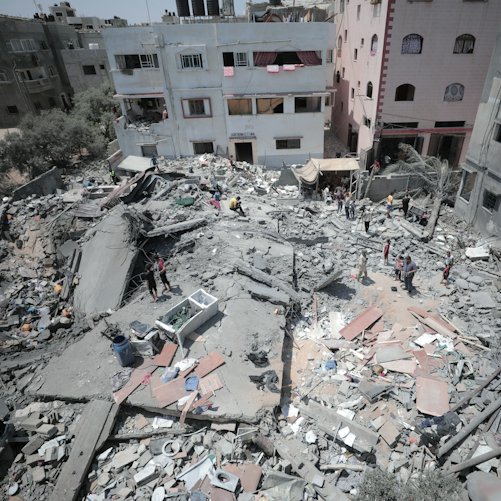
The announcement landed against an operational backdrop that explains why a missile procurement decision in the United States now belongs in the same strategic conversation as Russian drone attacks on Ukrainian cities. On September 28, Reuters reported that Russia struck Kyiv and other Ukrainian locations with a large wave of drones, including faster jet-powered types that Ukrainian officials say are harder to intercept. President Volodymyr Zelenskyy said nine people were killed nationwide and more than 80 were injured; Reuters separately reported early on September 29 that explosions were again heard in Kyiv. Those casualty figures and the stated interception performance came from Ukrainian authorities and were not independently established in full by Reuters. What is indisputable is the strategic pressure: each new generation of one-way attack drone, cruise missile or ballistic threat forces defenders to decide which interceptor to fire, how many to reserve, and which cities, air bases, logistics hubs and power systems must receive priority.

A contract measured in years, not sorties
On September 28, RTX said its Raytheon business had received a five-year multiyear contract with two option years valued at up to $20.7 billion to accelerate production of the Advanced Medium-Range Air-to-Air Missile, or AMRAAM. Reuters described the award as provisional because the full multiyear commitment still depends on future congressional appropriations. That distinction matters. The headline number is not a single cheque already spent; it is a framework intended to give the manufacturer and its suppliers enough visibility to invest in people, tooling, component capacity and factory throughput. In wartime industrial policy, predictability is itself a capability. A contractor that expects only one-year purchases has less incentive to add a second source for a difficult component, expand a line or carry the inventory needed to smooth disruptions. A multiyear signal changes those calculations even before the last dollar is appropriated.
RTX says the programme is designed to support annual production of at least 1,900 AMRAAMs, a level far above the procurement quantities that defined the pre-war era. The company also says it nearly doubled AMRAAM production in 2025 compared with 2024. Those are corporate statements, not independent audits of every delivered missile, but they are consistent with a broader pattern visible across the Western defence sector: governments are using longer contracts and larger ceilings to persuade companies to shift from peacetime efficiency toward sustained surge capacity. The Pentagon’s fiscal 2026 weapons budget book, for example, planned procurement of 534 AMRAAMs for the Air Force and Navy in that fiscal year. The gap between annual procurement figures of that scale and a future production objective of at least 1,900 illustrates the magnitude of the industrial pivot.
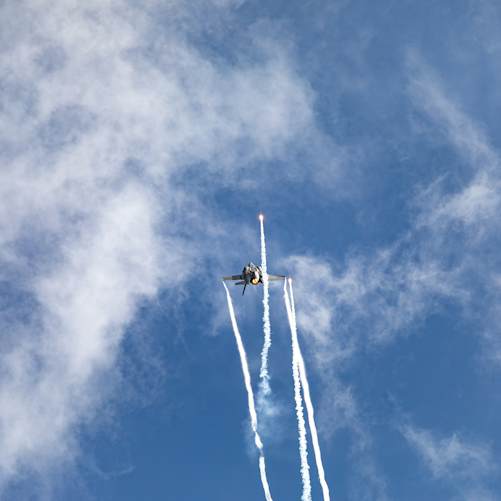
The strategic meaning is larger than the missile itself. AMRAAM is a shared munition across air forces and ground-based air defence. It equips fighter aircraft, but it is also the principal interceptor associated with NASAMS, the networked surface-to-air system fielded by the United States and numerous partners. That dual role gives the missile unusual importance in a period when states are simultaneously preparing for high-end air combat, defending cities against long-range attack and trying to protect scarce stocks for contingencies beyond Europe. A missile produced for one mission can therefore influence readiness in another. The problem facing planners is not simply whether a weapon works; it is whether enough can be manufactured, stored, transported and replenished at a rate compatible with years of conflict rather than days of combat.
Ukraine is exposing the arithmetic of air defence
Ukraine has become the clearest demonstration of the mathematics behind the new contract. Russian forces have repeatedly mixed cheap one-way attack drones with more expensive missiles, reconnaissance systems and decoys in an effort to exhaust Ukrainian sensors and interceptors as well as to penetrate the defended area. On September 28, Reuters reported that Ukrainian officials said 90 of 120 drones in one attack were jet-powered and that the interception rate against the broader wave was 57 percent. That figure should be read as an official Ukrainian account rather than an independently verified technical assessment. Even so, the reported appearance of faster, higher-flying jet drones reinforces the operational trend: attackers adapt to the defensive layer, and defenders must then change sensors, interceptor tactics, electronic warfare and the mix of weapons they are willing to expend.
NASAMS occupies an important middle layer in that mix. The U.S. Army describes the system as a distributed, networked air-defence architecture whose missiles include AMRAAM. Washington first contracted for additional NASAMS batteries for Ukraine in 2022, and by January 2025 the U.S. State Department said the United States had committed 12 NASAMS systems and munitions to Kyiv. That historical figure should not be treated as a precise current inventory: systems may be added, rotated, damaged, repaired or integrated with other national contributions. The more durable point is that Ukraine has years of operational experience with a weapon family that also protects allied airspace elsewhere. Every Ukrainian engagement therefore has consequences for a transatlantic supply chain, because the missile that destroys a threat over Ukraine is drawn from the same industrial ecosystem that must also support U.S. and NATO readiness.
Air defence is also an economic contest. A defender does not want to fire a premium missile at every low-cost drone, but refusing to engage can allow a cheap air vehicle to destroy infrastructure worth millions, kill civilians or force a power plant, data centre or railway node offline. The rational response is a layered architecture: guns, electronic warfare, mobile teams and lower-cost interceptors for simpler threats; medium-range systems such as NASAMS for more demanding targets; and high-end systems such as Patriot for ballistic and advanced missile threats. Yet layers only work if each tier has depth. A shortage at one level pushes more engagements onto another, often more expensive, level. That is why industrial output rather than the nominal range of a missile increasingly defines real-world defensive capacity.
The Middle East has turned a European shortage into a global one
The United States is not replenishing AMRAAM inventories for Ukraine alone. Reuters reported that American weapons stocks have also been strained by U.S. military operations in Iran and by the flow of weapons to allies in the Middle East. That makes the current production drive a global allocation problem. The same U.S. industrial base must support air defence in Europe, maintain forces in the Middle East, meet foreign military sales, train units and preserve war reserves for a possible crisis in the Indo-Pacific. In such a system, one theatre does not consume an isolated stockpile. It competes for motors, seekers, electronics, explosives, skilled labour and final assembly slots with every other customer using the same family of weapons.
This is why the $20.7 billion ceiling should not be interpreted as a straightforward transfer of missiles to Ukraine. The contract serves U.S. Air Force and Navy requirements as well as international customers, and RTX says AMRAAM is fielded by 44 countries. Some future production may replenish U.S. stocks, some may satisfy foreign orders, and some may support new demand that has not yet been publicly allocated. The precise distribution will depend on appropriations, contracts, configuration, export approvals and military priorities. For Kyiv, therefore, higher factory throughput is necessary but not sufficient. Availability also depends on political decisions about who receives missiles, in what sequence and whether the variant produced is compatible with the receiving system.
The same logic applies to the broader interceptor market. In July, Lockheed Martin announced a multiyear Patriot PAC-3 Missile Segment Enhancement award whose total potential value reached $58.62 billion, following an earlier first-year action. Reuters reported that the arrangement was designed to drive production toward much higher annual levels. The Pentagon has pursued similar long-term frameworks for Tomahawk and other critical munitions. Together, these programmes show a strategic conclusion taking hold in Washington: stockpiles sized around short, intense campaigns are inadequate when multiple theatres can demand sophisticated weapons at the same time and when a major land war can last for years.
AMRAAM’s importance comes from flexibility—and that creates competition
AMRAAM began as an air-to-air weapon, and that remains central to its value. Modern fighters need beyond-visual-range missiles that can engage manoeuvring aircraft in contested electronic environments. But the missile’s adaptation to NASAMS created a second strategic function: defending fixed and mobile assets from the ground. In practical terms, the same production line can serve aircraft that protect NATO airspace and launchers that defend a capital or logistics hub. Flexibility is attractive to procurement planners because it creates commonality, but commonality also concentrates demand. When dozens of countries rely on one interceptor family, a production delay or supplier bottleneck can propagate across multiple air forces at once.
That pressure has already altered earlier procurement structures. A 2025 U.S. Defense Department contract for AMRAAM production Lots 39 and 40 listed foreign military sales customers across Europe and the Indo-Pacific and included Ukraine among them. The award, worth up to $3.5 billion at the time, was significant by historical standards, but the new 2026 ceiling is many times larger. The comparison should not be read as a simple increase in unit price; the contracts cover different periods, quantities, support elements and options. It is more useful as evidence that the U.S. government is moving from batch procurement toward industrial-scale commitments intended to reshape the capacity of the supplier network.
For military planners, the operational question is whether that capacity arrives before demand peaks. Factories cannot instantly convert contract value into finished missiles. Rocket motors require energetic materials and specialised manufacturing. Seekers and guidance electronics depend on qualified components. Warheads, batteries, control surfaces, test equipment and secure software processes all have their own suppliers and quality requirements. Expanding output can require new machines, new buildings, new environmental permits and a trained workforce. Even when final assembly space exists, a shortage of one component can limit the whole line. The industrial race therefore has the same logic as the battlefield: the system is constrained by its weakest node.
Why Congress still matters after a $20.7 billion announcement
The most important caveat in the contract is fiscal rather than technical. Reuters reported that industry executives have warned Congress has not yet appropriated all the funding needed to support the full multiyear commitment. RTX itself described the award as valued at up to $20.7 billion over five years with two option years. Those formulations mean the political process is still part of the production equation. A company can plan against a long-term framework, but the pace at which it hires workers, signs supplier agreements or builds facilities will be influenced by how credible future funding appears.
This tension is familiar in defence acquisition. Governments want contractors to invest ahead of demand so they can deliver faster in a crisis; contractors want evidence that demand will persist long enough to recover the cost of that investment. Multiyear procurement is designed to bridge the gap by offering a predictable order stream. Congress, however, retains constitutional authority over appropriations, and lawmakers may change priorities, impose conditions or fund less than an announced ceiling. For readers assessing the contract, the correct interpretation is therefore neither that the money is imaginary nor that the entire sum is guaranteed. It is a strategic procurement mechanism whose effectiveness depends on sustained political follow-through.
The distinction also matters for allies. European governments cannot assume that an American contract automatically shortens every delivery queue. U.S. services will protect their own readiness requirements, while foreign customers operate through procurement and export processes that can take years. A larger production base should reduce pressure over time, but the near-term benefit may be uneven. The strategic advantage is that a factory network capable of producing many more missiles annually creates options. It can refill war reserves faster after a crisis, support surge deliveries to an ally, and reduce the risk that one theatre consumes stocks needed to deter another.
Europe is being drawn into the production architecture
The industrial response is no longer confined to U.S. territory. At NATO’s July summit in Ankara, Secretary General Mark Rutte highlighted new transatlantic industrial cooperation intended to produce or sustain American-designed capabilities in Europe, including AMRAAM. RTX separately said it had begun feasibility studies with the U.S. government and several NATO countries to qualify additional European suppliers for priority AMRAAM components. The company said the objective was to expand capacity, speed deliveries and make the supply chain more resilient. Reuters reported that discussions involved a group of allies seeking to move toward European co-production.
This shift addresses several strategic problems at once. First, a larger pool of qualified suppliers reduces dependence on a small number of U.S. plants. Second, manufacturing in Europe can shorten transport and maintenance chains for NATO customers. Third, allied investment makes the political burden of rearmament more distributed. And fourth, co-production can preserve U.S. capacity for American forces without forcing European states to abandon the systems on which they already depend. The challenge is that industrial sovereignty and standardisation do not always pull in the same direction. Governments want national jobs and supply security, while militaries benefit from common weapons and interchangeable logistics.
For Ukraine, European production could eventually be as important as additional U.S. output. Geography matters in a long war. A missile component manufactured, repaired or stocked closer to the eastern flank can move through a shorter logistics chain than one that must cross the Atlantic. Yet the word eventually is essential. Feasibility studies do not equal a running production line, and qualifying a second supplier for safety-critical missile components is deliberately slow. Every part must meet demanding tolerances and traceability standards. The political announcement can be made in a day; industrial replication takes years.
The cost-exchange problem is forcing a new interceptor hierarchy
Russia’s use of large numbers of drones has made a basic problem unavoidable: the defender can win the engagement and still lose the campaign if each interception is financially or industrially unsustainable. That does not mean expensive missiles are being wasted whenever they destroy cheaper targets. If a drone is headed toward a command post, power transformer, ammunition depot or apartment block, the value of the protected target can dwarf the price of the interceptor. The problem emerges at scale, when hundreds of low-cost threats repeatedly force the defender to choose between firing a scarce missile and accepting risk.
Ukraine’s answer has been to diversify. Mobile anti-aircraft teams, electronic warfare, interceptor drones, conventional guns and Western surface-to-air systems all occupy different points on the cost and capability spectrum. Ukrainian officials have said they are testing new interceptors against Russia’s faster jet-powered drones. Such claims should be treated as statements from a combatant government unless independently verified, but they fit a broader technological pattern visible across the war: both sides are constantly trying to push the opponent into an unfavourable cost exchange. Russia modifies drones to fly faster or higher; Ukraine seeks cheaper ways to destroy them; Russia then changes routes, altitude, signatures or timing.
AMRAAM’s role in that ecosystem is therefore not to become the answer to every drone. Its value lies in preserving a capable medium-range layer for targets that justify it while lower-cost systems absorb simpler threats. The more reliable that lower tier becomes, the more AMRAAMs can be reserved for cruise missiles, fast drones, aircraft and other demanding targets. Conversely, if cheaper layers are saturated or defeated, NASAMS and other missile systems may have to do more work. Industrial production and tactical innovation are thus inseparable. A missile factory can buy strategic endurance, but only if doctrine ensures the weapon is spent where its performance matters most.
The battlefield is changing faster than factories can
The Russian strike campaign is also a reminder that the interceptor being mass-produced today must remain useful against a threat that is changing during the production cycle. Reuters reported that Ukraine has recently faced faster, higher-flying jet-powered drones and that new interceptors are being tested in response. The exact technical characteristics of those Russian systems are still contested and evolve between models. What matters strategically is the adaptation cycle. A production expansion that takes several years risks delivering large quantities of a missile optimised for yesterday’s threat unless software, seekers and integration pathways can be updated along the way.
RTX emphasises that current-generation AMRAAM incorporates advanced processing and software that can be updated to respond to emerging threats. That is a corporate performance claim, but modular software and electronics are increasingly important because they allow capability improvements without redesigning every mechanical element. The same principle applies to launchers and sensors. NASAMS is valuable partly because it is networked: radars, command nodes and launchers can be configured as an architecture rather than a single self-contained vehicle. That gives operators more choices about how to detect and engage targets, but it also makes communications resilience and data quality critical.
Industrial policy must therefore fund more than metal. Expanding missile output without expanding test capacity, software engineering, secure electronics supply and operator training would solve only part of the problem. Likewise, producing interceptors without sufficient radars or command-and-control networks can leave missiles underused. The emerging lesson from Ukraine is that air defence is a system-of-systems contest. The attacker tries to find the seams between sensors, decision-makers and weapons. The defender must keep each link functioning under physical attack, cyber pressure, electronic interference and the constant attrition of hardware.
A procurement race can strengthen deterrence—but it can also reveal priorities
Large missile contracts are often described as responses to shortages, but they are also signals. By committing to a production objective measured in thousands of AMRAAMs per year, Washington is telling allies, industry and potential adversaries that air superiority and air defence are long-term priorities. The same is true of the Patriot expansion. Deterrence depends partly on demonstrating that an opponent cannot simply wait for Western stocks to run out. A credible replenishment pipeline complicates any strategy based on exhausting a coalition through prolonged conflict.
At the same time, production choices reveal what governments fear most. AMRAAM and Patriot investments point to a world in which aircraft, cruise missiles, ballistic missiles and drones are expected to remain central threats. They also reflect the requirement to protect air bases, ports, command centres, energy infrastructure and cities while preserving aircraft for offensive and defensive missions. The emphasis on interceptors is not a prediction that every future war will resemble Ukraine. It is an acknowledgement that the ability to survive repeated long-range attack has become a prerequisite for almost every other form of military power.
This logic extends beyond Europe. A U.S. force preparing for a high-end Pacific contingency may need enormous stocks of air-to-air missiles, while Middle Eastern partners seek the same weapons for air defence and NATO members seek them for both aircraft and ground-based systems. The resulting competition can create political friction when urgent wartime requests collide with alliance-wide readiness. Higher production is the most sustainable way to reduce that friction, but until the new capacity is fully operational, allocation decisions will remain strategic decisions. The missile that goes to one customer is, at least temporarily, unavailable to another.
What the contract does—and does not—change for Ukraine now
For Ukraine, the contract’s immediate effect is primarily strategic confidence rather than instant battlefield abundance. A factory expansion announced in late September cannot fill launchers overnight. Kyiv’s near-term defensive position will still depend on existing stocks, previously contracted deliveries, allied transfers, repair rates and how effectively its layered network uses each weapon. Current Russian attacks underline that time gap. The September 28 strike damaged civilian and commercial sites in several regions, according to Ukrainian officials cited by Reuters, and early September 29 brought another warning in Kyiv. Higher production in 2027 or beyond does not protect a building under attack today.
But long wars are shaped by the expectation of future supply. If Ukrainian commanders and allied governments believe the interceptor pipeline will strengthen, they can plan force structure, training and procurement around systems such as NASAMS with greater confidence. European governments can also justify investments in launchers and radar networks if they believe the ammunition base will grow rather than remain permanently scarce. Conversely, if appropriations stall or supplier bottlenecks prevent the announced production increase, the gap between launcher capacity and missile availability could widen.
The correct conclusion is therefore conditional. The $20.7 billion AMRAAM framework is evidence that Washington and industry recognise the scale of the replenishment problem and are attempting to move from emergency substitution toward sustained production. It is not proof that shortages have been solved. The next indicators will be less dramatic than the headline: appropriations enacted by Congress, supplier qualification, factory output, delivery rates and the extent to which European co-production becomes real. Those measures will determine whether the contract becomes an industrial turning point or merely an ambitious ceiling.
The war is becoming a contest between adaptation and replenishment
The broader significance of the AMRAAM award lies in the collision between two different clocks. The battlefield clock runs in hours and days. Russia modifies a drone, Ukraine changes a defensive tactic, an air-defence battery relocates, a power substation is repaired, a new route is tested the next night. The industrial clock runs in months and years. Suppliers qualify new processes, workers are trained, buildings are expanded and multiyear contracts move through appropriations. A coalition that cannot connect those clocks risks having technically excellent weapons in quantities too small to influence a protracted war.
The United States and its allies are now trying to close that gap. The AMRAAM contract, the Patriot expansion and European co-production initiatives all point toward a more distributed and durable missile economy. None removes the need for cheaper interceptors, better electronic warfare or tactical innovation. In fact, mass production of expensive weapons makes those complementary solutions more important, because every high-end interceptor preserved by a cheaper defensive layer increases the endurance of the whole system.
For Russia and other potential adversaries, the strategic question is whether Western production can expand faster than offensive arsenals and tactics can adapt. For Ukraine, the question is more immediate: whether enough defensive depth can be maintained through another cycle of strikes while new capacity comes online. The September 28 contract does not answer either question. It does, however, mark a recognition that air defence is no longer a niche procurement category. It is becoming one of the central industrial measures of military power in an era of persistent missile and drone warfare.
Stockpiles are political reserves as well as military ones
Missile inventories also have a political function that is easy to miss when discussion focuses on technical performance. A government that believes its reserves are thin may become more cautious about transferring weapons to an ally, even when the military case for the transfer is strong. The uncertainty is not only about the next battle; it is about the unknown crisis that might follow. If planners cannot estimate how quickly a missile can be replaced, every export or emergency drawdown carries a larger opportunity cost. Higher and more predictable production therefore affects diplomacy. It can make governments more willing to support partners because the perceived risk of creating a hole in their own readiness is reduced.
That mechanism has been visible throughout the Ukraine war. Public debates over air-defence aid repeatedly turn on the same underlying question: how much can allies provide without weakening their own national or alliance plans? The answer is not fixed. It changes with threat assessments, delivery schedules, training pipelines and the number of interceptors expected from industry. A country that expects a replacement missile in eighteen months behaves differently from one that expects to wait four years. The new AMRAAM framework is therefore not just an industrial document; it is an attempt to change the political psychology of scarcity by making replenishment more credible.
The reverse is also true. Announced production targets can create false confidence if they are treated as immediately available inventory. A missile counted in a future annual production goal may still be years from a launcher, and some output will be reserved for testing, training or customers whose contracts predate an emergency. Strategic analysis must distinguish between production capacity, actual deliveries and usable stocks. Those numbers are related but not interchangeable. The value of the $20.7 billion framework will ultimately be measured by how much it narrows the time between expenditure and replacement, and by whether that improvement gives political leaders greater freedom to sustain allied defence without accepting unacceptable readiness risk elsewhere.
Source record and verification
The contract terms and production objective are based on the September 28, 2026 RTX announcement and Reuters reporting from September 28. Details on the September 28 Russian attacks and Ukrainian casualty and interception claims come from Reuters’ Kyiv report; the early September 29 explosions were separately reported by Reuters.
Background on U.S. fiscal 2026 AMRAAM procurement comes from the Pentagon FY2026 weapons budget book. The U.S. Army’s description of NASAMS and its AMRAAM integration is available in the Army’s 2022 NASAMS contract release. The 2025 AMRAAM production award and foreign military sales list are in the Defense Department contract notice. NATO’s July 2026 industrial-cooperation announcement is documented in NATO’s official transcript.
The comparison with Patriot production is drawn from Lockheed Martin’s July 29 announcement and contemporaneous Reuters reporting. European AMRAAM co-production discussions are supported by Reuters reporting from July 7 and the related NATO transcript. Where battlefield casualty totals, interception rates or military effectiveness figures originate from a government involved in the war, this article identifies them as claims or official accounts rather than independent facts.