A Dubai-to-Tel Aviv flight landed safely in Saudi Arabia after a violent cockpit incident, prompting tighter scrutiny while investigators still work to establish motive and sequence.

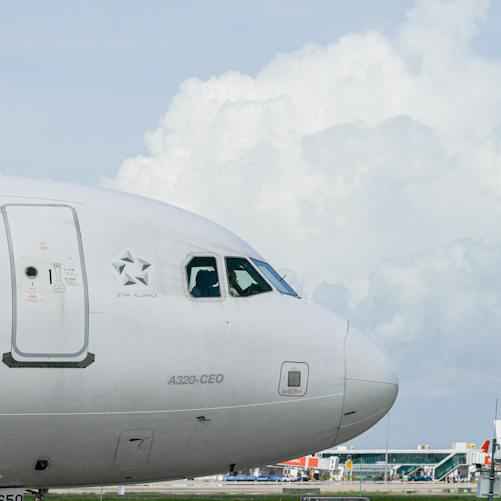
A flydubai flight from Dubai to Tel Aviv landed safely in Tabuk, Saudi Arabia, on September 30 after a violent incident in the cockpit that Israeli officials said involved one pilot stabbing another and attempting to crash the aircraft. Passengers and crew intervened, and two additional flydubai pilots who were travelling on the flight helped bring the aircraft down safely, according to Reuters.
The episode aboard flight FZ1073 immediately raised questions about cockpit security, crew screening and how airlines respond to threats originating inside the flight deck. Yet the most important fact at this stage is the limit of what is known. Flydubai said the underlying reasons for the event remained unclear and warned against premature speculation. Israeli authorities said the co-pilot was detained in Saudi Arabia, while the motive remained under investigation.
A rapid descent turned a crew crisis into a passenger emergency
Reuters reported that the aircraft plunged nearly 14,000 feet in less than half a minute during the struggle. Flight-tracking analysis published by Flightradar24 documented emergency transponder codes and the diversion to Tabuk.
For passengers, the technical distinction between a security event and an operational emergency disappeared instantly. A sudden altitude loss, an inaccessible cockpit and a diversion into another country created a situation in which people on board had to respond before investigators or security agencies could intervene.
The incident challenges the assumption that the threat is outside the cockpit
Modern aviation security is designed around layers: airport screening, identity verification, restricted access to aircraft and reinforced cockpit doors. Those systems are highly effective against many external threats. An incident involving a member of the flight crew creates a different problem because authorised access is already present.
That does not mean existing screening failed in a way that can already be identified. Investigators will need to establish the sequence of events, medical and psychological factors, communications before departure, and whether any warning signs existed. The absence of a confirmed motive makes broad conclusions premature.
Israel moved quickly to tighten checks
Israeli Prime Minister Benjamin Netanyahu described the event as a serious security incident and ordered tighter checks on pilots flying into Israel. Such measures are understandable after an extraordinary event, but they will have to be designed carefully if they are to improve security without creating ineffective duplication.
Aviation security works best when controls address specific vulnerabilities. Additional screening can be useful, but only if authorities know what risk they are trying to detect. Investigations into crew behaviour, airline procedures and cockpit access are therefore likely to matter more than symbolic visible measures.
The Saudi diversion adds a regional diplomatic dimension
Tabuk became the unexpected destination for an aircraft flying between the United Arab Emirates and Israel. Saudi authorities received the plane, treated injured personnel and detained the co-pilot for questioning, according to Israeli officials. The handling of the emergency illustrates the practical cooperation that can occur even where diplomatic relationships remain complex.
The route itself is politically significant. Israel and the UAE established formal relations under the 2020 Abraham Accords, and direct commercial air links became one of the most visible expressions of that change. An emergency involving an Israel-bound aircraft therefore carries significance beyond ordinary airline operations.
Flydubai’s caution is important
In the first hours after a dramatic aviation event, incomplete information can harden quickly into a public narrative. Flydubai’s statement that the reasons remained unknown is therefore important. Authorities may ultimately determine a criminal, ideological, medical or personal motive, but none should be assumed before evidence is established.
That principle is especially important in the Middle East, where a violent incident can immediately be interpreted through the region’s political conflicts. The airline’s responsibility is to cooperate with investigators while maintaining operational safety; governments have a separate responsibility to avoid conclusions that could prejudice the investigation.
Passenger intervention will be studied closely
Israeli officials credited passengers and crew with helping prevent a catastrophe. That aspect of the event is unusual and likely to draw attention from safety specialists because commercial aviation procedures normally discourage passengers from approaching the cockpit unless instructed.
The circumstances appear to have been exceptional: a crisis was already unfolding inside the flight deck, and additional qualified pilots were reportedly available on board. The lesson is therefore not that passengers should generally intervene, but that emergency procedures must account for rare scenarios in which normal barriers no longer function as intended.
Airlines will examine the human layer of security
Technology can lock doors, track aircraft and monitor flight parameters, but aviation remains dependent on trained people making decisions under pressure. Crew recruitment, recurrent training, medical assessment and peer reporting are all part of the safety system.
The industry will want to know whether this case exposes a specific procedural gap or whether it was an extreme event that existing systems could not reasonably have predicted. That distinction matters because policy built around a single unusual case can impose high costs without reducing broader risk.
The immediate safety outcome was successful
Despite the violence and rapid descent, the aircraft landed safely, passengers were transferred onward and the incident did not produce a mass-casualty disaster. That outcome reflects a combination of crew capability, passenger action, available diversion infrastructure and the presence of additional pilots.
Aviation investigations typically focus not only on what went wrong but on what prevented the worst outcome. Understanding those successful layers can be as valuable as identifying the initial failure.
The investigation now matters more than the first headlines
The central questions remain unresolved: what triggered the cockpit violence, whether there were prior warning signs, how access and control changed during the incident, and what actions were decisive in recovering the aircraft. Until those questions are answered, the safest interpretation is narrow.
FZ1073 became a major security event because it combined a violent cockpit confrontation with a severe in-flight emergency. It also ended with everyone on board surviving. The policy response should be built on the evidence that emerges from the investigation, not on assumptions formed before investigators have completed their work.