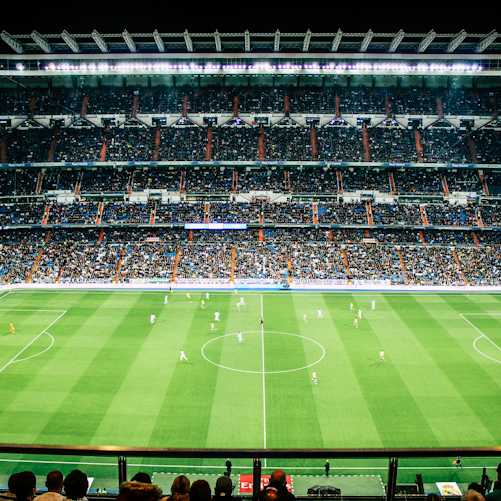
Two first-half penalties and a late Amine Adli free kick delivered Bournemouth’s 3–0 Europa League victory over AC Milan on October 22, after goalkeeper Mike Maignan was sent off.

A result that changes Bournemouth’s European scale
Bournemouth’s 3–0 victory over AC Milan on Thursday, 22 October, was more than a third consecutive win in the Europa League. It was a measure of how quickly the English club has grown into a competition featuring opponents with far longer continental histories. Justin Kluivert and Marcus Tavernier scored first-half penalties before Amine Adli finished the evening with a late free kick, as the home side punished mistakes and maintained control against ten men.
The club’s official match report confirmed that Marco Rose’s team entered the game having already beaten Real Sociedad and Sturm Graz. The win at the Vitality Stadium preserved Bournemouth’s perfect start through three league-phase fixtures. Against a club that has won Europe’s premier competition seven times, however, the immediate achievement mattered independently of what the standings may eventually show.
Penalties put the hosts in charge
Bournemouth struck in the eighth minute. Koni De Winter was penalised for handling an Evanilson header, and Kluivert converted from the spot. It was the kind of early decision that can change a match’s tempo: a home team already prepared to press could now demand that Milan take greater risks to restore the scoreline. Penalty decisions can be contentious, but the confirmed match record gives no reason to treat the opening goal as anything other than a successfully converted award.
The most damaging moment for Milan arrived before the half-hour, when goalkeeper and captain Mike Maignan was dismissed after an incident involving Bournemouth midfielder Tyler Adams at a corner. The referee’s red-card decision stood after video review. Coverage by Sky Sports described the goalkeeper pushing Adams in the face. The reduction to ten players forced Milan to reorganise at precisely the moment it needed stability.
Milan introduced reserve goalkeeper Lorenzo Torriani, yet Bournemouth soon had a second opportunity from twelve yards. Tavernier scored in the 32nd minute, sending the substitute goalkeeper the wrong way, and the hosts reached the interval 2–0 ahead. The score was not a mathematical guarantee of victory. It was nonetheless a formidable position against an away team already facing the physical and tactical disadvantage of playing a man short.
What the red card changed tactically
Playing against ten men can appear straightforward from the stands, but it creates a different challenge for the side holding the numerical advantage. The temptation is to attack with too many players, leave counterattacking space and mistake territorial dominance for genuine control. Bournemouth’s task was to use width and circulation to move Milan’s defensive block without losing their own shape. The decisive first-half sequence made that approach possible.
For Milan, the goalkeeper’s dismissal affected much more than a single position. A substitute had to enter, an outfield player had to leave and the remaining players needed to cover greater distances to protect the penalty area. Those changes reduce passing options when trying to escape pressure and make every turnover potentially costly. A team of Milan’s pedigree still has technical quality, but history offers no numerical advantage once the match has tilted on the pitch.
Rose’s side did not need to force a spectacular goal immediately after half-time. With a two-goal lead, the important requirements were concentration, efficient pressing and resistance to any momentum created by Milan’s changes. The distinction is relevant to Bournemouth’s season: a team can win an unusual match through a chaotic first half while also demonstrating the discipline required to manage the result once the score favours it.
Adli supplies the final flourish
The evening’s third goal came in the 84th minute, when Adli struck a direct free kick. The finish turned a commanding victory into an emphatic one. The official AC Milan account records the goals at eight, 32 and 84 minutes and confirms Maignan’s first-half dismissal. That shared match chronology is more important than attempts to explain every action through the result alone.
The timing of the final goal also illustrated Bournemouth’s persistence. They did not simply retreat to protect their lead or allow the game to become an exercise in time management. Instead, the hosts retained enough attacking intent to produce another scoring moment late in the match. That balance between pragmatism and ambition is particularly valuable in a league phase where goal difference can influence positions when teams finish level on points.
For supporters, the image of a domestic underdog defeating a European heavyweight will be compelling. For Rose and his analysts, the performance presents more practical evidence: the side managed a major occasion, capitalised on set-piece and disciplinary developments, and kept pressure on an opponent that might have expected to impose its reputation on the game.
Milan face questions beyond one bad evening
Milan’s immediate difficulty is not simply the three goals conceded. A captain’s sending-off placed the side under avoidable pressure, and the ensuing adjustment came at a moment when Bournemouth had already seized initiative. Coach Ruben Amorim must consider how his players defend set pieces, respond to emotional flashpoints and manage situations in which an early setback forces tactical compromise.
The result should not be interpreted as proof of an irreversible decline or a forecast of elimination. League-phase campaigns allow teams to recover over subsequent fixtures, and single matches can be shaped by decisions that are unlikely to recur in precisely the same way. Yet the prospect of recovery does not remove the need for accountability. Elite squads are judged by their ability to contain damage when events turn against them as much as by their capacity to dominate when everything runs smoothly.
Three victories, with more difficult work ahead
Bournemouth’s perfect opening is a strong platform rather than a final qualification verdict. Future opponents will study the way the English side presses, earns territory and responds to different match states. Some will defend deeper, others will compete for possession, and not every evening will include two penalties or a dismissal. A repeatable European identity depends on creating chances and protecting transitions under a variety of conditions.
The 3–0 scoreline therefore has two meanings. It is a landmark result against AC Milan and a reminder that continental status is earned on the field, not inherited from a club’s past. It is also a test for Bournemouth’s own ambitions: the team must now show that the composure displayed on Thursday can withstand matches in which the breaks, decisions and scoreline are far less accommodating.
Sources and reporting basis
Primary match reporting: AFC Bournemouth, 22 October 2026 and AC Milan, 22 October 2026. Independent accounts: Sky Sports match report and Reuters match report syndicated by ESPN. Tactical interpretation is analysis of the reported sequence, not a prediction of future results.