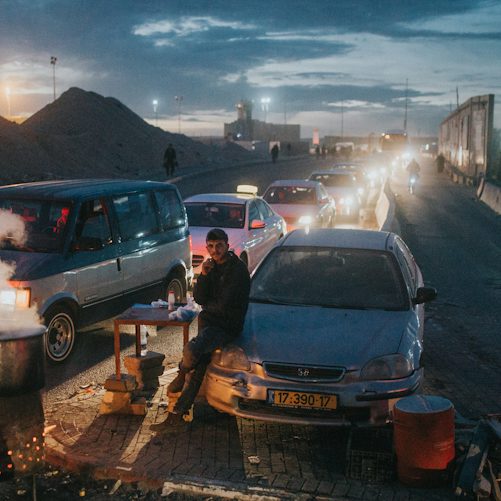
A Hebron military sweep following the killing of two Israeli soldiers displaced around 1,200 Palestinians, according to local officials, renewing scrutiny of civilian protection.

An Israeli military operation in and around Hebron displaced roughly 1,200 Palestinians by Saturday, 24 October, according to a Palestinian municipal official, after a deadly attack on Israeli soldiers at a checkpoint the previous day. The operation brought security, civilian protection and the use of demolitions into direct confrontation in one of the occupied West Bank’s most sensitive cities. Israeli forces said they were searching for militants and weapons; Palestinian officials said families with no connection to the attackers were being forced from their homes.
The immediate trigger is not in dispute: two Israeli soldiers were killed in a shooting on Friday, and Israeli authorities said the two Palestinian gunmen responsible were shot dead. The scale and lawfulness of the response, and the extent of civilian harm, require more careful examination. Neither the soldiers’ deaths nor the subsequent displacement should be minimised, and a security rationale does not by itself establish the legality of every measure taken during an operation.
A checkpoint attack followed by a wider sweep
The Israeli military launched its operation after Prime Minister Benjamin Netanyahu announced a large-scale response to the shooting near Hebron. In a 24 October report, Reuters said the army described searches for militants and weapons in the Al-Jaladah and Ein Deir Baha neighbourhoods and indicated that demolitions would form part of the operation. The military account presents the actions as a security effort following a lethal attack on serving soldiers.
Reuters also reported that Hebron municipal chief Yousef Zouhair Al-Jabari estimated roughly 1,200 residents had already been displaced and about 1,300 more faced the possibility of losing their homes. These figures are an attributed local estimate, not a verified comprehensive census or a prediction that every person at risk will necessarily be displaced. They should not be added to other estimates without determining whether they refer to the same households and geographic areas.
Homes, livelihoods and civilian movement
Residents described evacuations and restrictions on access, and Al-Jabari accused Israeli forces of damaging homes, businesses and roads. In the same report, residents said some people required to leave had no connection to the checkpoint attackers. The Palestinian Authority condemned what it called collective punishment. Those allegations demand investigation, but the statements should remain attributed rather than be presented as findings established by an independent inquiry.
The practical effect of displacement can be immediate even if an operation lasts only a short time. A family may lose access to medication, documents, household income and ordinary schooling before any longer-term decision about demolition or return is made. Where roads or commercial facilities are damaged, neighbourhood-level recovery can be slower than the duration of military activity. Temporary accommodation, medical assistance, the ability to retrieve personal belongings and information about return arrangements are therefore urgent civilian-protection concerns.
Local businesses are vulnerable for additional reasons. A shop that cannot open may lose perishable stock, miss supply deliveries or lose customers for weeks. Demolition of a workshop or damage to road access can harm workers who have no relationship with the circumstances of the original shooting. Such consequences should form part of a proportionality and humanitarian assessment, even where the military maintains that an operation is necessary to prevent further attacks.
Arrest figures also need careful attribution
The Palestinian Prisoners’ Club said that Israeli forces detained approximately 70 Palestinians across Friday and Saturday, Reuters reported. Israeli officials had not commented on those arrests in the cited report. An organisation’s total is important reporting, but it does not by itself establish the identities of all those detained, the legal basis for each arrest or whether any have subsequently been released. Reliable follow-up would require case-by-case records and access to lawful review mechanisms.
Arrest operations also have implications for families seeking to locate relatives. Clear information about custody, medical needs and access to legal counsel helps prevent further uncertainty. An investigative operation can legitimately seek suspects and weapons; it still must distinguish those suspected of criminal conduct from residents present because they live in a searched area. That distinction is crucial to confidence in both security enforcement and the protection of civilians.
What international humanitarian law requires
The territory’s status as occupied West Bank makes the legal framework particularly important. The International Committee of the Red Cross’s guidance on occupation law explains duties owed to protected people, including respect for civilians and restrictions on destruction of property. The rules also prohibit collective punishment. The relevant legal assessment concerns the purpose, necessity and circumstances of particular actions; the existence of a security threat does not dispense with those standards.
The ICRC has separately warned about punitive house demolitions under international humanitarian law. There are legal distinctions among property destruction justified by imperative military necessity, demolition resulting from direct hostilities and destruction imposed as punishment on relatives or an entire community. A photograph of debris is not enough to settle which category applies, just as a broad invocation of security is not proof that the legal conditions for a particular demolition have been met.
Security and legal accountability are not opposing goals. Protecting soldiers and civilians from further armed attacks is a legitimate responsibility of authorities exercising control. Scrutiny of the methods used, especially where children, businesses and unrelated households are affected, is part of ensuring that those measures are lawful and that protection is not extended to one community at the expense of another’s basic rights.
Competing political explanations
Hebron’s municipal chief argued that the operation was influenced by Israeli electoral politics ahead of parliamentary voting expected on 27 October. That is his interpretation of political motive, not a proven description of the decisions inside the Israeli government. The army’s stated purpose was to locate militants and weapons following the checkpoint attack. Those accounts can be reported side by side without treating either claim as independently verified in every detail.
The timing nevertheless makes transparency particularly important. In an election period, statements of resolve may be directed both at domestic voters and at armed groups. Public confidence is better served by evidence about operational objectives, the legal basis for property destruction, the fate of detainees and the conditions for civilian return than by rhetoric alone. A political debate cannot replace a factual account of what individual residents experienced.
A civilian-protection test beyond the first two days
The most urgent indicators over the coming days are whether families can return safely, whether medical and humanitarian workers can reach affected neighbourhoods, whether damage and demolitions are documented, and whether arrested people receive recognised procedural protections. Residents need credible information about immediate hazards and the status of their homes. Israeli authorities also need to demonstrate how their measures address a specific continuing threat rather than impose indiscriminate costs on a wider population.
Saturday’s reporting is an interim picture. The displacement estimate could change as access improves or new operations unfold; official and civilian accounts may also be updated. The two soldiers killed in the original attack and the hundreds of families affected afterwards are both central to understanding the episode, but no assumption of shared culpability follows from living in the same city as attackers.
The larger lesson of Hebron is that a violent security incident can become a prolonged civilian emergency when the response reaches homes, shops and roads. A durable resolution requires identification of those responsible for the shooting, lawful and discriminate security action, reliable accounting of displacement and practical routes for ordinary residents to resume their lives. None of those conditions is satisfied by announcing an operation alone.
Sources and reporting
The account draws on Reuters’ 24 October report and attributed municipal estimates, Associated Press reporting from the West Bank, and the ICRC’s explanation of occupation law and house-demolition guidance. Allegations of motive, arrests and civilian displacement remain attributed; legal questions are not presented as final judicial findings.