António Guterres says the United Nations is ready to help if this week’s three-leader meeting produces a disarmament initiative. Unequal arsenals, the end of New START and the practical demands of verification will shape the diplomatic challenge.

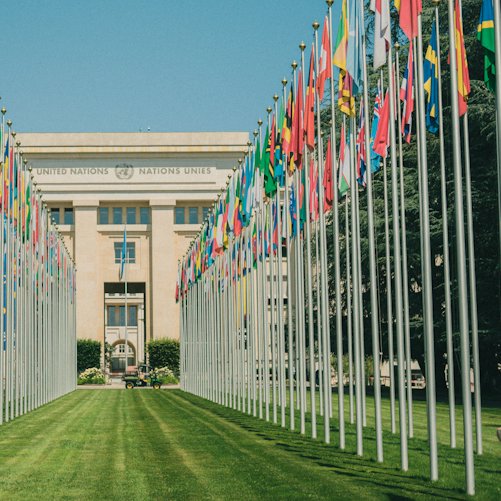
United Nations Secretary-General António Guterres offered on Monday to support any nuclear-disarmament initiative emerging from the planned meeting between Donald Trump, Xi Jinping and Vladimir Putin this week. Speaking in Manila, he also cautioned that a successful outcome was uncertain, Reuters reported. The offer places international assistance on the table while leaving the substance of any arrangement to the governments involved.
China’s foreign ministry confirmed on 16 November that Xi would meet the Russian and American presidents in Shenzhen on Thursday, 19 November. Its short announcement establishes the date, location and participants. It does not set out proposed reductions, negotiating terms or a verification mechanism. Those omissions are important when assessing what has actually been agreed before the leaders meet.
The limits of the announcement
Guterres presented disarmament as a broader international security objective. According to Anadolu’s account of his press conference, he argued that a substantive commitment by the three powers would be a major achievement and that complete safety ultimately requires eliminating nuclear weapons. He said the UN could engage with an initiative and help it succeed, while acknowledging that such an initiative had not been secured.
The parties enter the meeting with different expectations. In a submission to this year’s NPT review conference, China argued that countries with the largest arsenals should lead verifiable, irreversible reductions and rejected trilateral disarmament negotiations at that stage as unfair and unrealistic. That earlier position does not establish Thursday’s outcome, but it identifies a central obstacle: sharing obligations between nuclear forces of very different sizes.
Why arsenal sizes shape negotiations
The starting positions are sharply unequal. SIPRI’s 2026 assessment estimates that Russia and the United States together possess about 83 per cent of nuclear warheads held in military stockpiles. It puts China’s inventory at approximately 620 warheads. These are research estimates, rather than figures released through a new trilateral agreement.
SIPRI estimates that the global inventory contained 12,187 warheads in January, including retired weapons awaiting dismantlement. About 9,745 were in military stockpiles and 4,012 were deployed with missiles or aircraft. The distinction matters: a reduction in retired weapons can lower the overall inventory without producing an equivalent fall in weapons available for military use.
The institute also reported continuing modernization across all nine nuclear-armed states and warned that slower dismantlement, together with new deployments, could reverse the long decline in total inventories. That assessment explains why an arms-control discussion must address what is counted, as well as the headline number. Equal percentage reductions, identical numerical ceilings and restrictions on particular weapons would have different consequences.
Arms control after New START
The meeting comes after the expiry of New START on 5 February. In a statement marking that expiry, Guterres warned that the United States and Russia were left without binding limits on their strategic nuclear arsenals for the first time in more than half a century. He called for a successor framework with verifiable limits and measures to reduce risk.
His argument was also about predictability. The secretary-general credited successive arms-control arrangements with helping prevent miscalculation and supporting reductions in national arsenals. Restoring that predictability would require governments to decide what information they are prepared to exchange and how compliance can be assessed. Public expressions of support for disarmament do not resolve those questions by themselves.
A wider obligation already exists under Article VI of the Nuclear Non-Proliferation Treaty. It commits parties to pursue negotiations in good faith on ending the nuclear arms race and advancing nuclear disarmament, alongside general disarmament under effective international control. The provision supplies a legal foundation for negotiations; it does not prescribe the detailed shape of a new agreement among these three countries. It also places the debate within a wider bargain involving countries without nuclear weapons, whose interest in reducing nuclear risk extends beyond the security calculations of the three governments gathering in Shenzhen.
What verification requires
The UN has already identified the technical work behind credible reductions. General Assembly resolution 80/53 established a group of 21 scientific and technical experts on nuclear-disarmament verification, with sessions scheduled from January 2027 to September 2029. Its remit includes examining methods, procedures and technical obstacles, drawing on experience from earlier initiatives.
The resolution lists subjects including initial declarations, removal of deployed warheads, dismantlement, storage of components and the treatment of nuclear material. It also addresses facilities and delivery systems. This programme is separate from Thursday’s summit, but it illustrates the practical questions that would follow any commitment to reduce weapons. Verifying a declaration and confirming the irreversible removal of a capability require different evidence.
The test for Shenzhen
The regional backdrop adds urgency. Anadolu reported that Guterres also appealed for serious negotiations between Iran and the United States, linking the unresolved confrontation to high fuel prices and difficulties obtaining fertilizers. His intervention connects strategic security with costs borne far beyond the nuclear powers, including by countries with no seat at the three-leader meeting.
The immediate test will be whether the leaders identify concrete next steps: a negotiating format, a timetable, a defined scope or agreed principles for verification. Any resulting document will need to be assessed against those specifics. For now, the confirmed development is the planned meeting and the UN’s willingness to assist; the terms and depth of a possible disarmament process remain to be established.
Sources
Reuters: UN ready to support any denuclearisation effort
Chinese foreign ministry: Xi Jinping to hold China–Russia–US summit
Anadolu: Guterres calls for meaningful nuclear disarmament
SIPRI Yearbook 2026: Nuclear arsenals and escalation risks
UN secretary-general: Statement on New START expiry
United Nations: Nuclear Non-Proliferation Treaty text
UN General Assembly resolution 80/53: Nuclear-disarmament verification experts