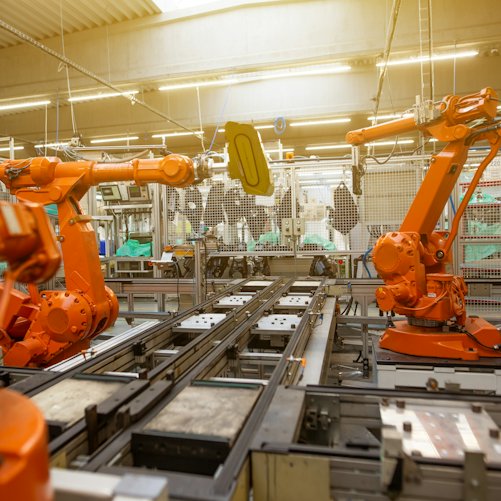
European industry gained some ground in September, but the improvement remains uneven across sectors and countries. The latest production figures arrive alongside modest economic growth, flat employment and persistent energy pressures across the region, sharpening the questions facing policymakers as Brussels prepares its autumn economic forecast.

Seasonally adjusted industrial production in the euro area increased by 0.2% in September from August, offering a modest improvement at the end of the third quarter. Across the wider European Union, output rose by 0.5%. The first estimates, published on November 16, provide a timely check on industrial conditions before the European Commission’s autumn economic forecast, scheduled for November 17.
The rebound leaves a mixed picture. Euro-area industrial output remained 1.5% below its level a year earlier, while businesses face an uncertain combination of production costs, financing conditions and demand. For a company deciding whether to add a shift or order new machinery, the distinction between a temporary improvement and a sustained recovery matters more than a single positive monthly result.
A narrow improvement across industry
The sector breakdown shows why the headline needs care. Euro-area production of intermediate goods rose by 0.7% and durable consumer goods by 1.3%, while capital goods were unchanged. Energy output fell by 1.7% and non-durable consumer goods by 0.4%. These movements describe quantities produced; a fall in energy output does not establish that energy has become cheaper.
National results also diverged. Denmark, Poland, Czechia and Slovakia recorded the strongest monthly increases among countries with available figures. Ireland, Luxembourg and Romania registered the largest declines. The spread means a business supplying several European markets can encounter very different conditions within the same reporting month.
The practical reading is therefore selective. An aggregate can help identify direction, but it cannot reveal whether an individual factory has a full order book, profitable contracts or spare capacity. Those decisions require company and sector evidence alongside the regional index. A production increase can reflect the timing of deliveries or the completion of existing orders without establishing stronger future demand.
Germany shows why monthly gains need context
Germany’s national production release illustrates that distinction. Destatis reported a 0.7% monthly increase in its broader industry measure for September, while output across the third quarter was 0.4% below the previous quarter. Its national headline includes construction, so it should not be treated as identical in coverage to Eurostat’s industrial series.
German automotive output rose sharply after a period affected partly by factory holidays and production changeovers. Pharmaceuticals also improved, while machinery and equipment production declined. Energy-intensive branches increased output during September but remained weaker over the quarter. The figures describe several different operating cycles, rather than a uniform change across German industry.
For suppliers, the lesson is that a large customer’s production rebound may restore orders without changing the wider investment climate. Comparing several months helps distinguish catch-up activity from lasting expansion. Revisions matter too: Destatis lowered its earlier estimate of August’s monthly increase after receiving additional construction data. An initial release is a measurement that can improve, not a final verdict.
The wider economy grows without adding jobs
Separate national-accounts figures show the euro-area economy expanded by 0.4% in the third quarter and the EU by 0.5%. That was slower than the previous quarter’s respective increases of 0.6% and 0.7%, but still represented growth. Industrial weakness therefore sits within an economy whose combined output continued to rise.
Employment was unchanged from the previous quarter in both areas, after a small increase earlier in the year. The combination of growing output and a stable number of workers is relevant to the recovery’s breadth, although these aggregate figures alone cannot explain changes in hours worked, productivity or hiring within particular industries.
For households, the labour-market connection is especially important. A rise in economic output becomes more visible in daily life when it supports dependable employment, wages and spending power. For firms, steady employment may preserve skills and production capacity, but a cautious hiring stance can also limit how quickly stronger demand translates into additional jobs. The next releases will help establish which pattern is developing.
Energy and borrowing costs remain difficult
The European Central Bank kept its key interest rates unchanged on October 29, leaving the deposit rate at 2.50%. Its assessment highlighted higher energy prices as a threat to both inflation and growth. The bank also reported tighter financing conditions, while noting that underlying inflation had remained broadly stable and wages had not yet shown a material response to the energy shock.
That combination creates a difficult setting for industrial companies. Higher input bills can reduce margins when customers resist price increases. More expensive finance can simultaneously raise the hurdle for replacing equipment or expanding capacity. A company may consequently produce more to meet existing contracts while delaying investment that would make future production more efficient.
The ECB has not committed to a particular interest-rate path. Its decisions will depend on incoming evidence, including inflation, underlying price pressures and how monetary policy reaches households and businesses. A modest industrial improvement therefore does not, by itself, establish either the case for tighter policy or the timing of eventual relief in borrowing costs.
The next forecast must connect the pieces
The Commission’s forthcoming autumn forecast is the next major opportunity to bring growth, inflation, employment and public finances into one outlook. Its spring assessment had already identified an energy shock linked to the Middle East conflict as a drag on activity. The new forecast will need to assess how those pressures interact with the economic information collected since then.
Forecasts and production releases answer different questions. The factory data describe a recent period; projections set out a conditional path ahead. Their usefulness lies in the assumptions as well as the headline numbers: how energy costs evolve, how financing affects investment, and whether spending can sustain demand. For Europe’s industrial recovery, consistency across those indicators will matter more than one month of better output.