The International Court of Justice ordered Myanmar to help displaced families return, restore property and account for the disappeared. Survivors in Bangladesh welcomed the ruling as fighting continues in Rakhine State.

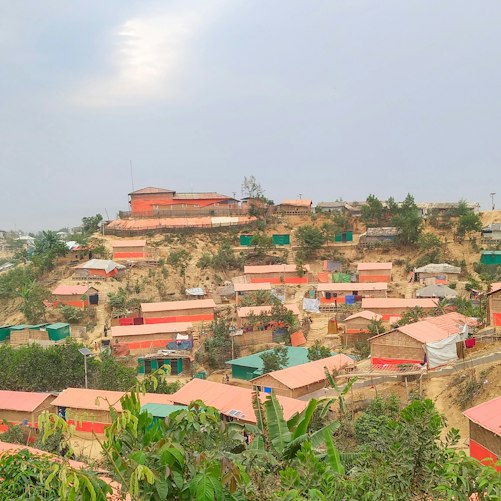
Rohingya refugees gathered around a screen in Cox’s Bazar on Thursday to hear the International Court of Justice rule that Myanmar committed genocide against their community in 2017. The judges ordered Myanmar to help displaced people return voluntarily to the places where they lived, reunite families and make reparations. Nine years after the military campaign drove more than 730,000 people into Bangladesh, the judgment establishes Myanmar’s responsibility and sets out what it owes the people its forces displaced.
Myanmar’s government called the decision unfair on Friday. Presidential spokeswoman Khine Khine Soe pointed to the nine-to-six vote on genocide and said officials would need time to study the judgment and the separate opinions.
In Bangladesh, Sayed Ullah, a Rohingya community representative, said the decision would strengthen refugees’ efforts to go home. The people watching in Cox’s Bazar had obtained a ruling they had waited years to hear. Fighting across the border still stood between them and their homes.
What the judges decided
The Gambia brought the case in November 2019 with the backing of the Organisation of Islamic Cooperation. The West African state had no territory or citizens at the centre of the case. As a party to the Genocide Convention, it argued that it shared an interest with every other member in upholding the treaty. The court accepted that it could bring the claim. The Rohingya themselves, as individuals, could never have filed this case before a court that hears disputes between states.
The majority examined the way Myanmar’s security forces treated civilians across northern Rakhine State. They considered killings, widespread sexual violence, violence against children and the burning of villages alongside other evidence.
Myanmar said its military had responded to an insurgency. The judges concluded that the pattern taken as a whole could be explained only by an intention to destroy a substantial part of the Rohingya community. Six of the fifteen judges voted against the genocide finding.
The court had heard witnesses called by both sides during January’s hearings in The Hague. It also considered material gathered by the UN’s Independent Investigative Mechanism for Myanmar, which shared testimony and analyses covering subjects such as the destruction of Rohingya property and efforts to investigate sexual violence. The judges gave considerable weight to statements its investigators had collected. A case formally argued by governments thus depended in part on people willing to describe what had happened to them or to their neighbours.
UN Secretary-General António Guterres said this was the first time the court had found a state responsible for committing genocide. Individual prosecutions follow a separate legal process. The judgment obliges Myanmar to investigate people reasonably suspected of acts prohibited by the convention in connection with the 2017 operations, and to prosecute and punish them where warranted.
The judges also found that the state breached an earlier order to preserve evidence. In Buthidaung Township, the judges found that Myanmar burned or destroyed what remained of at least five Rohingya villages in May 2020, four months after the order. In neighbouring Maungdaw Township, the state completed a government base on former village sites the following year.
What families can claim
The remedies extend well beyond crossing a border. Myanmar must return or replace property lost or damaged through its wrongful acts, including property held by the community. It must help locate people who disappeared and assist families in recovering, identifying and burying the dead according to Rohingya traditions.
The ruling also requires care for survivors who suffered physical or psychological injury. Those obligations reach families who fled abroad and people who moved elsewhere inside Myanmar.
The distinction matters to more than 100,000 Rohingya still displaced within Rakhine State. The UN refugee agency puts the number living as refugees elsewhere in the region above 1.3 million, most of them in Bangladesh.
A family separated across the frontier may need several different remedies at once. One relative may want to return, another may require treatment where they live, and both may still be seeking news of someone last seen in their village in 2017.
Citizenship remains a central demand. The Gambia asked the judges to require full and equal citizenship for every member of the group. The court declined to go that far. Its order to protect the Rohingya against persecution and discrimination extends to access to citizenship.
UN human rights chief Volker Türk called for citizenship to be restored and warned against returns while conditions remain unsafe. Renewed fighting between the military and the Arakan Army has driven more Rohingya out of Rakhine since 2023.
Myanmar owes compensation for harm that restitution cannot repair. The court left the amount and method for a later stage. Within two years, Myanmar must tell the judges what it has done to restore what people lost and specify what compensation it proposes where restoration is materially impossible.
The court will hear the parties before deciding how to proceed. That timetable covers the report on reparations. The obligation to start investigating suspected perpetrators is immediate.
Life in exile continues
For children in Bangladesh, the school calendar offers a shorter measure of time. Human Rights Watch reported this week that humanitarian education programmes had enrolled about 312,000 of roughly half a million school-age Rohingya children in the camps. Separately, schools organised by Rohingya teachers were reaching about 30,000 pupils despite lacking legal recognition. Some children who fled as infants in 2017 are now old enough to have missed years of schooling while their families waited for a safe return.
The humanitarian response for 2026 calls for $710.5 million to reach 1.6 million people, including Bangladeshis living near the camps. It covers refugees in Cox’s Bazar and on Bhasan Char, as well as host communities in Ukhiya and Teknaf.
Türk appealed for predictable funding after the judgment. International donors deciding whether to finance classrooms and clinics have choices to make long before the judges return to the question of how Myanmar should compensate survivors.
Another option emerged on Friday for some Rohingya living in Malaysia. Deputy Prime Minister Ahmad Zahid Hamidi said his government planned to work with Turkey and UNHCR on a skills-training and resettlement programme for 10,000 refugees. He said individual consent would be part of the process. The announcement concerns people in Malaysia. For families in Bangladesh who want to return to Rakhine, Thursday’s judgment places the duty squarely with Myanmar to make it possible to go back to their own homes in safety.