A candid conversation reveals the ambitions, struggles, and ideological core of France’s left-wing firebrand

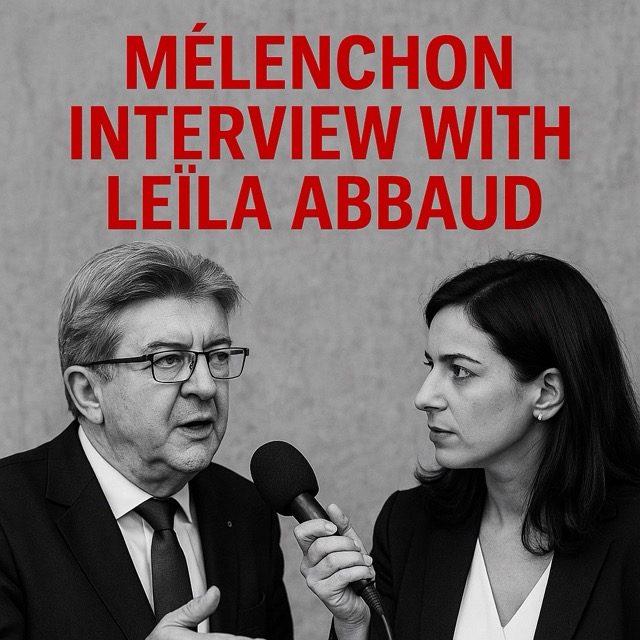
In a wide-ranging and thought-provoking interview with journalist Leïla Abbaud, Jean-Luc Mélenchon, leader of La France Insoumise, opened up about his vision for France, the current political climate, and the personal convictions driving his decades-long career in public service. Broadcast on national television and streamed across digital platforms, the conversation offered a rare glimpse into the mind of one of France’s most polarizing political figures.
Mélenchon, known for his fiery oratory and unapologetically leftist positions, used the interview as a platform to articulate what he views as the fundamental challenges facing the Republic: inequality, ecological collapse, and the erosion of democratic institutions. Speaking with passion and precision, he warned against the normalization of far-right rhetoric and criticized what he termed the “neoliberal consensus” dominating both Macronist centrism and parts of the traditional left.
The dialogue with Abbaud was candid and at times confrontational. When asked about recent controversies surrounding his remarks on secularism, police violence, and media freedom, Mélenchon defended his positions forcefully. He argued that his critique of the French establishment is rooted not in provocation, but in a desire to awaken political consciousness and reclaim the republic for its citizens.
Perhaps most notably, Mélenchon signaled that he has not ruled out another run for the presidency in 2027. While careful not to make a formal declaration, he emphasized the need for a “popular alternative” that could unite fragmented progressive forces and challenge the rise of authoritarianism in Europe. He also praised the new generation of young activists and elected officials emerging within his movement, suggesting that the future of French politics lies with them.
Throughout the interview, Abbaud pressed Mélenchon on both ideology and strategy. Their exchange touched on everything from the European Union and the climate crisis to immigration policy and the future of labor. Mélenchon reiterated his call for a Sixth Republic, one that would replace the current presidential system with a more participatory and parliamentary democracy.
Public reaction to the interview has been mixed. Supporters hailed it as a moment of clarity and leadership, while critics accused Mélenchon of political opportunism and divisive rhetoric. Regardless, the conversation reignited national debate about the direction of the French left and its role in a volatile political era.
In the end, the interview was more than a media event—it was a political statement. As France gears up for European elections and braces for another presidential cycle, Mélenchon’s words, and the platform offered by Leïla Abbaud, may prove influential in shaping the battles ahead.