A Deep Dive into Strategic Thinking, Global Power Shifts, and the Future of Warfare

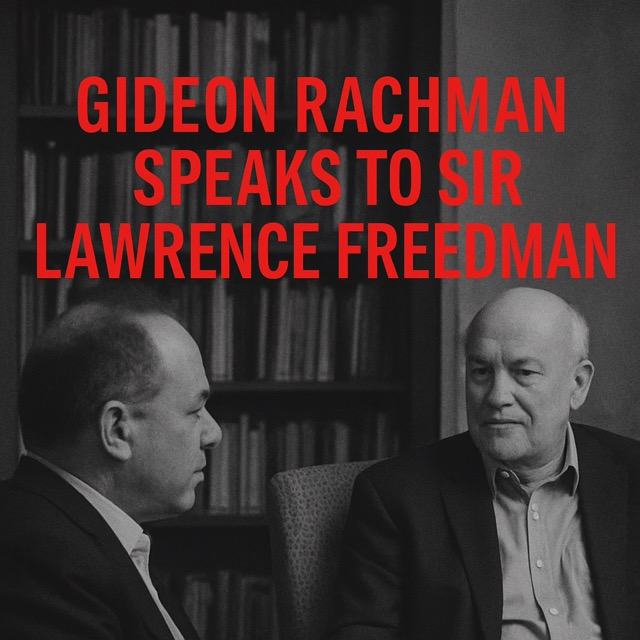
In a compelling and wide-ranging conversation, Financial Times foreign affairs columnist Gideon Rachman sits down with Sir Lawrence Freedman, one of the world’s most respected strategic thinkers, to explore the shifting tides of global geopolitics and the enduring relevance of strategic theory. The dialogue, recorded as part of a series of interviews on power and diplomacy, covers everything from the legacy of the Cold War to the challenges posed by authoritarian resurgence and emerging technologies in warfare.
Sir Lawrence Freedman, emeritus professor of war studies at King’s College London and former advisor to the UK government, offers a sobering yet nuanced assessment of the modern strategic landscape. “We are witnessing a moment where old assumptions are being challenged,” Freedman says. “Power is becoming more diffuse, and the ability to control events is increasingly limited.” He discusses how traditional state-centric models of conflict are being upended by non-state actors, hybrid warfare, and cyber threats.
Rachman and Freedman delve into the lessons of past conflicts, with a particular focus on the missteps of Western interventions in the Middle East. Freedman emphasizes that while military force remains a central element of power, its limits have been starkly revealed. “Strategic success,” he notes, “is not just about firepower. It’s about understanding context, culture, and the unpredictability of human behavior.”
On Ukraine, Freedman expresses cautious optimism about the resilience of democratic nations in the face of aggression. He praises the adaptability of Ukrainian defense efforts and highlights the role of Western support. Yet, he warns against complacency. “Strategic patience and unity among allies will be key. Wars are not won overnight.”
Artificial intelligence and autonomous weapons also feature prominently in the conversation. Freedman acknowledges the disruptive potential of these technologies, calling for urgent ethical and legal frameworks. “There’s a real danger,” he says, “that strategic decisions could be delegated to machines without adequate oversight.”
The discussion concludes with a reflection on the role of scholars and analysts in turbulent times. Freedman advocates for intellectual humility, stressing that strategic forecasting should be grounded in history but alert to surprise. “We need fewer certainties and more questions,” he suggests.
Rachman’s exchange with Freedman underscores the importance of critical, long-term thinking in a world dominated by short-term crises. As global dynamics continue to evolve, their conversation serves as both a warning and a guide for policymakers and citizens alike. It reminds us that in strategy, as in life, wisdom often lies in recognizing complexity rather than imposing simplicity.