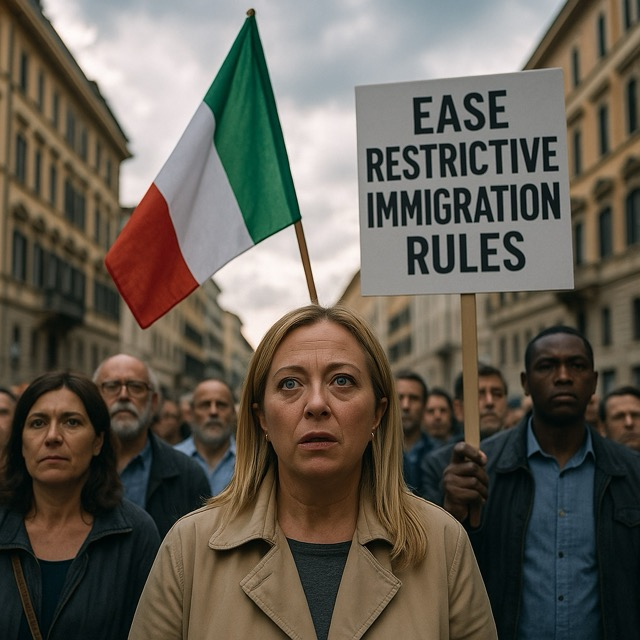
As Migration Pressures Mount, Voters Debate the Nation’s Future Direction

Immigration has long been a divisive issue in Italy, a country at the frontline of migration flows into Europe due to its strategic Mediterranean location. In recent years, the topic has gained renewed urgency, as increasing numbers of people fleeing conflict, poverty, and climate crises arrive at Italy’s shores. Now, Italian voters are grappling with the critical question: should the country ease its restrictive immigration rules?
The current immigration policy framework in Italy has been shaped by years of political tension, security concerns, and fluctuating public sentiment. Under right-leaning governments, particularly the one led by Prime Minister Giorgia Meloni, measures have been tightened to curb irregular migration and limit asylum approvals. The policies have included stricter border enforcement, reductions in humanitarian protections, and agreements with North African countries to stem departures.
However, Italy’s strict approach has come under increasing scrutiny. Humanitarian organizations, civil society groups, and segments of the political left argue that the existing framework fails to address the root causes of migration and exacerbates human suffering. They emphasize the need for a more humane and sustainable immigration policy, including pathways for legal entry, improved integration programs, and better protection of human rights.
The economic dimension adds further complexity to the debate. Italy, like many European countries, faces an aging population and labor shortages in sectors such as agriculture, caregiving, and construction. Advocates of reform highlight that easing immigration restrictions could help fill these gaps, boost economic productivity, and contribute to the country’s long-term sustainability.
On the other hand, concerns about national identity, cultural cohesion, and social services strain remain prevalent among large segments of the population. Populist narratives have often linked immigration to crime and instability, shaping public opinion and influencing electoral outcomes. The media’s portrayal of migration crises, particularly during moments of mass arrivals, has further intensified polarization.
The upcoming regional and European Parliament elections are expected to serve as a litmus test for the public’s stance on immigration. Political parties are tailoring their campaigns accordingly, with the center-left pushing for a more compassionate approach, and the right reiterating calls for tighter control and national sovereignty.
Italy’s role in the broader European migration framework also plays a pivotal role. EU burden-sharing agreements and asylum reform initiatives continue to face resistance, even as Italy calls for greater support from fellow member states. The ongoing impasse at the EU level only adds pressure on domestic policymakers to find viable solutions.
In conclusion, the debate over easing Italy’s immigration rules reflects broader questions about national values, identity, and global responsibility. As voters prepare to head to the polls, the outcome of this debate will have profound implications—not just for migrants, but for the very soul of the Italian republic.


