Toyota’s Longtime Leader Faces Industry Shifts, Internal Challenges, and Legacy Questions
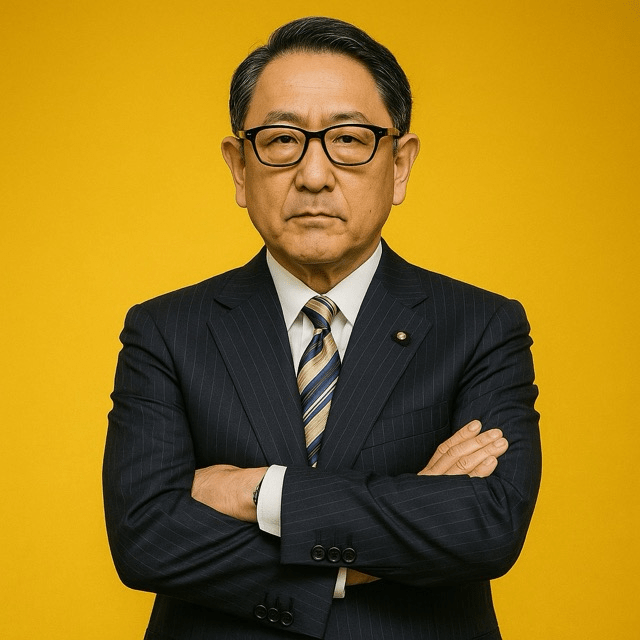
For over a decade, Akio Toyoda has stood as a symbol of consistency, innovation, and heritage at the helm of Toyota Motor Corporation. As the grandson of the company’s founder, Toyoda has guided the world’s largest automaker through financial storms, technological revolutions, and a rapidly shifting automotive landscape. But now, cracks are beginning to appear in the polished image of his leadership.
While Toyota remains a global powerhouse, the company is facing growing scrutiny over its electric vehicle (EV) strategy—or lack thereof. As competitors like Tesla, BYD, and Volkswagen aggressively expand their EV portfolios, Toyota has been criticized for lagging behind. Toyoda’s longstanding emphasis on hybrid technology, hydrogen, and internal combustion engine optimization is increasingly seen as conservative in an era demanding bold electrification.
Adding to the strain, several recent quality control issues have led to recalls that dented Toyota’s reputation for reliability. Though the brand still commands loyalty in key markets such as the U.S., Japan, and Southeast Asia, its image as the gold standard of trustworthiness has been shaken.
Internally, employees and executives have begun to speak more openly—albeit anonymously—about tensions within the leadership structure. Critics argue that Toyoda’s traditionalist approach has slowed the company’s responsiveness to market trends, particularly in software innovation, autonomous driving, and global regulatory compliance. Younger executives reportedly seek more freedom to innovate, while Toyoda maintains tight oversight and a cautious stance.
Compounding these issues is the broader macroeconomic climate. Inflationary pressures, supply chain instability, and geopolitical uncertainties have impacted global production and sales. While Toyota has proven resilient in past crises, the current convergence of challenges presents a more complex threat.
Toyoda has responded with characteristic calm, emphasizing long-term vision over short-term reaction. In public remarks, he has defended Toyota’s multi-pathway approach to carbon neutrality and reiterated the importance of balancing innovation with reliability. “Our mission is not just to sell more EVs, but to make sustainable mobility available to everyone,” he recently stated.
However, investors are watching closely. Shareholder meetings have become more heated, with calls for clearer direction and bolder investment in future technologies. Some have even speculated about Toyoda’s eventual succession, questioning whether the next phase of leadership should come from outside the founding family.
Despite the mounting pressure, it would be premature to write off Akio Toyoda. His deep ties to the company’s culture, proven ability to weather past crises, and continued focus on global vision keep him relevant in the boardroom and respected across the industry. Yet the next 12 months will be pivotal.
If Toyota can pivot more decisively into the electric future while maintaining its legendary reliability and manufacturing efficiency, Toyoda may yet preserve his legacy as a bridge between tradition and transformation. If not, his reign—once seen as unshakable—may come to symbolize the difficulties of leading through disruption in the 21st-century auto industry.


 The Tower Post