Controversial Politician Faces International Warrant Amid Political and Legal Turmoil
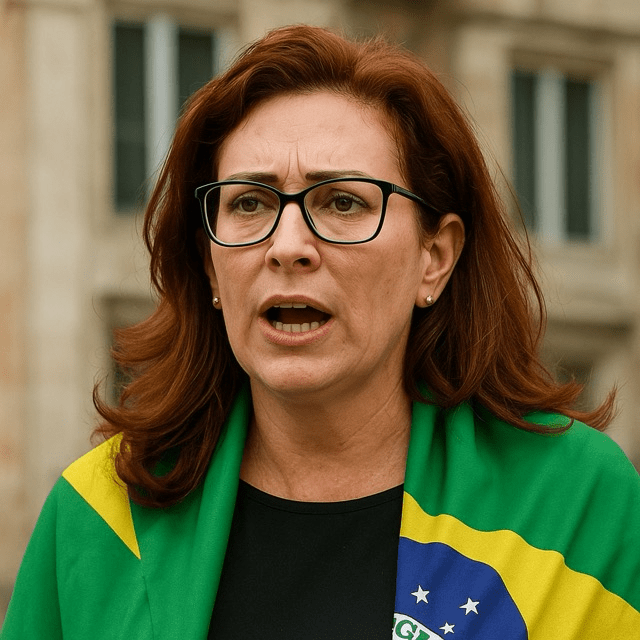
Interpol has formally requested that Italian authorities in Rome execute an international arrest warrant for Brazilian lawmaker Carla Zambelli. The right-wing deputy, known for her close ties to former President Jair Bolsonaro and her polarizing public statements, is currently believed to be residing in Italy.
The arrest warrant stems from charges filed in Brazil, where Zambelli is under investigation for alleged abuse of power, obstruction of justice, and incitement of political violence. The case gained notoriety after a series of incidents surrounding Brazil’s 2022 elections, during which Zambelli was caught on video chasing a man through the streets of São Paulo while wielding a firearm—an action that drew widespread condemnation and legal scrutiny.
According to Brazilian prosecutors, her actions represent a direct threat to public order and democratic stability. Following months of investigation, Brazil’s Supreme Federal Court issued an arrest warrant, which was subsequently circulated by Interpol under a Red Notice—a high-level alert for international law enforcement cooperation.
Italian authorities have acknowledged receipt of the request but have not yet confirmed whether Zambelli will be detained. The situation places the Italian government in a diplomatically sensitive position, caught between international legal obligations and potential political ramifications. Legal experts note that while Italy is a signatory to several international treaties facilitating extradition, political asylum claims or appeals to parliamentary immunity could complicate proceedings.
Zambelli’s legal team has dismissed the charges as politically motivated, claiming that the lawmaker is a target of judicial persecution in Brazil. They have also filed motions to block extradition proceedings, citing concerns over due process and political bias in Brazil’s judiciary.
The unfolding situation has sparked debate across Brazilian and international media. Supporters of Zambelli argue that she is being unfairly prosecuted for her conservative views, while critics contend that she must be held accountable for actions that threaten Brazil’s democratic framework.
Interpol’s intervention highlights the global dimension of political accountability and the growing use of international law enforcement mechanisms to pursue high-profile fugitives. It also raises questions about the balance between national sovereignty, international cooperation, and the politicization of justice.
As Rome deliberates its next move, legal and political observers around the world are watching closely. The case could set a precedent for how international arrest warrants are handled within the EU when they intersect with politically charged cases. For now, Carla Zambelli remains a flashpoint in an ongoing battle over law, order, and democratic values in Brazil and beyond.




 The Tower Post