Brazilian President Presses for Conclusion of Long-Pending Economic Pact During Diplomatic Talks
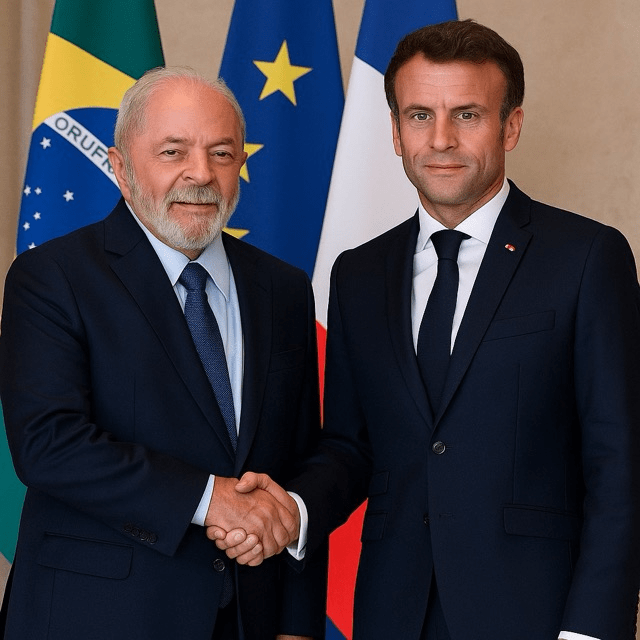
During a recent high-level diplomatic engagement, Brazilian President Luiz Inácio Lula da Silva urged French President Emmanuel Macron to accelerate the finalization of the EU-MERCOSUR trade agreement. The long-stalled pact, which has been under negotiation for over two decades, holds the promise of deepening economic ties between the South American trade bloc and the European Union.
Lula’s appeal comes amid a broader push by South American leaders to secure greater economic integration and expand market access for key exports such as agricultural goods, minerals, and manufactured products. Speaking during a joint press conference in Brasília, Lula emphasized the historic opportunity presented by the agreement, noting that its successful conclusion would benefit both sides economically and politically.
“The time has come to overcome the obstacles and bring this agreement to fruition,” Lula said. “We owe it to our citizens, our industries, and our farmers who are ready to compete and grow under fair and mutually beneficial terms.”
Macron, while expressing support for stronger EU-MERCOSUR relations, reiterated France’s concerns about environmental standards, particularly regarding deforestation in the Amazon. French agricultural sectors have also voiced opposition to the pact, fearing increased competition from Latin American producers with lower regulatory costs.
Nevertheless, Lula assured Macron that Brazil is taking concrete steps to improve its environmental credentials, including enhanced protections for the Amazon rainforest and investment in sustainable agriculture. He proposed a bilateral environmental monitoring mechanism to address concerns over compliance and transparency.
The EU-MERCOSUR agreement, first agreed in principle in 2019, remains unratified due to resistance from certain EU member states. The agreement would create one of the world’s largest free trade zones, impacting over 700 million people. Supporters argue it would significantly boost trade and investment flows while enhancing geopolitical alignment between the two regions.
Critics, however, continue to challenge the agreement on grounds of environmental, labor, and sovereignty issues. As negotiations resume, both European and South American lawmakers are under pressure from civil society groups to ensure the deal incorporates enforceable commitments to sustainability and human rights.
Diplomatic sources suggest that Lula’s outreach is part of a broader strategy to reassert Brazil’s global leadership and diplomatic clout after years of political turbulence. By aligning Brazil’s economic agenda with sustainability goals, Lula hopes to rebuild international trust and attract investment.
Macron’s response will be critical in shaping the EU’s final stance on the deal. France, as a key EU power, holds significant influence over the ratification process. Should Lula’s assurances gain traction, a breakthrough could be possible within the year.
As talks continue, the world watches closely. The fate of the EU-MERCOSUR trade agreement not only carries economic consequences but also symbolizes the evolving dynamics of global cooperation in an era increasingly defined by climate responsibility and inclusive growth.
 The Tower Post