Giorgia Meloni warns that Russian aggression might not stop at Ukraine
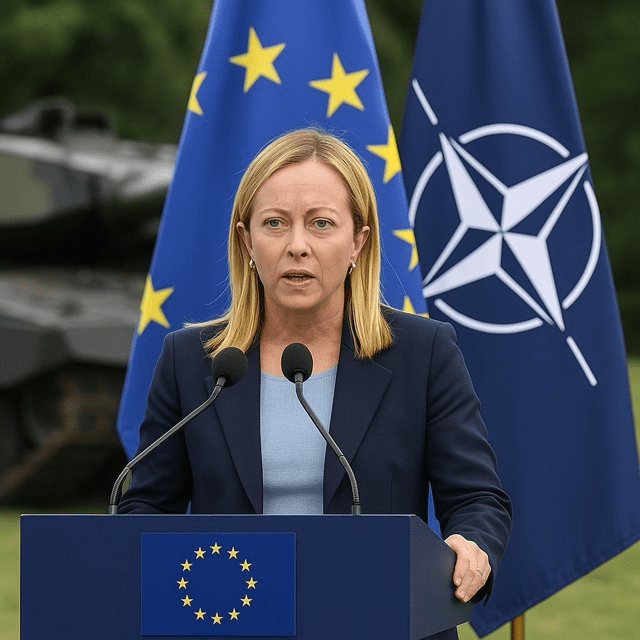
In recent remarks that sent ripples across European capitals, Italian Prime Minister Giorgia Meloni has underscored the urgent need for a unified European defense strategy. Speaking in response to growing instability on the Eastern front, Meloni suggested that attacks from Russia against the European Union can no longer be ruled out.
Her comments come amid ongoing tensions between Russia and the West, fueled by the protracted war in Ukraine and an increasingly assertive Russian foreign policy. According to Meloni, the time has come for Europe to think beyond national military capabilities and embrace a collective approach to defense. “We cannot afford to be naive,” she said, “Europe must be prepared for any scenario.”
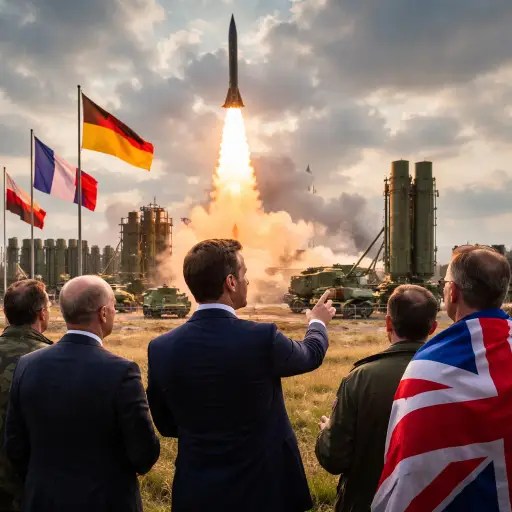
The idea of a common European defense has gained traction in recent years, particularly after the perceived shortcomings of relying solely on NATO for strategic autonomy. France and Germany have historically led the charge for greater military integration within the EU, but Meloni’s remarks reflect a growing consensus among member states that unity is no longer optional—it is a necessity.
Meloni emphasized that deterrence plays a key role in preserving peace. “Our strength lies in our unity,” she declared. “Only together can we build a credible defense posture that makes potential adversaries think twice.” She also mentioned that the European Defense Fund and Permanent Structured Cooperation (PESCO) initiatives should be accelerated to provide the necessary infrastructure and coordination for a rapid response to emerging threats.
The warning also touches a broader issue: the EU’s strategic dependence on external powers. While the United States has long been the cornerstone of European defense under the NATO umbrella, shifting geopolitical dynamics and the potential for reduced U.S. engagement in Europe have made the case for greater European self-reliance more compelling.
Critics of a common defense often raise concerns about sovereignty and the feasibility of harmonizing military forces across diverse national contexts. However, Meloni argued that security is the foundation upon which sovereignty stands. Without safety and resilience, she warned, “the European project itself could be in jeopardy.”
Whether Meloni’s warning will spur concrete policy changes remains to be seen. What is clear, however, is that the debate on Europe’s defense future has entered a new phase—one marked by urgency, realism, and a growing awareness that the peace Europe has long enjoyed cannot be taken for granted.


 The Tower Post