Unraveling the Mystery Behind a Notorious Figure in the Gaza Conflict
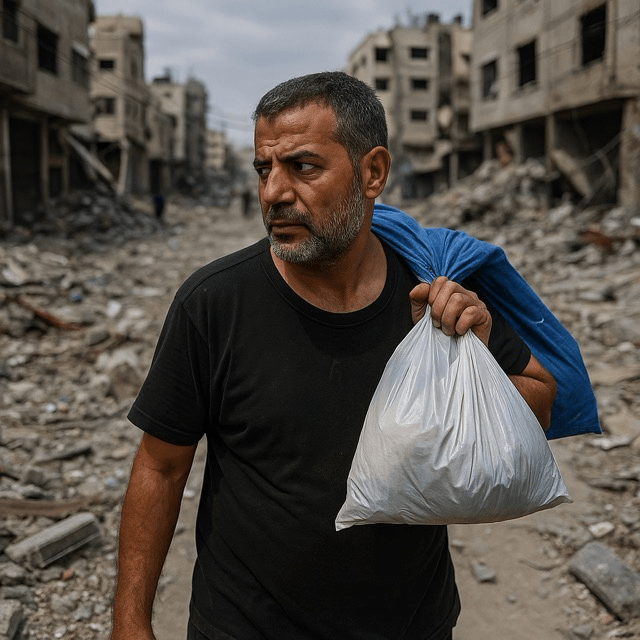
In the chaotic landscape of Gaza, where the boundaries between civilian life and armed conflict often blur, a mysterious figure known as “Shabab – the Plunderer of Gaza” has captured both local and international attention. Alleged to be involved in widespread looting amid ongoing military operations, Shabab has become a symbol of the region’s desperation and complexity. But who is he working for—Hamas, Israel, or perhaps neither?
Local residents report sightings of Shabab in war-torn neighborhoods, seizing valuables from abandoned homes and businesses. Some claim he operates under the tacit approval of Hamas, exploiting the chaos to fill coffers meant to sustain the group’s long-term resistance. Others, however, argue that his actions are too reckless and indiscriminate to align with Hamas’ typically calculated operations. These observers suggest he may instead be a rogue agent, or possibly an Israeli asset aiming to destabilize Hamas’ internal grip.
Israeli sources have categorically denied any involvement with Shabab. Yet speculation persists, particularly due to the precision with which he seems to avoid Israeli airstrikes and raids. His uncanny ability to operate in high-risk zones without being apprehended raises questions about whether he receives protection or intelligence from an external actor.
Human rights organizations have condemned the looting, regardless of the perpetrator’s affiliations. They point out that such actions exacerbate the humanitarian crisis in Gaza, where civilians already face extreme shortages of food, medicine, and shelter. “Looting in a war zone is not only criminal but morally reprehensible,” said a spokesperson for the International Crisis Watch.
Meanwhile, social media has elevated Shabab to a near-mythical status. Videos allegedly showing him escaping with stolen goods have gone viral, accompanied by wildly differing narratives. To some, he is a villain. To others, he is a symptom of deeper issues: lawlessness, desperation, and the breakdown of order in a region long plagued by conflict.
Political analysts stress the importance of not oversimplifying the story. “In asymmetric warfare, actors like Shabab often emerge in the gray areas where formal governance has collapsed,” said Dr. Amal Youssef, a Middle East policy expert. “It’s possible that he represents no one but himself, or perhaps multiple interests at once.”
As the conflict grinds on, the legend of Shabab continues to grow. Whether he is a tool of Hamas, a ghost of Israeli psychological operations, or simply an opportunist feeding on the ruins of war, his presence is a stark reminder of the unpredictability and human toll of conflict in Gaza.


 The Tower Post