As violence spirals, reports emerge of schools reduced to rubble and civilians caught in the crossfire of a dirty war
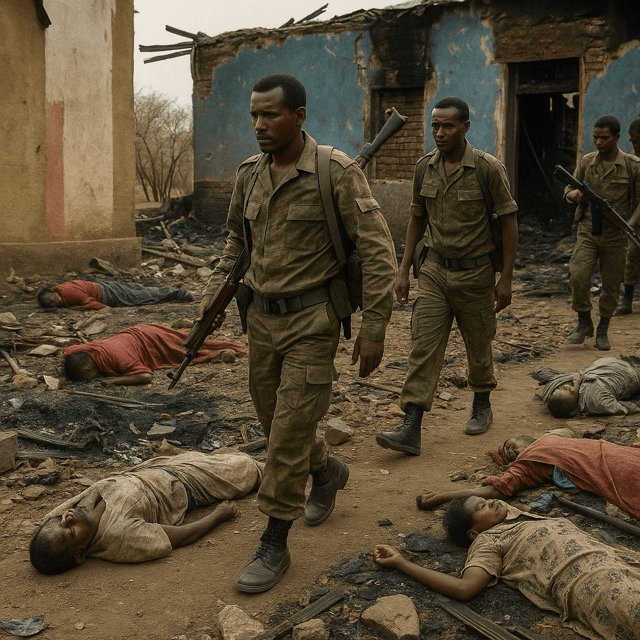
The conflict in Ethiopia continues to unravel with devastating consequences, especially for the Amhara people. Once overshadowed by the war in Tigray, the violence in the Amhara region has now drawn attention due to escalating atrocities committed against civilians and critical infrastructure. Human rights organizations have documented an alarming pattern of deliberate attacks on non-combatants and the systematic destruction of schools, clinics, and places of worship.
Since 2022, tensions between regional forces and federal military units have intensified, particularly following the declaration of a state of emergency. The Ethiopian government’s efforts to disarm regional paramilitary groups have met fierce resistance in Amhara, where local militias and armed civilians accuse the state of targeting their communities under the guise of maintaining order. The result has been a brutal and often indiscriminate campaign marked by airstrikes, extrajudicial killings, and village burnings.
Eyewitness accounts paint a grim picture. Survivors from the towns of Kobo, Debre Markos, and Woldia speak of mass executions, with bodies left unburied for days. Children have been orphaned, families separated, and thousands displaced. Schools once filled with laughter and learning now lie in ruins, bombed or looted during military operations. In some cases, school buildings have been repurposed as makeshift detention centers, further depriving local populations of essential services.
Independent media and human rights groups face restricted access to conflict zones, complicating verification efforts. Nonetheless, satellite imagery and on-the-ground testimonies confirm a widespread pattern of destruction. More than 150 schools have reportedly been damaged or destroyed in the Amhara region since mid-2023, and dozens of health centers have ceased to function due to looting or targeting.
The Ethiopian federal government denies deliberate targeting of civilians, framing its actions as necessary to preserve national unity and fight armed insurgents. However, critics argue that the suppression of the Amhara identity and territorial claims lies at the heart of this campaign. The violence has drawn condemnation from diaspora groups and calls for an independent investigation from international observers, including the United Nations.
Despite the severity of the crisis, international response has been muted. Analysts suggest geopolitical interests and a desire to maintain diplomatic ties with Ethiopia—an influential player in East Africa—have limited global pressure. Meanwhile, humanitarian agencies warn that without immediate intervention, the Amhara region may face a full-scale humanitarian disaster akin to the famine and displacement crises seen during the Tigray conflict.
In the face of suffering, Amhara communities have shown resilience. Volunteer networks continue to provide aid, evacuate the wounded, and preserve cultural heritage under threat. Yet these grassroots efforts remain inadequate against the scale of destruction and trauma being inflicted.
Ultimately, the situation in Ethiopia calls for urgent global attention. The cost of inaction is measured not only in lives lost but in the long-term destabilization of a nation already fractured by ethnic divisions and historical grievances. Protecting civilians and preserving the fabric of communities must become a priority if peace is to return to Ethiopia’s highlands.



 The Tower Post