Member Nations Face Pressing Imperatives to Strengthen Air Defense Capabilities Amid Evolving Threats
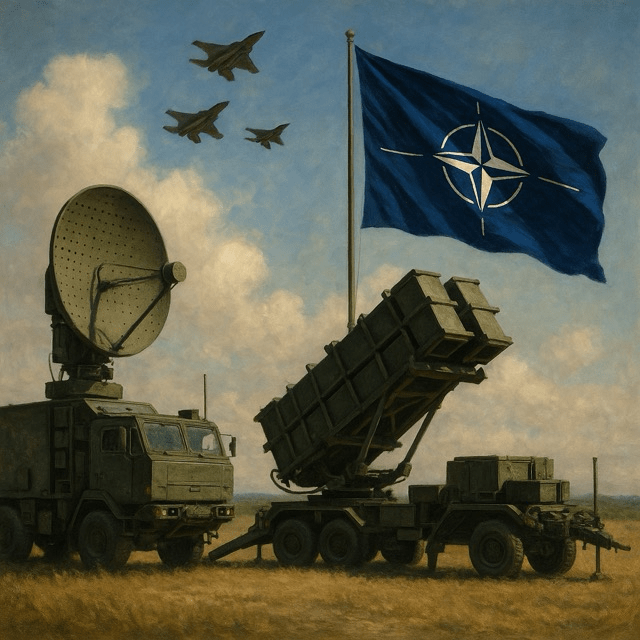
Since the end of the Cold War, NATO’s air defense posture has faced cycles of expansion and contraction, reflecting both shifting threat perceptions and fluctuating budgetary priorities. Yet the rapid evolution of aerial threats—including hypersonic missiles, unmanned aerial systems, and advanced cruise missiles—has forced alliance members to reexamine long-held assumptions about deterrence and collective defense. Against this backdrop, military analysts and defense planners are warning that current air defense assets fall far short of what is needed to protect critical infrastructure, population centers, and deployed forces.
Today, NATO operates a patchwork of air surveillance radars, surface-to-air missile (SAM) batteries, and integrated command-and-control systems across its 31 member nations. While flagship systems like the U.S.-supplied Patriot batteries and European SAMP/T (Surface-to-Air Missile Platform/Terrain) offer robust capabilities, they remain relatively scarce and often concentrated in Western Europe. Eastern flank states in particular report gaps in coverage and insufficient capacity to deal with saturation attacks, a scenario increasingly plausible in light of recent advances in Russian and non-state missile technology.
In a dramatic call to action, a consortium of air defense experts convened at the annual NATO Defense College seminar in Rome has concluded that alliance members must increase their combined air defense resources by roughly 400 percent over current levels. This figure stems from war-gaming projections simulating a high-intensity conflict in the Baltic region, where multiple ballistic and cruise missiles could be launched simultaneously against allied territory. The analysts argue that without such expansion, NATO risks leaving vital assets vulnerable to a well-coordinated strike.
Key components of the proposed 400 percent increase include the acquisition of additional long-range SAM systems, upgrades to existing radar networks for enhanced early warning, and the integration of new counter-drone technologies. Modern platforms such as the American Terminal High Altitude Area Defense (THAAD) and the German IRIS-T SLM are highlighted for their extended reach and precision tracking capabilities. Complementing these systems, investments in sensor fusion and artificial intelligence-driven decision support tools are deemed essential to managing the complex battlespace.
Several member states have already signaled a willingness to boost defense spending. Poland, for example, has contracted several additional Patriot batteries and is negotiating for the establishment of a joint air defense command center with neighboring Baltic allies. Norway and Finland have accelerated deliveries of ground-based radars and short-range missile launchers to secure against low-flying threats. Yet these national efforts, while commendable, remain fragmented; NATO’s North Atlantic Council must harmonize procurement schedules, funding models, and operational doctrines to achieve the envisioned scale.
The challenges to a 400 percent increase are substantial. Industrial production lines for advanced missiles and radars are operating near capacity, limiting the speed at which new units can be fielded. Political debates over burden-sharing persist, with some members cautious about committing to multi-year procurement programs given competing fiscal priorities. Additionally, training and personnel requirements for sophisticated air defense systems impose further strains on national armed forces.
Despite these hurdles, the seminar’s final communiqué underscores that the air defense race is not simply about equipment numbers. It emphasizes the need for joint exercises, streamlined command architectures, and partnerships with the defense industry to accelerate research and development. The communiqué calls for a NATO Air Defense Summit later this year, where defense ministers will review progress and set concrete targets for capability growth.
In conclusion, the call for a 400 percent increase in air defense assets reflects a sobering recognition of emerging threats and the strategic imperative to safeguard alliance territory. As geopolitical tensions intensify, NATO’s credibility as a deterrent hinges on its ability to project a resilient, layered air defense shield. Achieving this goal will demand political resolve, financial investment, and unprecedented cooperation among member states—an endeavor that will define the alliance’s security posture for decades to come.



 The Tower Post