Major State Investment Aims to Boost Energy Security and Transition to Low-Carbon Power
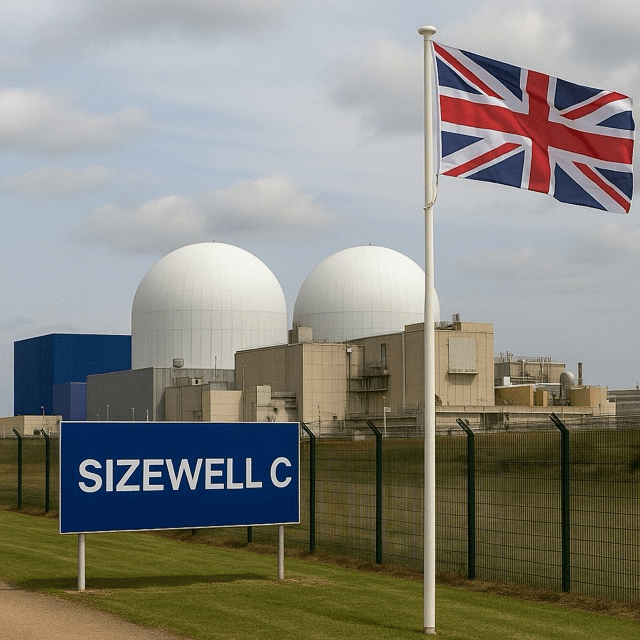
The United Kingdom government has announced a landmark £11.5 billion funding package for the Sizewell C nuclear power plant in Suffolk, marking one of the largest ever public investments in British civil nuclear infrastructure. The pledge reinforces the government’s strategy to strengthen the nation’s energy security, reduce reliance on imported fossil fuels, and meet ambitious net-zero targets.
Sizewell C, which has been in development for over a decade, is expected to generate approximately 3.2 gigawatts of electricity—enough to power around six million homes. The project is being developed by EDF Energy and is modeled after the Hinkley Point C design, using the European Pressurised Reactor (EPR) technology.
Prime Minister Rishi Sunak called the funding commitment a “historic vote of confidence in British energy innovation” and emphasized its importance in the face of volatile global energy markets. “We are securing homegrown power for generations to come,” he said in a statement from Downing Street.
The project is expected to create around 10,000 construction jobs and provide a significant economic boost to the East of England. In addition to the job creation, the investment includes funding for local infrastructure, skills training, and environmental mitigation programs. Officials have stated that the Sizewell C project will play a central role in the UK’s long-term clean energy strategy.
However, the announcement has also drawn criticism from some environmental groups and local communities. Concerns have been raised about the impact on coastal habitats, water consumption, and the lengthy construction timeline, which could stretch into the 2030s. Others argue that renewable energy sources like wind and solar should be prioritized over nuclear due to cost and safety considerations.
Business and Energy Secretary Claire Coutinho defended the decision, noting that nuclear energy offers a stable, low-carbon base load that complements the intermittency of renewables. “Sizewell C will be a backbone of our clean energy future,” she said. “It’s a strategic investment not just in electricity but in national resilience.”
The £11.5bn state funding will be allocated through a combination of equity and loan guarantees, with further private-sector investment anticipated in the coming years. Officials also confirmed the establishment of a new body to oversee project governance and ensure compliance with environmental and safety standards.
Internationally, the move signals the UK’s renewed commitment to nuclear power, aligning it with countries like France, South Korea, and Japan, which are also ramping up nuclear development as part of broader decarbonization efforts.
As construction preparations accelerate, the focus will turn to timely delivery, workforce development, and continued community engagement. The government insists that Sizewell C will be built to the highest standards of sustainability and safety, incorporating lessons from past projects and advances in reactor design.
If completed on schedule, Sizewell C will represent a major milestone in the UK’s journey toward a more secure and sustainable energy system—providing both environmental benefits and economic opportunities for decades to come.




 The Tower Post