Skepticism Grows Over Official Data Released by the Chinese Communist Party
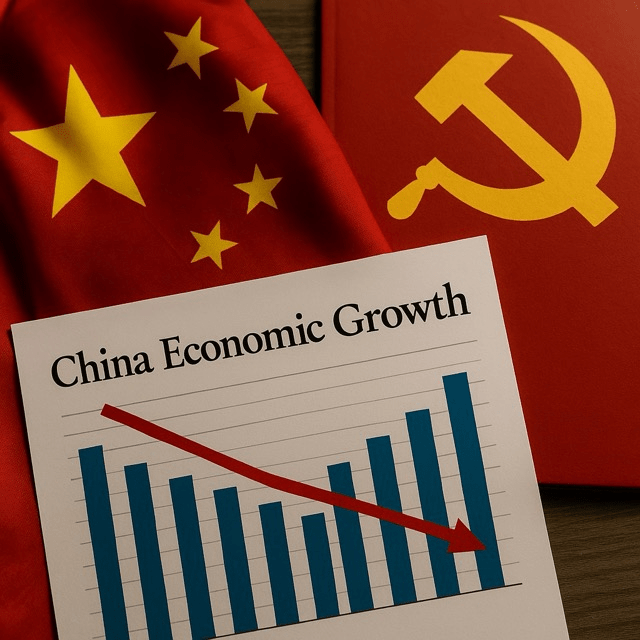
China’s rise as an economic superpower has long captivated analysts, investors, and policymakers. With its impressive growth rates over the past three decades, the country has transformed into the world’s second-largest economy. However, recent reports have reignited concerns about the accuracy and transparency of the data released by the Chinese Communist Party (CCP). Is China’s real economic performance as strong as Beijing claims? Or is there more behind the numbers?
Officially, the Chinese government reported a GDP growth rate of around 5.2% for 2024, a figure that has been met with skepticism by many economists and international observers. Critics argue that China’s opaque statistical system, political pressures, and lack of independent verification make it difficult to trust such data at face value.
Independent analysts point to various indicators that suggest slower growth. These include weak consumer demand, falling exports, declining property values, and rising youth unemployment. While the government maintains a narrative of resilience and stability, on-the-ground data and anecdotal reports paint a more nuanced, if not troubling, picture.
“China’s economic numbers have always carried a political component,” says an economist at a leading think tank. “They are not just economic metrics; they are tools of narrative and legitimacy for the CCP.”
The doubts surrounding China’s economic data are not new. For years, experts have questioned the consistency between national statistics and regional data. Local officials, under pressure to meet growth targets, have been known to inflate numbers. In some cases, discrepancies between electricity consumption, freight volumes, and reported GDP figures have raised red flags.
The real estate sector, once a key engine of growth, has become a major liability. The collapse of major developers like Evergrande and Country Garden has had a cascading effect on domestic demand and financial stability. Despite this, government figures appear to understate the impact, prompting further doubts about statistical reliability.
Another challenge is the broader geopolitical climate. As tensions between China and the West increase, there is a growing perception that Beijing is less inclined to share transparent economic data. Regulatory crackdowns on foreign consultancies and data providers have further limited independent analysis, adding to the fog.
International institutions like the IMF and World Bank continue to work with Chinese data, but they often adjust forecasts and models to account for potential distortions. This duality—official optimism versus analytical caution—has become a defining feature of discussions around China’s economy.
Ultimately, while China remains a global economic powerhouse, the question of its true growth trajectory is more complex than any single data point. Transparency, accountability, and independent verification are key to understanding where the country truly stands—and where it may be headed.
Until then, the world will continue to watch, analyze, and question the figures emerging from Beijing.



 The Tower Post