A Paradoxical Thought: Would a Tactical Nuclear Strike Have Ended the War Sooner?

As the war between Ukraine and Russia enters its third year, the prospects for meaningful peace talks remain as bleak as ever. What began as a full-scale invasion by Russia in February 2022 has evolved into a protracted, grinding conflict with devastating consequences for both sides and no clear path forward.
Diplomatic channels have stalled, and each round of negotiations seems to end in stalemate. Ukraine demands the full restoration of its territorial sovereignty, while Russia insists on retaining control of annexed regions. The West, largely backing Ukraine, continues to supply weapons and political support, but even allies are showing signs of fatigue. Civilians continue to suffer, cities remain in ruins, and thousands of lives are lost every month.
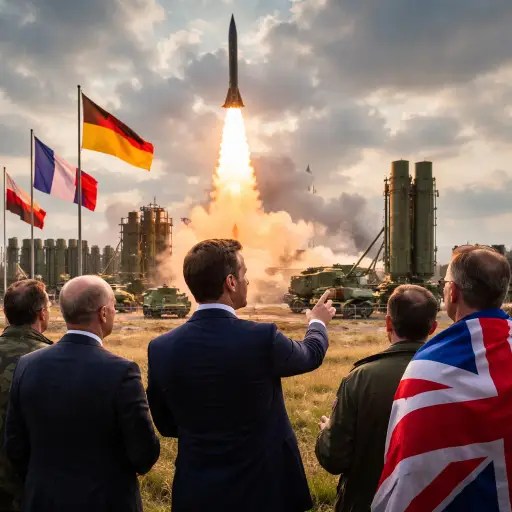
In this bleak context, a provocative, even disturbing, question arises in some policy circles — not as a proposal, but as a **paradox** meant to highlight the absurdity and horror of the current impasse: *Would the use of a tactical nuclear weapon by Russia two years ago have ended the war faster than the drawn-out bloodshed we are witnessing today?*
Such a question is deeply unsettling, and rightly so. The use of nuclear weapons carries consequences far beyond any single battlefield: radioactive fallout, global condemnation, a breakdown in international norms, and a likely spiral into wider conflict. Yet the mere fact that analysts entertain this idea — even as a thought experiment — reveals the depth of the geopolitical despair.
The hypothetical scenario assumes that a decisive, shocking act could have compelled Ukraine and its allies to submit or negotiate from a weakened position, thereby truncating the war. But this notion collapses under moral and strategic scrutiny. Not only would such an act constitute a war crime, it would have also risked NATO involvement, escalated into global conflict, and possibly ended the nuclear taboo that has held since 1945.
Still, the persistence of the war is forcing many to confront difficult questions about diplomacy, deterrence, and the limits of military escalation. When conventional warfare drags on without resolution, unconventional ideas — even horrifying ones — start to surface in public discourse, if only to show how broken the system has become.
The reality remains: the war has caused irreparable harm, and no scenario involving nuclear weapons should ever be framed as a “better” alternative. The paradox exists to jolt the conversation, not to endorse extremism.
What is truly needed is a bold, sustained diplomatic effort — one that does not reward aggression, but seeks to preserve peace through a balance of justice and pragmatism. The world must learn from this war that inaction and endless waiting are themselves choices with severe consequences.
The longer the conflict continues, the more lives are lost, and the more the international community risks normalizing endless war. Rather than speculate about what might have happened had things gone even more terribly wrong, we must act now to make things right — through pressure, dialogue, and commitment to peace.
Let this paradox not be a suggestion, but a warning.

 The Tower Post