Two-Thirds of Emerging Economies at Risk of Economic Slowdown in 2025
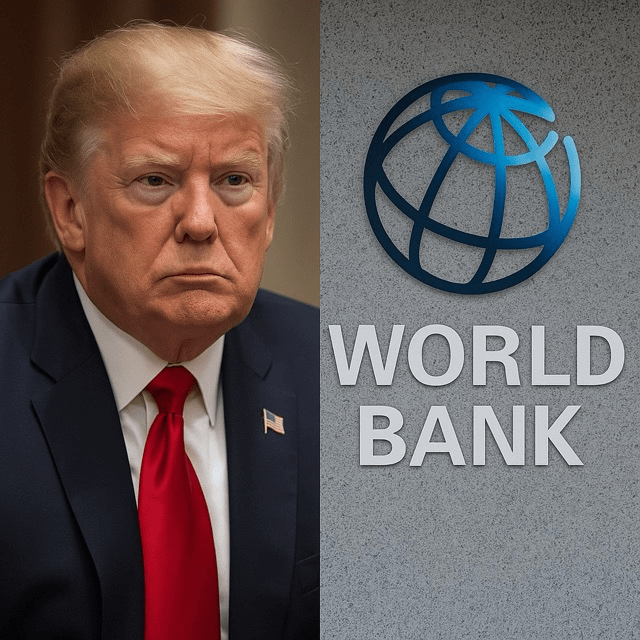
The World Bank has issued a stark warning about the global economic fallout from former President Donald Trump’s revived trade policies, cautioning that nearly two-thirds of developing countries will face slower growth as a result. The trade war, reignited by proposed tariffs and protectionist rhetoric, threatens to derail fragile recoveries across emerging markets already grappling with inflation, debt, and post-pandemic volatility.
The warning comes in a comprehensive report released this week, detailing the risks posed by renewed trade tensions between the United States and key economic partners. Although Trump is not currently in office, his ongoing influence on Republican economic policy and prospects of a potential return to the White House in 2025 have already begun to reshape market expectations.
According to the World Bank, new tariffs on Chinese, Mexican, and European imports—either proposed or supported by Trump-aligned officials—could disrupt global supply chains, raise costs for essential goods, and stifle investment in lower-income countries that rely heavily on export-driven growth.
“Developing economies are extremely vulnerable to global trade shocks,” the report states. “The anticipated increase in U.S. protectionism will reduce export demand, disrupt production, and delay much-needed investments.”
Countries in Sub-Saharan Africa, Southeast Asia, and Latin America are projected to be hardest hit. Many of these economies depend on agricultural and manufacturing exports to larger markets like the U.S., and any increase in tariffs or trade uncertainty undermines investor confidence.
Trump’s initial trade war during his presidency led to tit-for-tat tariff escalations with China, a sharp decline in global trade volumes, and heavy economic losses in export-reliant regions. Now, fears are mounting that a second round could have even more severe consequences, especially given the current instability in commodity prices and interest rate hikes.
The World Bank emphasized that the global economic environment is already fragile. Many developing nations are facing rising borrowing costs, weak currencies, and mounting debt. The additional burden of a U.S.-led trade war could tip several countries into recession.
Economic analysts also highlight the geopolitical ramifications of renewed protectionism. As the U.S. withdraws from multilateral trade agreements and imposes tariffs unilaterally, rival powers such as China may seek to deepen economic ties with developing nations, reshaping global alliances and supply chains.
Despite the grim outlook, the report calls for urgent diplomatic engagement to prevent trade escalation. The World Bank urges both U.S. policymakers and global leaders to prioritize open markets, fair trade rules, and cooperative economic strategies.
Without coordinated action, the warning is clear: the trade war may not only depress economic growth, but also deepen inequality and stall the development progress achieved over the last decade.
For billions in the developing world, the costs of renewed protectionism could be far greater than any political gain.



 The Tower Post