Critics warn that the former president’s recent actions signal a deepening threat to democratic institutions
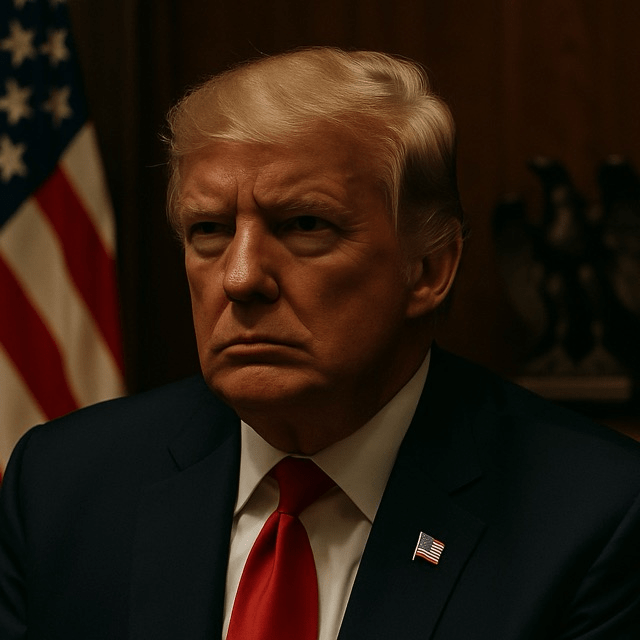
Former President Donald Trump’s most recent political maneuver has ignited a new wave of concern among political analysts, historians, and democracy advocates, who describe it as his clearest step yet toward authoritarianism. His rhetoric, coupled with an explicit focus on consolidating power and purging dissent, is being interpreted as a direct threat to the foundational principles of American democracy.
The catalyst for this heightened alarm was Trump’s unveiling of a proposed framework for reorganizing the federal government—one that dramatically increases executive power and targets civil servants who are perceived as disloyal. Dubbed by critics as a “purge plan,” this initiative aims to root out what Trump and his allies call the “deep state,” a term increasingly used to delegitimize career officials and independent institutions.
The plan proposes sweeping changes, including reclassifying tens of thousands of federal workers under a new category that would strip them of job protections, making it easier to fire them without cause. Legal scholars warn that this would undermine the independence of federal agencies and politicize traditionally nonpartisan roles, effectively turning bureaucratic functions into extensions of executive will.
Historically, authoritarian regimes have relied on purging dissent and co-opting state mechanisms to consolidate control. Trump’s language—referring to internal enemies and emphasizing loyalty over competence—bears uncomfortable resemblance to tactics employed by autocrats across the globe. In a recent speech, Trump vowed to “clean house” and rebuild government “in the image of the people,” a phrase critics interpret as code for installing loyalists and eliminating checks on presidential authority.
This strategy is not emerging in isolation. It is part of a broader ecosystem of actions and rhetoric aimed at undermining institutions—from the judiciary and intelligence community to the free press. Trump’s repeated rejection of election results, his attacks on the rule of law, and his calls for retribution against political opponents are increasingly being seen not as political bluster but as a blueprint for authoritarian governance.
Prominent historians and former government officials have sounded the alarm, comparing the current trajectory to democratic backsliding in countries like Hungary, Turkey, and Venezuela. “This is not just dangerous talk,” said one former national security adviser. “It’s a systematic effort to dismantle the guardrails of democracy.”
Supporters argue that Trump is merely seeking to “drain the swamp” and rein in an unaccountable bureaucracy. But the framing of dissent as treasonous and the push to centralize control raise significant concerns about the erosion of democratic norms. Even some within the conservative movement have voiced discomfort with the scale and implications of Trump’s proposals.
As the 2024 election approaches, the stakes could not be higher. The battle over the future of American democracy appears to be intensifying, with Trump’s vision of governance standing in stark contrast to the pluralism and institutional integrity that have long defined the republic.
Whether the electorate will embrace or reject this shift remains to be seen—but the warning signs, many argue, are flashing red.


 The Tower Post