A Green and Digital Transformation Anchored by High-Speed Rail Expansion
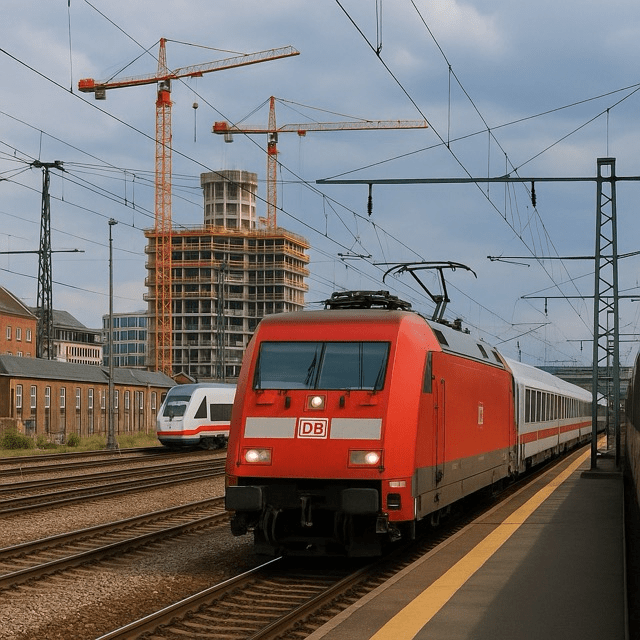
In a landmark announcement on June 14, 2025, Germany’s federal government unveiled a historic €500 billion investment package over the next decade, with the lion’s share directed to revitalizing and expanding the nation’s rail network. Chancellor Olaf Scholz and Transport Minister Volker Wissing presented the plan as a cornerstone of Germany’s green and digital transition, aiming to shift freight and passenger traffic from road and air to environmentally friendly rail systems.
Under the new strategy, €220 billion will be allocated to modernizing existing tracks, building high-speed corridors, and electrifying regional lines. Key projects include the Berlin–Hamburg high-speed link upgrade to support 300 km/h travel, completion of the Rhine–Danube corridor to bolster east–west connectivity, and extension of suburban lines around Munich and Frankfurt to ease urban congestion. An additional €50 billion will finance a fleet of state-of-the-art electric locomotives and digital signaling systems, including the digital European Train Control System (ETCS), to improve safety and punctuality.
The investment spree reflects Germany’s commitment to the European Union’s climate targets, under which rail is seen as a low-emission alternative to road transport. Freight traffic by rail carries only 1.4% of Germany’s transport-sector emissions, compared to 19% by heavy goods vehicles, according to the Federal Environment Agency. By shifting an estimated 25% of freight from highways to rail by 2035, the government projects a reduction of up to 8 million tonnes of CO₂ annually.
Moreover, the plan dovetails with Germany’s industrial policy. The railway construction boom is expected to generate up to 250,000 jobs in engineering, manufacturing, and construction, with a particular focus on training programs for young technicians and engineers. Standardized contracts and public–private partnerships will streamline project delivery, drawing in infrastructure funds and pension assets as long-term investors.
Despite broad political support, the rail-first approach faces hurdles. Critics from the automotive and trucking lobbies warn of economic dislocation, as highways and logistics hubs risk underutilization. Environmental groups, while welcoming the green shift, contend that greater investment is needed in rural branch lines and cycling infrastructure. The transport ministry has countered that the balanced allocation—€120 billion for roads, €60 billion for aviation, and €100 billion for digital infrastructure—ensures a comprehensive network upgrade.
Financial oversight will be crucial. Germany plans to leverage budget surpluses and green bonds to minimize debt impact while tapping EU Recovery and Resilience Facility funds. The finance ministry will publish quarterly reports on disbursement and performance metrics, including carbon reduction per euro spent and passenger-kilometers shifted to rail.
As Germany embarks on this ambitious spending spree, stakeholders across Europe are closely watching. The success of the rail-first strategy could serve as a model for other EU member states grappling with decarbonization and digitalization. For now, Chancellor Scholz summed up the vision: “We are building the backbone of our modern, climate-neutral economy—one rail at a time.”


 The Tower Post