Analyzing how illicit fuel theft empowers criminal networks and challenges regional stability
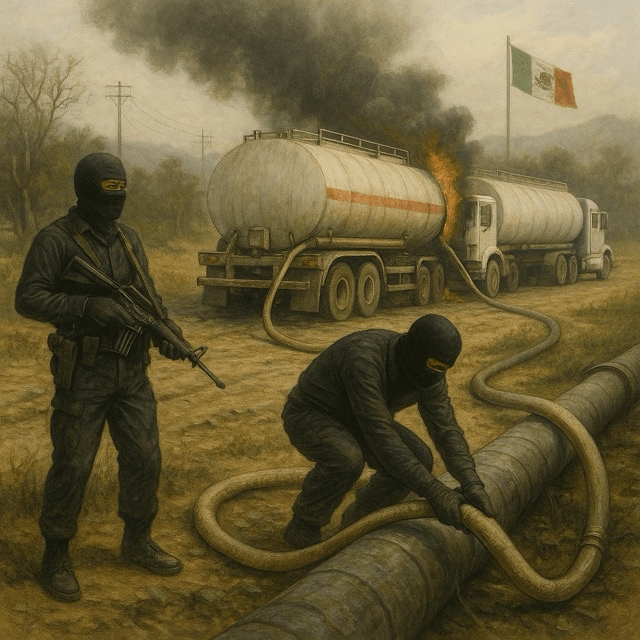
The Financial Times recently illuminated the staggering scale of fuel theft in Mexico, where pipelines siphoned from state-run Pemex feed an extensive black market. “It’s a very big black market,” notes Samuel León, underscoring how stolen gasoline and diesel enter illicit distribution networks across the country. The FT report highlights not just the technical ease of tapping pipelines, but the systemic vulnerabilities that allow cartels to profit by selling cheap fuel at roadside pumps or smuggling it across the U.S. border.
Beyond domestic sales, U.S. financial authorities have sounded alarms over how these stolen hydrocarbons finance organized crime. A recent FinCEN alert details how Mexican cartels, notably the Jalisco New Generation and Sinaloa factions, exploit complicit brokers and shell companies to launder revenues from fuel theft into the legitimate energy sector in the southwestern United States. This cross-border criminal commerce not only furthers narco-violence but also distorts legal markets, undermining honest businesses and depriving governments of tax revenues.
Operational crackdowns in Mexico have produced notable seizures, yet cartels adapt swiftly. In late May 2025, authorities in Tabasco state confiscated over 3 million liters of illegally stored fuel, along with vehicles and containers used for smuggling. President Sheinbaum’s new traceability system aims to monitor fuel from import or refinery to point of sale, but widespread corruption and limited inspection capacity hamper full implementation.
Moreover, U.S. sanctions have targeted logistical networks that traffic stolen hydrocarbons. In May 2025, the U.S. Treasury blacklisted transportation firms accused of moving cartel-controlled fuel into the United States, a measure intended to choke off illicit revenue streams. Yet, without coordinated enforcement and intelligence-sharing between U.S. and Mexican agencies, such sanctions risk displacing rather than dismantling illicit supply chains.
The FT report stresses that fuel theft is deeply embedded within local communities. Rural populations, facing poverty and limited opportunities, often collude with siphon crews for daily income. Cartels pay up to several hundred pesos per tap, creating a parallel economy that erodes state authority. Tackling this phenomenon thus requires not only security operations but also socio-economic investment in affected regions.
Experts argue for a multipronged response combining advanced surveillance, community outreach, and international cooperation. Technological tools—such as pressure sensors, aerial drones, and chemical markers—can detect illegal tap-offs in real time. Meanwhile, anti-corruption drives within Pemex and strengthened regulatory frameworks can limit insider facilitation. Most crucially, Mexico and its neighbors must forge joint task forces to track cross-border fuel flows and prosecute transnational actors.
Financial transparency is another critical front. Banks and oil traders should enhance due diligence, flagging suspicious transactions and supply anomalies that diverge from declared import levels. The FinCEN alert provides red-flag typologies—such as frequent small-value transfers and use of shell entities—that can guide compliance teams. Bridging the gap between financial intelligence and criminal investigations will be vital to constraining the cartels’ economic might.
Ultimately, the FT’s exposé on Mexico’s stolen fuel underscores a broader geopolitical risk: when illegal markets flourish unchecked, they empower violent networks, deplete public resources, and imperil regional security. Addressing fuel theft demands structural reforms—spanning governance, technology, and cross-border law enforcement—to prevent cartels from turning pipelines into profit conduits for violence and corruption.



 The Tower Post