Analyzing Vladimir Putin’s diplomatic bid and its implications for Benjamin Netanyahu’s strategy
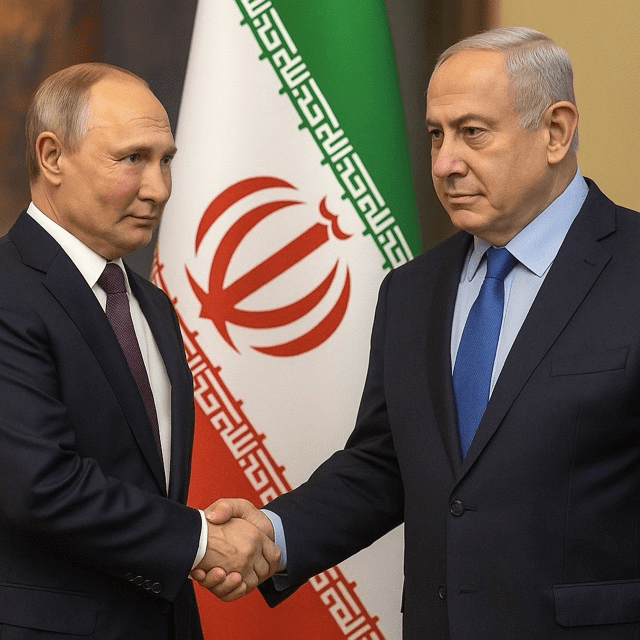
In mid-2025, Russian President Vladimir Putin made an unexpected diplomatic overture: offering to mediate between Israel and Iran in the escalating tensions over Tehran’s nuclear and military activities. This intervention marks a significant departure from Moscow’s usual posture of balancing relations on both sides, signaling Russia’s desire to assert influence in one of the world’s most volatile theaters. For Israeli Prime Minister Benjamin Netanyahu, Putin’s proposal presents both an opportunity and a calculated risk, as Jerusalem weighs the potential benefits of Russian facilitation against the pitfalls of overreliance on a major power with its own regional ambitions.
Netanyahu’s government has long regarded Russia’s presence in Syria and its ties with Iran’s Revolutionary Guard Corps as complicating factors for Israeli security. Since 2015, Moscow’s military deployment around Damascus has enforced “deconfliction” protocols that allow Israeli air strikes on Iranian targets—provided Israel notifies Russian forces in advance. Putin’s leap to active mediation therefore raises questions: will Russia continue to permit Israeli operations, or will it leverage the mediation talks to constrain them?
From Putin’s perspective, the mediation bid serves multiple objectives. First, it positions Russia as an indispensable power broker in the Middle East, counterbalancing U.S. influence. By convening shuttle diplomacy between Tehran and Jerusalem, Moscow can extract concessions—such as assurances that Iran refrains from deploying additional forces in Syria or that Israel scales back joint exercises with NATO allies in the Mediterranean. Second, mediation offers Putin a public-relations windfall, bolstering his image domestically and internationally as a statesman capable of resolving intractable conflicts.
Netanyahu’s gamble, however, is fraught with strategic complexity. Israeli leadership must determine how to engage without appearing to legitimize Iran’s nuclear program or undermine Western-led sanctions. Publicly, Jerusalem has maintained that only direct negotiations—free of preconditions—could yield a durable agreement on Iran’s enrichment capabilities. Behind closed doors, senior Israeli officials have reportedly signaled openness to a temporary freeze on certain uranium enrichment facilities in exchange for Iranian withdrawal from Syrian border zones critical to Israeli security.
Critics of Netanyahu’s outreach warn of potential pitfalls. A failed or abortive Russian-mediated process could erode Israel’s deterrence, emboldening Iran to intensify its nuclear research or proxy activities in Lebanon and Gaza. Moreover, Israel’s principal ally, the United States, under President Biden, has expressed reservations about Moscow’s intentions. Washington insists that any credible mediation must be internationally sanctioned and include verifiable mechanisms—concerns that could strain U.S.-Israel coordination if Netanyahu appears too deferential to Putin’s plan.
Iran’s response to the Russian initiative has been cautiously optimistic. Supreme Leader Ali Khamenei’s office issued a statement endorsing “any diplomatic framework” that respects Iran’s sovereign rights under the Non-Proliferation Treaty. Iranian negotiators have reportedly prepared proposals to limit enrichment at Fordow and Natanz in exchange for phased relief from oil-export restrictions. Yet, Tehran’s calculus is equally careful: entering into mediation with Israel—its avowed existential foe—risks political backlash from hardline factions, who view any concession as a betrayal of revolutionary principles.
Regionally, Arab Gulf states are watching the mediation effort with mixed feelings. Countries like Saudi Arabia and the United Arab Emirates, which share Israel’s concerns about Iran’s regional role, could welcome a reduction in Iranian nuclear activities. However, they remain wary of Russia’s broader ambitions, especially its military ties with Damascus and potential arms sales to regional actors. Gulf leaders may therefore support behind-the-scenes consultations while urging a multilateral framework that includes the United Nations and the European Union.
As the Russian shuttle diplomacy unfolds, several scenarios could materialize. In an optimistic outcome, a limited interim agreement could emerge, featuring a moratorium on new centrifuge installations in exchange for targeted sanctions relief—thus buying time for more comprehensive talks. A less favorable path could see the process stall, reinforcing mutual distrust and prompting Israel to resume unilateral strikes, with U.S. backing, to interdict Iranian shipments to proxy militias. The most dangerous scenario involves Moscow leveraging the stalemate to forge a separate security architecture in the Levant, sidelining Western influence and compelling Israel to recalibrate its regional strategy.
Putin’s mediation gambit thus presents Netanyahu with a domestic and international conundrum: seize the chance to negotiate a respite from an increasingly perilous confrontation, or reject the overture to preserve strategic autonomy and alliance solidarity. Whatever choice Netanyahu makes, the move will redefine the geopolitical fault lines in the Middle East and test the resilience of long-standing partnerships. In a game of high-stakes diplomacy, both Israeli and Iranian leaders must navigate the uncharted waters of Russian facilitation—fully aware that in this modern Cold War arena, every concession carries profound implications for regional stability.

 The Tower Post