Labour leader’s hallmark achievements and pending challenges as he marks 12 months in office
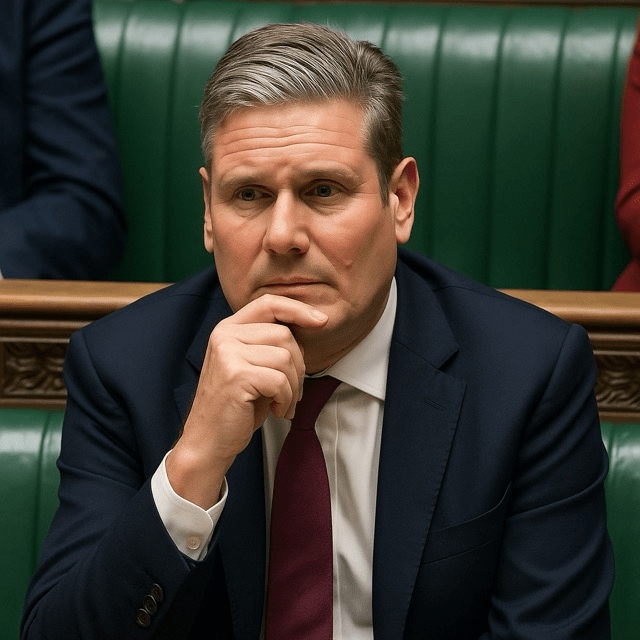
As Keir Starmer approaches the first anniversary of his tenure as Labour leader, the political landscape of the United Kingdom stands at a crossroads. Once viewed as an underdog in the race for 10 Downing Street, Starmer has spent the past year reshaping the party’s image, consolidating its policy platform, and engaging with a public eager for change.
In a series of high-profile speeches, Starmer laid out a vision of “pragmatic progressivism,” aiming to balance fiscal responsibility with social justice. His commitment to revising the party’s economic policy away from its more radical fringes has won plaudits from moderate voters and some business leaders, although tensions remain with the party’s grassroots base.
On the international stage, Starmer’s diplomatic engagements have sought to position the UK as a constructive post-Brexit player. His recent visit to Europe culminated in renewed talks on trade cooperation, signaling a departure from the confrontational approach of recent years. Analysts note that these efforts have helped rebuild bridges with key trading partners.
Domestically, Starmer has been tested by crises ranging from a cost-of-living squeeze to a beleaguered National Health Service. His decision to propose targeted tax relief measures has garnered mixed reviews, with supporters praising the attempt to ease burdens on struggling families, while critics argue that the proposals lack clear funding sources.
Within Labour, Starmer has worked to heal the divisions left by Jeremy Corbyn’s leadership. The readmission of suspended MPs, alongside a revamped shadow cabinet that includes fresh faces, underscores his prioritization of party unity. Yet doubts linger over whether the leader’s centrist pivot might alienate core supporters.
Polling data indicates that public approval of Starmer has climbed modestly, with Labour maintaining a consistent lead over the Conservatives in national surveys. Nonetheless, voter enthusiasm varies widely by region, with traditional Labour strongholds showing signs of volatility.
Political commentators highlight that Starmer’s ability to translate popularity into tangible electoral gains remains unproven. With local and regional elections on the horizon, the first real test of Labour’s momentum will come later this year.
Starmer’s messaging emphasizes competence and stability, pitching Labour as the safe pair of hands needed to guide the UK through economic uncertainty. His carefully calibrated rhetoric contrasts sharply with the polarizing style of his predecessor.
As the anniversary approaches on July 4, reflections on the past year are tempered by anticipation of the months ahead. For Starmer, the challenge will be to sustain incremental progress while demonstrating bold leadership capable of inspiring the electorate.
Whether his first year will be remembered as a triumph of steady stewardship or a missed opportunity depends largely on the outcomes of the policy initiatives he has put in motion—and on his capacity to seize the narrative when the stakes are highest.



 The Tower Post