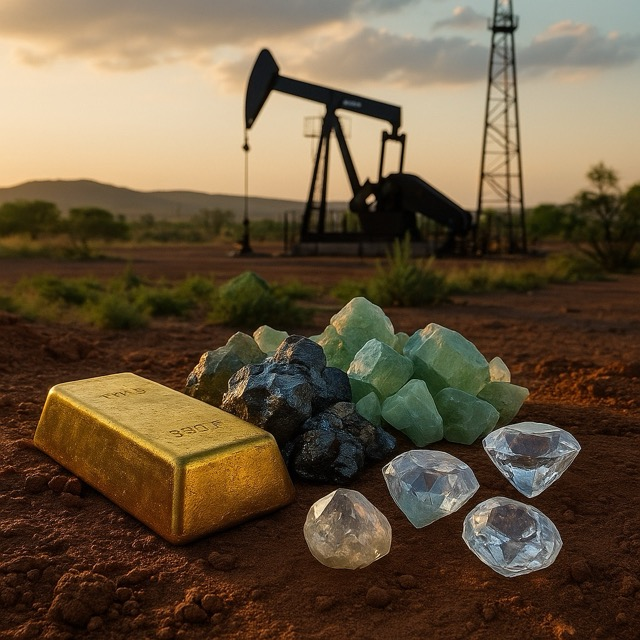
From gold and diamonds to rare earths and oil, the continent’s vast natural resources remain a magnet for foreign powers and shadowy interests.

Across vast swathes of Africa, beneath its red earth and verdant forests, lie some of the richest deposits of natural resources on the planet: gold, diamonds, rare earth elements, and oil. But while the continent holds the promise of prosperity, the reality for many African nations has been a painful paradox—resources flowing out, wealth rarely staying in.
In recent years, concerns have grown over a new “scramble for Africa,” not with colonial flags, but through financial leverage, opaque contracts, and corrupt alliances. A complex web of multinational corporations, state actors, and private intermediaries are accused of siphoning off Africa’s mineral wealth—often with the tacit approval or active complicity of local elites.
The Democratic Republic of Congo (DRC), for example, holds over 60% of the world’s cobalt reserves—a mineral vital to smartphones, electric vehicles, and military equipment. Yet despite this immense strategic value, much of the DRC’s population lives in poverty. Reports by watchdog groups highlight how global mining giants and Chinese state-backed firms dominate extraction contracts, while artisanal miners work under dangerous conditions with little oversight.
“Cobalt is the new oil, and Congo is the new battleground,” said François Mbuyi, a mining analyst based in Kinshasa. “But the profits rarely return to the people. Instead, they vanish into tax havens or the vaults of multinationals.”
Diamonds tell a similar story. In Sierra Leone, Angola, and the Central African Republic, decades of conflict have been fueled by the pursuit of these precious stones. Despite international regulations like the Kimberley Process, smuggling remains rampant. Many diamonds extracted from conflict zones still find their way into global markets via shell companies and laundering operations.
Gold, another African treasure, is often trafficked across borders illegally. According to a 2023 United Nations report, billions of dollars in gold are smuggled each year from West Africa to the United Arab Emirates, bypassing official channels and depriving nations of much-needed revenues.
Oil, meanwhile, remains a double-edged sword. In Nigeria, Africa’s largest oil producer, corruption scandals and oil theft have drained billions from state coffers. Foreign oil giants continue to dominate the sector, often striking deals that favor their bottom lines over national development.
“Oil should have transformed Nigeria. Instead, it became a curse,” said journalist and author Tunde Adebayo. “A small elite grows richer, while pipelines leak into farmland and youth remain unemployed.”
Rare earth minerals, crucial to global technologies, are now drawing increasing attention from superpowers. China, the U.S., and European nations are vying for access to lithium, tantalum, and neodymium—minerals essential for clean energy and defense applications. African nations, often lacking the technical capacity to fully process or regulate these resources, are at risk of becoming mere extraction zones once again.
While some governments have begun renegotiating contracts or introducing local beneficiation policies, progress is slow and often resisted by powerful interests.
Activists and economists alike argue that transparency, better governance, and pan-African cooperation are vital to reversing the tide.
“Africa is not poor,” said Kenyan economist Dr. Njeri Mwangi. “It is being impoverished—systematically, and in plain sight.”
As the global demand for critical resources accelerates, Africa finds itself at a crossroads: continue exporting raw wealth while importing poverty, or reclaim control over its destiny. The answer may determine the continent’s future for generations to come.