Winemakers warn of shrinking market share as U.S. trade policy tilts the playing field in favor of foreign competitors
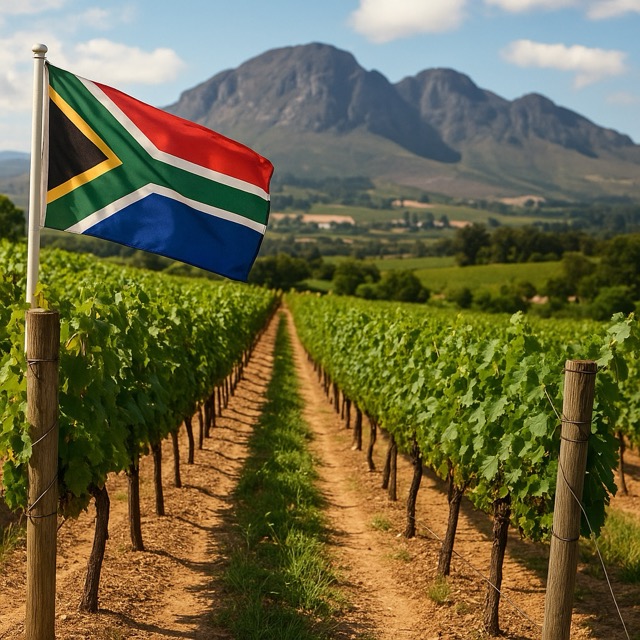
South Africa’s celebrated wine industry is bracing for a period of significant upheaval after the United States imposed a 30 per cent tariff on its wine exports, placing local producers at a severe disadvantage compared to foreign rivals. The move, announced this week by the U.S. Trade Representative’s office, has sent shockwaves through the Cape’s sprawling vineyards and the communities that depend on them.
The U.S. is South Africa’s third-largest wine export market, accounting for more than $100 million in annual sales. Industry leaders say the steep tariffs will make South African wines far less competitive, especially against producers from countries with favorable trade agreements with Washington, such as Chile and Australia.
“This is a devastating blow,” said Lindiwe Jacobs, CEO of the Stellenbosch Wine Council. “Our wines are already battling for shelf space in an increasingly crowded market. Adding 30 per cent to our prices in the U.S. is like handing our competitors the keys to our customer base.”
The impact is expected to ripple far beyond the vineyards themselves. South Africa’s wine sector supports more than 270,000 jobs, from farm workers and cellar staff to exporters and hospitality workers in wine tourism. A contraction in U.S. sales could lead to job losses, reduced investment in new vineyards, and a slowdown in the broader rural economy.
Economists warn that the tariffs could also disrupt the delicate balance of the global wine trade. With fewer bottles headed to the U.S., South African producers may flood other markets, driving down prices and intensifying competition in Europe and Asia. “It’s a classic case of trade diversion,” noted Willem Botha, a Cape Town-based trade analyst. “The U.S. move doesn’t just hurt South Africa—it has knock-on effects across the global industry.”
Some winemakers are already exploring alternative strategies, including expanding distribution in Africa’s growing middle-class markets, deepening ties with Asian buyers, and promoting premium wines in Europe to offset lost revenue. Others are urging Pretoria to engage in urgent trade negotiations with Washington to secure relief.
The timing of the tariff decision has added to the industry’s sense of unease. It comes on the heels of a difficult harvest season marked by drought in parts of the Western Cape and rising production costs due to inflation and a weaker rand. Many wineries are already operating on thin margins, making the new U.S. tariffs potentially existential.
“This isn’t just about business—it’s about preserving a cultural heritage that goes back more than 350 years,” said Jacobs. “If we lose access to the U.S. market in any meaningful way, the consequences will be felt for generations.”
For now, the mood in South Africa’s vineyards is one of cautious defiance. While the challenges ahead are formidable, industry veterans point out that the country’s winemakers have weathered political isolation, global recessions, and fierce international competition before. As the sun sets over the Cape Winelands, one thing is certain: South Africa’s vintners will fight to keep their place at the world’s table, tariffs or not.



 The Tower Post