Musk’s drive to dismantle America’s aid agency has triggered clinics to close and supply chains to stall. Court fights rage, Congress has reclaimed billions, and activists float ICC action—but prosecutors have announced no case against him.
LEDE
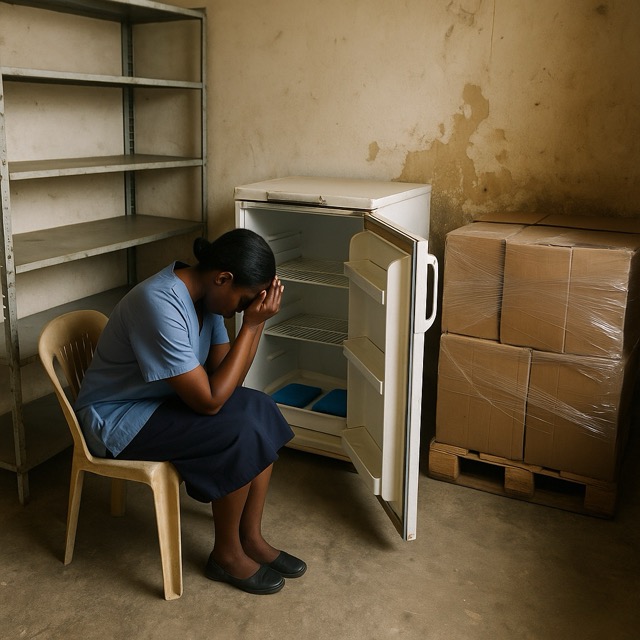
Six months on from the most dramatic shake‑up in U.S. development policy since the Cold War, the humanitarian ledger is bleak. In early February, Elon Musk—empowered by President Donald Trump to lead the ad‑hoc Department of Government Efficiency (DOGE)—moved to dismantle the U.S. Agency for International Development (USAID), Washington’s main conduit for overseas assistance. Programs were frozen, field staff furloughed or fired, and contracts terminated as operations were shifted to the State Department or simply halted. A federal judge later ruled that the effort likely violated the Constitution, though subsequent appeals loosened parts of the injunction. Meanwhile, out in the world’s clinics, the impacts have been immediate: medicine stock‑outs, interrupted malaria campaigns, and HIV treatment gaps that health workers warn could reverse decades of progress.
WHAT ACTUALLY CHANGED—AND WHAT DIDN’T
The administration’s actions combined executive orders with rapid administrative moves: a 90‑day foreign‑aid freeze for review; the deactivation of thousands of USAID email accounts; and a plan to fold or eliminate most USAID functions, with remaining activities steered through the State Department. Multiple courts intervened. In March, U.S. District Judge Theodore Chuang wrote that the dismantling ‘likely violated the Constitution in multiple ways.’ Days later, an appeals panel allowed parts of the overhaul to continue while litigation proceeds. Congress then reclaimed about $9 billion in previously allocated funds via a rare rescission. The White House insists the goal is to cut waste and localize aid. But for implementing partners—the NGOs and contractors that run programs—the on‑the‑ground picture looks like collapse.
ON THE GROUND: MALARIA, HIV AND PRIMARY CARE
Consider Guinea, where a long‑running U.S.‑backed malaria program had helped push down child infection rates. Aid workers there describe halted distributions of bed nets and medicines, training programs mothballed, and community health workers sent home. In southern Africa, clinicians report HIV regimens interrupted after procurement pipelines stalled. Some PEPFAR‑supported facilities have reduced operating hours or closed. In several countries, childhood immunizations—already dented by the pandemic—miss targets as cold‑chain budgets and outreach funds evaporate. A sweeping Financial Times analysis warned that as many as 14 million lives could be put at risk if the pullback persists.
THE LEGAL FIGHT: SEPARATION OF POWERS AND WHO GAVE THE ORDER
At the heart of the court battle is a basic question: can an unelected outside adviser oversee the de facto liquidation of a congressionally created agency? Justice Department lawyers have argued DOGE only advised; plaintiffs point to directives, access decisions and personnel moves they say emanated from Musk’s team. Chuang’s opinion emphasized Congress’s power of the purse and the statutory basis for USAID’s existence under the 1961 Foreign Assistance Act. In late March, a temporary stay from the Fourth Circuit allowed further steps to proceed, and the administration pressed ahead with breaking up remaining units even as arguments continue. For career staff and partners, the oscillation between injunctions and green lights has meant whiplash—and planning paralysis.
FOLLOW THE MONEY: RESCISSIONS AND RE‑PROGRAMMING
Beyond executive action, lawmakers cemented parts of the retreat. In July, Congress passed a rare rescission canceling roughly $9 billion in international aid already committed to humanitarian groups. Officials have discussed reshaping what remains of the ‘150 Account’—the foreign‑affairs budget line—by shifting authority to State and tightening controls over multilateral partners. Watchdog groups warn that abrupt cancellations strand clinics mid‑procurement and saddle governments with unpaid invoices. Even programs that survived on paper, they say, are functionally frozen without staff, systems or cash.
WHY IT HAPPENED: IDEOLOGY, POLITICS AND A TECH MOGUL’S CRUSADE
The administration framed USAID as bloated and unaccountable; Musk called it a ‘criminal organization’ and said it was ‘time for it to die.’ Supporters cast the overhaul as long‑overdue discipline: fewer contractors, less ‘mission creep,’ more local control. Critics counter that the speed and scale of the teardown ignored real‑world dependencies—supply chains for antiretrovirals or malaria drugs cannot be rebuilt overnight—and that evidence of systemic fraud remains thin. The episode reflects a broader push to centralize power in the White House, weaken the civil service and test the boundaries of unilateral executive authority.
WHO STEPS IN? EUROPE, GULF DONORS AND BEIJING
As U.S. pipelines have narrowed, European development agencies, Gulf philanthropies and Chinese lenders have moved to fill some gaps. But they prioritize differently. European funding is strained by commitments to Ukraine and domestic politics. Gulf money often flows through bilateral channels tied to strategic interests. Chinese support tends toward infrastructure and loans, not recurrent health commodities. For ministries of health in low‑income countries, this means a patchwork: some clinics get band‑aid relief while others go dark.
THE ICC QUESTION: RUMOR VS. REALITY
In recent weeks, activists and some politicians have urged The Hague to pursue crimes‑against‑humanity charges over policies they say knowingly imperil civilians. To date, however, the International Criminal Court has announced no investigation or case against Musk. In fact, the U.S. government has imposed sanctions on ICC officials, and the Court’s docket remains dominated by conflicts such as Ukraine, Gaza, the DRC and Libya. Legal scholars note that while ‘inhumane acts’ under the Rome Statute can, in theory, encompass widespread deprivation, the ICC’s jurisdiction is limited and novel theories face steep hurdles—particularly against nationals of a non‑member state shielded by hostile executive policy.
WHAT TO WATCH NEXT
Three tracks bear watching. First, the courts: plaintiffs seek to re‑establish statutory guardrails around USAID and reinstate staff; the administration is testing how far advisory bodies like DOGE can go. Second, appropriations: the next spending bill will decide whether foreign‑aid lines are rebuilt or permanently slimmed. Third, outcomes: malaria case counts, HIV treatment continuity and vaccine coverage will signal whether the world is absorbing the shock—or sliding backward.
BOTTOM LINE
Even if elements of USAID are rebuilt, months of disruption have already translated into lives at risk. The debate over waste and accountability is legitimate; the method—a blitz dismantlement without contingency plans—has proven extraordinarily costly. The world will measure this experiment not in spreadsheets, but in clinic registers, lab slips and empty pharmacy shelves.


 The Tower Post