From war in Ukraine to turmoil in the Middle East and a tightening Russia–China axis, many of Zbigniew Brzezinski’s old headaches are back—now stitched together by interests, technology and sanctions evasion rather than ideology.
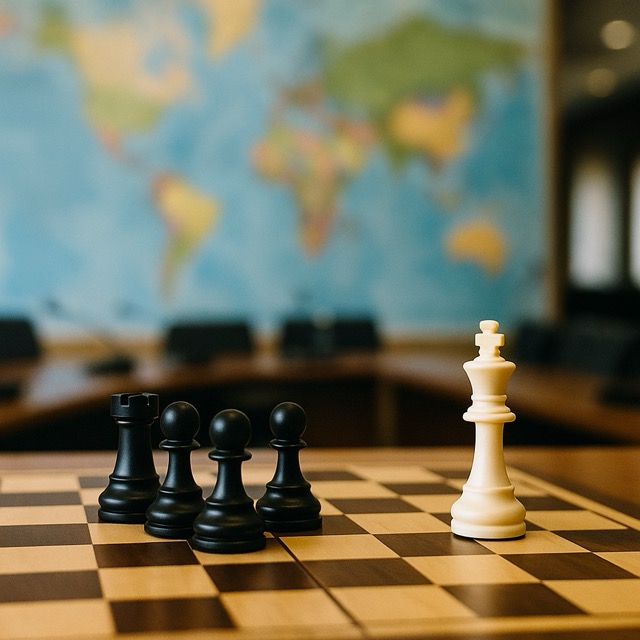
Zbigniew Brzezinski, the Polish‑born strategist who helped steer Washington through the late Cold War, spent his career urging Americans to look past the news cycle to the map—and to the habits of states. In his later writings he warned that U.S. hubris could provoke what he called an ‘alliance of the aggrieved’: a loose coalition of powers resentful of the American‑led order, plausibly including Russia, China, Iran and North Korea. A decade after his death, the silhouette he sketched has come into focus. It is not a treaty alliance like NATO, and its members distrust each other in profound ways. Yet across battlefields, sea lanes and supply chains, their coordination is thicker than at any time since the Sino‑Soviet split—and it is reshaping the costs and risks of U.S. statecraft.
WHO WAS ‘ZBIG’—AND WHAT DID HE FORESEE?
As Jimmy Carter’s national security adviser (1977–81), Brzezinski helped normalize ties with China, shepherd the Camp David Accords and rally pressure on the Soviet Union after its invasion of Afghanistan. In books such as *The Grand Chessboard* (1997) and *Strategic Vision* (2012), he argued that U.S. power would endure only if paired with strategic restraint and a ‘larger West’ that drew in fence‑sitters rather than pushed them away. He cautioned that the ‘most dangerous scenario’ for America would be a grand coalition between China and Russia—’united not by ideology but by complementary grievances’—with Iran and North Korea orbiting at the edges. In 2025, that reads less like prophecy and more like program notes.
SNAPSHOT, AUGUST 2025: THE TIES THAT BIND
Start with Moscow and Beijing. Their ‘no‑limits’ partnership has matured into a dense web of energy deals, joint military drills and dual‑use technology trade. Western officials say Chinese firms have supplied machine tools, microelectronics and other inputs that bolster Russia’s defense industry despite sanctions; Beijing denies providing weapons. In the Pacific, Russian and Chinese navies have staged high‑profile patrols this summer, a signal event for countries from Japan to Australia.
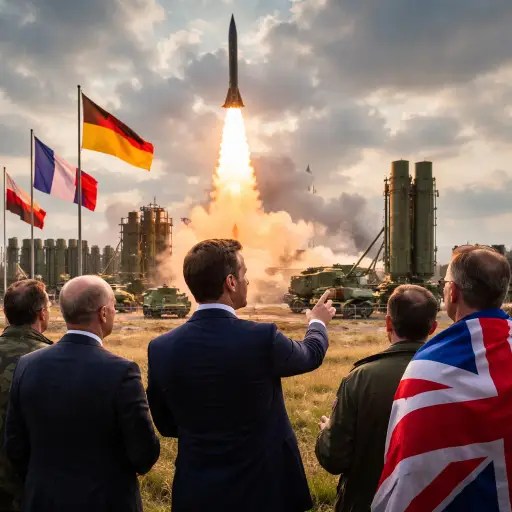
Add North Korea. In June 2024, Vladimir Putin and Kim Jong Un signed a mutual defense pact—ratified that autumn in Pyongyang—pledging assistance if either is attacked. Since then, Western governments say North Korea has shipped artillery shells and missiles to Russia; in return, analysts see Russian help with satellites and military technology. Then there is Iran. Tehran’s drone partnership with Moscow—begun in 2022—has evolved into Russian mass‑production of Iranian‑designed Shahed systems at the Alabuga industrial zone, with reports this year of upgraded variants and deeper technology exchange. Those flows coincide with Iran‑linked militia activity from the Levant to the Red Sea, which has strained commerce and drawn U.S. and allied responses.
HOW COORDINATION WORKS WITHOUT A CAPITAL ‘A’ ALLIANCE
What knits these actors together is less a formal charter than a portfolio of transactions: oil and gas swapped for weapons and components; scientific exchanges that double as technology transfer; logistics networks that route sanctioned goods through permissive jurisdictions. BRICS expansion and a patchwork of non‑Western payments channels provide diplomatic cover. The four governments line up tactically at the U.N. Security Council and in information spaces, amplifying each other’s narratives about American decline and Western double standards. For now, the arrangement is opportunistic. But opportunism can be enough to change facts on the ground.
THE EUROPEAN AND MIDDLE EASTERN THEATERS COLLIDE
Ukraine remains the crucible. Russia’s war effort has absorbed and adapted Iranian‑origin drone tactics, while sanction‑busting imports—some traced to Chinese suppliers—shore up production of explosives, electronics and machine tools. Kyiv’s air defenders face a mix of cheap mass and incremental innovation. Meanwhile, the conflict’s shockwaves intersect with a broader Middle East crisis. Iranian proxies have launched drones and missiles at Israel and Gulf targets; Yemen’s Houthis have kept up Red Sea attacks, pushing container ships around Africa and lifting insurance costs. One theater furnishes the other with tactics and leverage.
FRICTIONS WITHIN THE FOURSOME
None of this means harmony. Beijing dislikes being tarred as Moscow’s armourer and shrinks from secondary sanctions. Moscow and Tehran jostle over pricing and technology credits as Russia localizes production of Shahed‑derived drones. Pyongyang’s utility to Moscow does not erase Russia’s reluctance to be drawn into North Korea’s nuclear brinkmanship. These are marriages of convenience—arrangements Brzezinski would have expected. Yet convenience can be durable when it serves shared aims: humbling the West and reshaping the rules.
WHAT WASHINGTON CAN STILL DO—THROUGH A BRZEZINSKI LENS
Brzezinski’s late‑career prescriptions stressed renewal at home and coalition‑building abroad. In practice that means: tightening controls on dual‑use exports and financial loopholes without alienating the fence‑sitters needed to enforce them; re‑investing in the industrial base for air defense, munitions and maritime security; and stitching together a ‘larger West’—Europe, North America, Japan, South Korea, Australia and pivotal democracies in India’s and Brazil’s orbits—that is open enough to attract rather than merely punish. It also means tempering regime‑change rhetoric in favor of practical containment and off‑ramps that reduce incentives for the aggrieved to coordinate.
WHAT TO WATCH THROUGH YEAR‑END
• Russia–North Korea follow‑through: Will Pyongyang receive advanced aviation or space assistance, and does the treaty spur bolder missile testing?
• China’s calibration: Do U.S. and EU secondary sanctions meaningfully slow dual‑use flows, or does Beijing harden workarounds? Watch export data and enforcement actions.
• Iran’s risk tolerance: If regional escalation grows, does Tehran lean harder on proxies—or seek economic de‑escalation to protect oil revenues?
• Maritime security: The tempo of Red Sea attacks and the cost of insuring ships through the Suez route remain bellwethers for inflation and global growth.
• Western political will: Defense‑industrial bottlenecks, election calendars and public fatigue will determine whether pledges translate into capacity.
BOTTOM LINE
Brzezinski warned that American overreach could weld together a counter‑coalition defined by grievance more than doctrine. In 2025, the welds are visible: not a bloc, but a busy marketplace of mutual enablement spanning arms, energy, finance and propaganda. Treating it as an ‘alliance’ risks exaggeration; treating it as a series of unrelated transactions courts complacency. His deeper point endures: strategy begins with seeing the board as it is, and with recognizing that even ad hoc alignments can change the game.

 The Tower Post