Beyond invasion scenarios, a quieter campaign leverages culture, commerce and proxies to weaken the island’s elected government
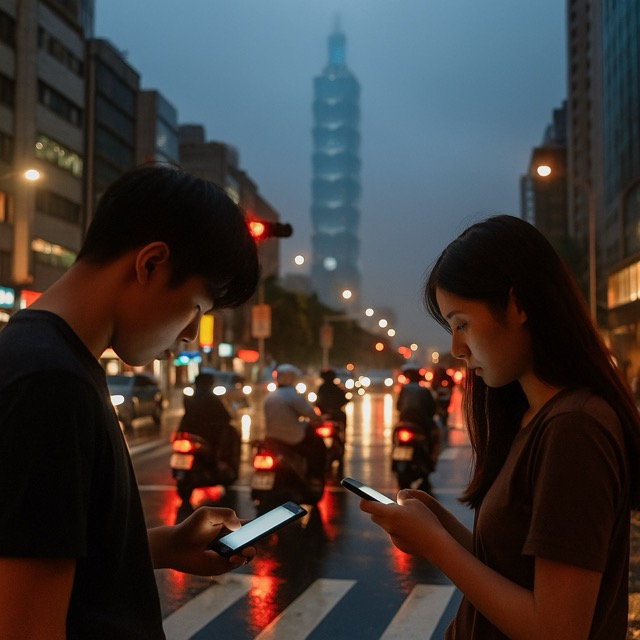
TAIPEI — For years, Western debates about Taiwan have revolved around timelines for an amphibious assault and how quickly allies might come to the island’s aid. Many Taiwanese, meanwhile, worry about a different timeline: the slow burn of political and social subversion. They fear Beijing will not need tanks if it can hollow out confidence in democratic institutions from within—by exploiting old cultural and commercial ties, grooming collaborators and coaxing local elites to treat the elected government as optional.
That anxiety has grown more pointed with each election cycle. The People’s Republic of China denies meddling in Taiwan’s domestic affairs, but a sprawling mix of party agencies, provincial governments and state‑linked firms now runs what security analysts describe as a permanent influence operation. It is not a single, secret plot so much as a set of reinforcing habits: economic carrots and sticks, media investments, grassroots patronage and a steady drip of disinformation. The effect is to narrow the political space for any Taipei administration that resists Beijing’s terms, and to widen rifts within Taiwanese society itself.
PROXIES AND PATRONAGE
The first layer of this campaign operates in the open. Business associations with deep cross‑strait ties host banquets and trips to the mainland for local leaders—borough chiefs, temple trustees, farmers’ cooperatives—offering access and small grants for cultural exchange. United Front organizations cultivate contacts in diaspora communities and religious networks. None of this is illegal per se, and much of it looks like routine people‑to‑people outreach. But Taiwanese investigators say the line can blur quickly when subsidies and ‘travel support’ appear close to election season or are paired with expectations about which candidates should be invited to speak.
At the neighborhood level, the ecosystem is granular. Temple festivals, seniors’ clubs and civic associations double as information hubs; who gets the microphone matters. A community organizer in Taichung describes being offered free tour packages to Fujian in exchange for bringing ‘influential aunties and uncles.’ “They knew exactly which households could sway a lane,” he recalls. He turned it down, but not everyone does. When benefits are tied to personal connections rather than policy, national arguments about sovereignty and strategy can be reframed as local favors won or lost.
THE MEDIA MAZE
Another layer is the media sphere. Taiwan’s television talk shows, YouTube channels and messaging‑app groups are cacophonous by design. That openness has allowed outside money and content farms to flourish alongside independent journalism. Researchers track coordinated networks that recycle stories from state‑run outlets in China, repackage them with Taiwanese accents and push them through short‑video platforms and encrypted chats. During election periods, these narratives thicken into swarms: clips alleging vote‑buying, rumors about candidate health, or slick explainer reels that present Beijing’s preferred ‘one family’ framing as common sense.
Fact‑checking groups can swat down the most egregious claims, and the National Communications Commission has fined stations found to broadcast paid political segments. Yet enforcement is whack‑a‑mole. Anonymous channels vanish and reappear; micro‑influencers trade reach for cash; and audiences tired of partisan bickering are primed to accept ‘alternative facts.’ The cumulative impact is not necessarily to convert voters to any single ideology, but to drain trust—especially in the idea that a democratic mandate can deliver clarity on cross‑strait policy.
ECONOMICS AS LEVERAGE
Beijing’s economic statecraft is more formal—and more powerful. When relations sour, customs inspections, import bans and tourism curbs materialize; when a local government or industry group takes a friendlier stance, suddenly delegations arrive and contracts follow. Taiwanese farmers, fishers and snack manufacturers have learned that access to the mainland’s vast market can be turned off with a customs notice. County magistrates know that charters full of tourists create jobs, and that their absence is noticed. The message travels quickly: choose confrontation and accept pain, or choose accommodation and be rewarded.
Supply chains are another pressure point. Thousands of Taiwanese firms manufacture on the mainland while keeping headquarters, R&D or listing status at home. For many executives, political turbulence is an operating risk to be managed; for Beijing, it is leverage. Subsidized industrial parks, tax breaks and simplified permits are sweeteners. Campaign‑season warnings about ‘uncertainty’ if the wrong party wins are the stick. None of this requires coordination at the level of a spy thriller. It requires only a web of incentives that make some choices easier than others.
THE DIGITAL FRONT
The disinformation battlespace has grown more sophisticated. Taiwan’s vibrant messaging‑app culture means rumors ripple through neighborhood Line groups long before they appear on television. Security officials say botnets boosted by generative content now seed plausible‑looking images and audio snippets into those circles, creating a fog where denials arrive too late. Deepfake voices imitating municipal leaders can announce fake school closures or safety alerts; synthetic videos splice a candidate’s face onto out‑of‑context remarks. Each incident is small, but the drumbeat normalizes the idea that nothing is quite authentic.
CAMPUS AND CULTURE
Universities and cultural institutions are courted as well. Exchange programs promise internships in mainland tech parks and scholarships at coastal universities. Touring troupes perform heritage operas and dance, emphasizing shared bloodlines and dialects. Some of this is warmly received—Taiwanese identity is complex, and many families have deep mainland roots. But there is also a contest over the framing. When history departments debate curricula or museums mount exhibitions about the Qing era, the question lurking beneath is whether Taiwan’s story is ultimately one of divergence or of return.
ELECTIONS AS PRESSURE VALVES
The rhythms of Taiwan’s democracy give these tactics a calendar. Local elections—where networks of borough chiefs and township offices are decisive—are especially susceptible to patronage politics. National races pull in bigger media and money. Beijing’s aim is not always to crown a favorite, analysts say, but to constrain the winner. A president who must govern with a fragmented legislature or a public skeptical of anti‑coercion policies will find it harder to push through defense budgets, trade diversification or counter‑interference laws.
THE RESILIENCE AGENDA
Taiwan is hardly passive. Since 2020, legislators have tightened rules around political donations from abroad and expanded disclosure for lobbyists. Prosecutors have brought cases under an anti‑infiltration framework. Civil‑society groups run real‑time rumor‑tracking dashboards; teachers pilot media‑literacy classes for teenagers and seniors alike. Tech companies have agreed—unevenly—to elevate verified sources during emergencies. Local governments experiment with public‑interest broadcasting that explains policy in plain language rather than slogans. None of this ends the problem, but it raises the cost of manipulation.
Still, resilience collides with the island’s openness. Taiwanese politics is ferociously competitive; parties accuse each other of ‘red’ ties as readily as they trade blame over housing or wages. Migrant workers from Southeast Asia, new immigrants from the mainland and a generation that came of age under full democracy bring divergent views to the same polling stations. Beijing’s playbook works best not by inventing divisions, but by amplifying the ones that already exist.
WHAT TAIWANESE FEAR MOST
Ask voters what keeps them up at night and the answers vary by age and postcode. Younger professionals in Taipei talk about cyber intrusions that could paralyse payments and transport. Small‑business owners on the west coast worry that a sudden customs move could sink a season’s revenue. Families with roots in both Xiamen and Kaohsiung fear being forced to choose between relatives. Few expect an imminent amphibious landing; many expect the next election to be waged in their smartphones, workplaces and neighborhood temples.
WHY THE WEST MISREADS THE RISK
War games are easier to storyboard than social ones. Foreign militaries can model missiles and ships; it is harder to model aunties’ chat groups or the weight of a factory manager’s mortgage. That bias shapes headlines. It also shapes policy: allies invest in deterrence at sea while under‑resourcing the slow, civilian work of building societal resilience. Taiwanese officials quietly wish for more help on the latter—cyber forensics, platform accountability, financial‑flows monitoring—without the fanfare of frigate visits.
WHAT TO WATCH NEXT
The next twelve months will test whether Taipei can turn defensive reflexes into a steadier doctrine. Watch for three things. First, whether courts can move faster on foreign‑influence cases without chilling legitimate exchanges. Second, whether ministries can communicate costs and trade‑offs with less spin and more data; sunlight slows rumor. Third, whether local leaders—regardless of party—can agree on norms for accepting overseas hospitality and funding. If those lines are clear, Beijing’s leverage shrinks.
Taiwan’s predicament is to remain open enough to be itself while hardening the seams where outside pressure bites. Invasion may remain the West’s obsession. On the island, the more immediate struggle is against a thousand cuts—none fatal alone, but together capable of sapping the will of a small, noisy democracy that has learned to thrive in the space between two stories of Chinese history.

 The Tower Post