Cash-and-stock deal extends Western’s footprint in the Delaware Basin and builds a full-cycle water platform; enterprise value pegged near $2 billion with closing targeted for Q4 2025.
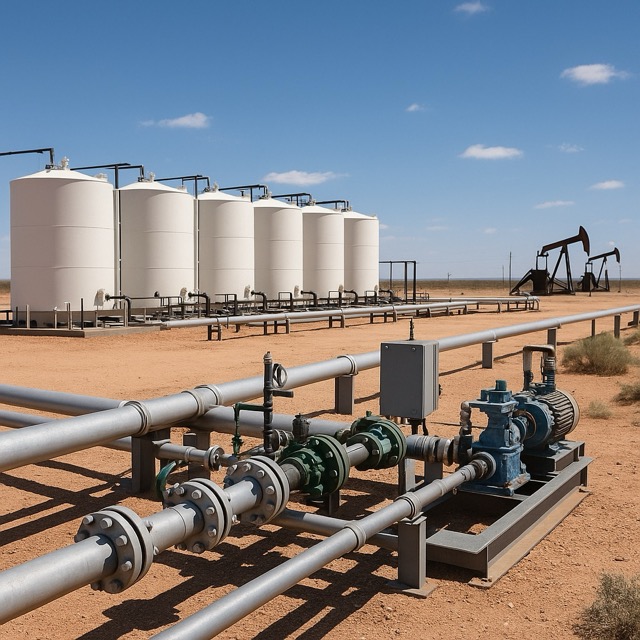
HOUSTON / MIDLAND — Western Midstream Partners (NYSE: WES) said this week it will acquire Aris Water Solutions (NYSE: ARIS) in a cash‑and‑stock deal valued at about $1.5 billion, the latest sign that water management has become central to energy logistics in the Permian Basin. The transaction, announced August 6–7, folds one of the Delaware Basin’s largest produced‑water specialists into Western’s broader gathering and processing franchise and, executives say, creates a scaled platform spanning water gathering, disposal, recycling and, eventually, long‑haul transportation.
Under the terms, Aris shareholders may elect to receive 0.625 Western common units per Aris share or $25 in cash, subject to proration with total cash consideration capped at $415 million. Based on Western’s August 5 closing price and assuming the maximum cash election, the company pegs the equity value near $1.5 billion and the enterprise value around $2.0 billion including debt. The companies expect to close the deal in the fourth quarter of 2025, pending shareholder and regulatory approvals.
Aris brings a deep water network to the combination: 790 miles of produced‑water pipelines, 1.8 million barrels per day of produced‑water handling capacity and 1.4 million barrels per day of recycling capacity, supported by long‑term agreements covering roughly 625,000 dedicated acres. The footprint stretches across Lea and Eddy counties in New Mexico and into West Texas, where activity remains robust. For Western, whose anchor sponsor Occidental Petroleum owns a 43.5% stake, the purchase extends its operated water system northward and adds scale around its Pathfinder long‑haul pipeline project.
Investors appeared to welcome the strategic fit. Aris shares jumped more than 20% following the announcement as arbitrage desks digested the unit‑and‑cash mix and the implied premium—about 10% to the 30‑day VWAP and roughly 23% to Aris’s August 5 close, by Western’s math. Western told investors the transaction should be accretive to 2026 free cash flow per unit while keeping pro forma leverage roughly flat.
Why water midstream matters now
Produced water—the briny by‑product that flows up with oil and gas—has always been a logistics headache in the Permian. Volumes have climbed with drilling intensity, and regulators are tightening oversight after a spate of induced‑seismicity events linked to deep injection. That is pushing operators to build closed‑loop systems, shift barrels between basins and recycle more water for completions. Scale, reliability and access to pore space for disposal are the coin of the realm—hence the deal‑making.
Aris spent the past several years positioning itself as a full‑cycle provider, expanding recycling hubs and securing long‑term acreage dedications with investment‑grade producers. Western, meanwhile, has been knitting together water assets alongside its gas and crude networks and advancing the Pathfinder concept for long‑haul produced‑water transport. Together, the companies claim they can offer customers “flow assurance” across gathering, recycling and disposal, including optionality to move barrels out of seismicity hot‑spots.
What the fine print says
The consideration mix—capped cash plus Western units—gives the buyer flexibility if markets turn choppy before closing. Governance will matter: Occidental’s sponsorship confers financial heft but also raises questions about customer concentration and conflict management. On the regulatory front, water projects face overlapping state regimes in Texas and New Mexico and must secure Class II disposal permits and, where relevant, seismic mitigation plans. The companies say the combined system will prioritise recycling to reduce dependency on disposal, while continuing to invest in monitoring and pressure‑management.
What to watch
• Integration timetable: how quickly Aris’s network is meshed with Western’s and whether the Pathfinder pipeline advances to FID.
• Contract renewals: producers’ willingness to sign longer‑dated recycling and transport agreements at scale.
• Seismicity and permitting: whether regulators impose tighter limits that shift volumes toward reuse or to different basins.
• Capital discipline: Western’s leverage and distribution policy as it absorbs a large water platform.
Bigger picture
For all the talk of AI‑driven electricity demand and new petrochem cycles, the less glamorous business of water handling is becoming one of the Permian’s most important midstream profit pools. If Western executes, the Aris purchase could turn a cost centre for producers into a growth engine for midstream investors—proof that, in shale, water flows often dictate where the money goes.




 The Tower Post