Italian shipbuilder alleges Owens Corning’s Helsinki-based subsidiary Paroc mis‑certified stonewool insulation panels used across cruise and naval builds, triggering costly delays, retrofits and reputational harm.
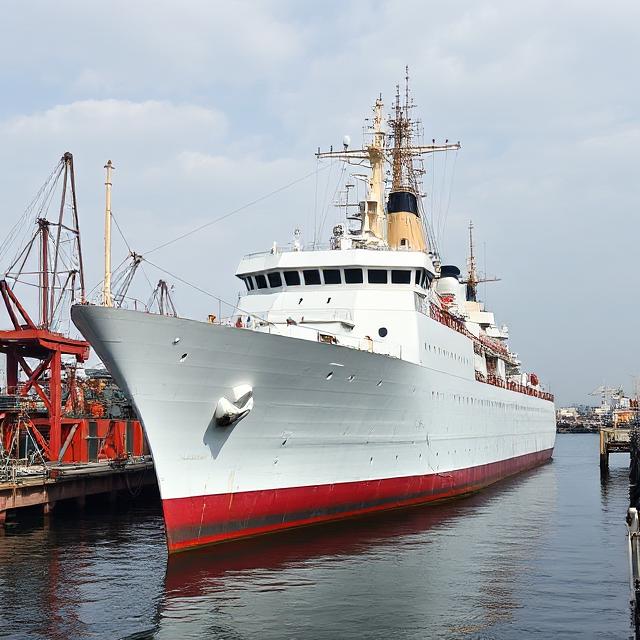
Trieste – Italian shipbuilding group Fincantieri has launched legal action in the United States against a key materials supplier, alleging that ‘fraudulently certified’ fire‑insulation panels were sold into multiple vessels under construction and already in service. In a complaint filed in Ohio last month, the company says the defective products have caused more than $100 million in economic damage and inflicted lasting harm on its reputation with shipowners and passengers.
The lawsuit targets New York‑listed Owens Corning and its Helsinki‑based subsidiary Paroc, a manufacturer of stonewool insulation panels. Fincantieri alleges Paroc’s panels were represented and certified as meeting the 60‑minute fire‑resistance standard required under European maritime rules, but later testing showed they did not perform to that level. The allegations go beyond product failure: the shipbuilder claims safety approvals were obtained under false pretences, by submitting samples that did not reflect the materials actually produced at scale.
The trigger for the dispute dates back to 2023, when retests overseen by Danish maritime authorities reportedly found that the panels withstood fire for about 45 minutes rather than the 60 minutes implied by their certificates. A recall followed, prompting Fincantieri to halt and rework ships in its yards and to assess remedies for vessels already delivered. The ripple effects included schedule slippages and penalty payments under contract terms with cruise operators and other clients.
One high‑profile impact was in the luxury cruise segment. The delivery of Explora I—an MSC‑owned, 248‑metre vessel built by Fincantieri—was postponed in mid‑2023 as engineers addressed the insulation issue. A sister ship, Explora II, also experienced knock‑on delays. While the specific technical fixes varied by hull and certification pathway, the common denominator was time: inspections, approvals and rework consumed critical weeks during a period of intense post‑pandemic demand for new tonnage.
In its court filing, Fincantieri asserts that the faulty panels were ‘inherently unsafe’ and that Paroc, under Owens Corning’s ownership, failed to adequately instruct shipyards on remedies for vessels already in service. The company says an independent risk assessment commissioned by the supplier highlighted elevated safety risks, yet instructions to the market were slow and incomplete. The complaint seeks compensation for direct costs, liquidated damages under shipbuilding contracts, and the broader commercial fallout of disrupted delivery plans.
Owens Corning said it was aware of the legal matter involving Paroc, but declined to comment on pending litigation. Fincantieri also declined to comment beyond the court filing. The case will test how far upstream liability runs in the shipbuilding supply chain, where components move through long qualification processes run by classification societies and flag‑state authorities before they are approved for use at scale.
The controversy touches a nerve in maritime safety. Fire protection is tightly regulated by the International Convention for the Safety of Life at Sea (SOLAS) and EU implementation regimes; shipyards, outfitters and material suppliers work through prescribed test standards to qualify bulkheads, doors and decks to withstand fire for defined intervals. A 60‑minute rating is commonly required for certain spaces. When a product falls short of its certificate, the cost is borne not only in materials but in tearing out completed interior modules, disrupting trades and retesting the ship’s integrated safety systems.
Industry executives say the episode is a cautionary tale about the difference between testing small samples and producing consistent performance at industrial volumes. They also note the importance of robust surveillance by third‑party labs, classification societies and national authorities to ensure that certified products remain in conformity over time. In recent years, supply‑chain strains and surging orderbooks have put unusual pressure on marine equipment manufacturers to deliver quickly—conditions that can magnify the impact of any quality lapse.
For Fincantieri, one of the world’s largest shipbuilders, the lawsuit comes as the company seeks to balance a strong backlog with the operational complexity of building ever more sophisticated vessels. Cruise customers have pushed for quieter, more efficient and more fire‑resilient interiors, while naval clients demand higher levels of survivability and compartmentation. A dispute over core safety materials strikes at the heart of those priorities and risks creating friction with owners who expect on‑time delivery in a tight deployment calendar.
Legal specialists point out that the Ohio venue places the dispute in Owens Corning’s home jurisdiction, a forum familiar with product‑liability and warranty claims. Depending on how the complaint is framed, the case could encompass allegations of fraud, negligent misrepresentation, breach of contract and breach of express and implied warranties. Discovery is likely to focus on the chain of custody for test samples, factory production records, communications around certification and the timing and scope of the market recall.
Insurance is another pressure point. Builder’s all‑risk policies and product‑guarantee covers may respond to some of the rework and schedule‑delay costs, but insurers have tightened wordings after a series of high‑value casualties and supply‑chain disputes. Underwriters will scrutinize whether the loss stems from a defective product, a certification failure, or the shipbuilder’s own processes—and how responsibility is apportioned among the companies and classification bodies involved.
The dispute also shines a light on Paroc, which Owens Corning acquired for about €900 million in 2018 to expand its reach in European mineral‑wool insulation. The unit has long supplied building and technical insulation, including marine applications where weight, acoustic performance and fire safety are key. The lawsuit suggests that marine‑specific quality controls will come under renewed attention, even as demand for insulating materials grows alongside decarbonisation retrofits and newbuilds designed for alternative fuels.
More broadly, the case raises a governance question: how should the maritime sector monitor performance drift in certified materials after approval? Some class societies have piloted data‑driven audits and randomised lot testing to bridge the gap between lab certification and shipyard realities. Regulators, meanwhile, face pressure to share information across borders rapidly when problems emerge, to avoid a patchwork response that leaves owners and yards guessing.
For cruise lines still recovering from the pandemic shock and grappling with environmental rules, any fresh disruption to newbuild schedules is unwelcome. If Fincantieri prevails, it could recover a portion of the direct costs associated with inspections, removal and replacement of panels, re‑qualification of affected spaces, and contractual penalties. But litigation rarely moves at the speed of a yard’s production plan. Executives across the sector will be watching for early rulings that hint at how courts will allocate responsibility among supplier, parent company and shipbuilder.
As of this week, neither side has signalled a timeline for settlement talks. Initial procedural steps in the Ohio court are expected in the coming months. In the meantime, Fincantieri is auditing projects, coordinating with classification societies and owners, and mapping out retrofit windows for any ships already delivered with the affected materials. Whatever the legal outcome, the episode underscores how vulnerable complex industrial programmes are to weaknesses in a single certified component.
Background: Fincantieri is Italy’s flagship shipbuilder, with cruise, naval and specialised‑vessel programmes across yards in Europe and the United States. Owens Corning, based in Toledo, Ohio, is a global manufacturer of building and industrial materials. Paroc, the Finnish stonewool producer at the centre of the dispute, has operated for decades in Northern Europe and was folded into Owens Corning’s insulation division following the 2018 acquisition.




 The Tower Post