Terrestrial Energy, Terra Innovatum and Eagle Energy Metals bet on blank-cheque deals to speed small modular reactors as investor optimism meets policy tailwinds — and old risks.
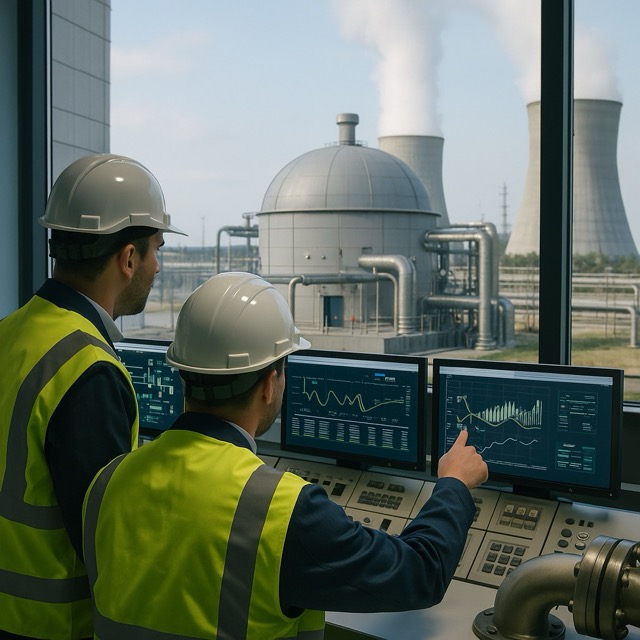
For the first time since the froth of 2021, nuclear start-ups are lining up to list via special purpose acquisition companies. Three developers — Terrestrial Energy, Terra Innovatum and Eagle Energy Metals — are seeking to raise more than $500mn in aggregate through SPAC mergers they say will accelerate small‑modular‑reactor (SMR) development. The timing is no accident: power demand from artificial‑intelligence data centres is surging, governments are leaning into atomic energy, and public markets once again appear open to speculative climate‑tech stories.
The most mature of the trio, Canada‑founded Terrestrial Energy, aims to net about $280mn by merging with HCM II Acquisition Corp, a vehicle led by former Cantor Fitzgerald executive Shawn Matthews. Terrestrial’s IMSR — an integral molten‑salt reactor — is pitched as a high‑temperature, industrial‑heat workhorse that uses standard low‑enriched uranium rather than scarce HALEU. The company has completed a pre‑licensing review with the Canadian regulator, begun engagement with the U.S. Nuclear Regulatory Commission and says early plants could supply both electricity and process heat at competitive costs.
Terra Innovatum, a newer entrant focused on micro‑modular units, struck a deal with GSR III Acquisition Corp to list on Nasdaq. The company says its SOLO™ design — a roughly 1‑MWe, helium‑cooled microreactor — could ship from factory to site and run for long intervals on standard LEU fuel. Transaction documents point to up to about $230mn in gross proceeds before redemptions and any additional financing. Management is targeting initial commercial deployments before the decade’s end, with potential customers ranging from remote mines and hospitals to behind‑the‑meter capacity for data centres.
A more unconventional SPAC target is Eagle Energy Metals, which pairs a large uranium resource in the U.S. Pacific Northwest with a very‑small, long‑life modular reactor concept. Eagle’s deal with Spring Valley Acquisition Corp II values the combined company at about $312mn and includes a $30mn institutional investment at closing; unlike many prior SPACs, the merger carries no minimum cash condition. Eagle argues that tying a domestic fuel source to a proprietary microreactor design provides vertical integration — and optionality — at a time when energy security and supply‑chain resilience have become policy priorities.
The backdrop is a feverish policy push. In May, the White House signed a package of executive orders that set an ambition to quadruple U.S. nuclear generating capacity to roughly 400GW by 2050, streamline licensing of advanced reactors and rebuild the fuel cycle at home. Westinghouse, the country’s most recognisable reactor brand, followed with plans to build 10 large AP1000 units and to explore additional SMR projects. The political tailwind coincides with a global race to power AI and high‑performance computing, which analysts say could add tens of gigawatts of incremental U.S. load this decade.
If policy and demand form the wind at nuclear’s back, the financing mechanism is its lightning rod. SPACs — blank‑cheque companies that raise cash and later merge with a target — are staging a modest revival after a bruising crackdown and a wave of redemptions. They can still be attractive to capital‑hungry hardware ventures because they offer a faster pathway to liquidity than a traditional IPO and can be stitched together with side‑by‑side private investments in public equity (PIPEs). But they are no guarantee of funding: trust cash can be redeemed, projections are policed more aggressively than in 2021, and post‑merger trading can be volatile.
For would‑be SMR issuers, the market’s questions are familiar. First, technology risk: most advanced designs remain pre‑commercial. NuScale, which went public via SPAC in 2022, has struggled to convert early interest into firm orders, even as it touts cost cuts and pipeline progress. Oklo, listed in 2024 through a merger with AltC, is still years from deployment and has sparred publicly with short‑sellers. Second, regulatory risk: the NRC’s rulebook was written for gigawatt‑scale light‑water plants, and while reform is under way, licensing remains time‑consuming. Third, fuel risk: HALEU supply is tight, though Terrestrial and Terra Innovatum both emphasise that their near‑term designs can run on standard LEU.
Terrestrial’s pitch to investors is built on industrial heat. By operating at higher temperatures than conventional light‑water reactors, molten‑salt systems can support hydrogen, chemicals and hard‑to‑electrify processes while producing dispatchable electricity. The company says standard fuel and lower‑pressure operation simplify operations and cut costs. Proceeds from the HCM II merger — $230mn of trust cash and a $50mn PIPE, subject to redemptions — would fund licensing, supply‑chain development and early site work. The company’s initial U.S. footprint centers on a Texas technology campus, with ambitions for fleet deployment in the 2030s.
Terra Innovatum’s business model leans into modularity and speed. Factory‑built SOLO units would arrive on trucks, drop into pre‑poured vaults and deliver around‑the‑clock power or heat with minimal onsite staffing, according to company materials. The target market spans remote communities seeking to replace diesel, industrial sites chasing decarbonisation and data‑centre operators who need resilient, high‑capacity power close to load. As with any microreactor, scalability and serviceability are open questions — from refuelling logistics to the economics of one‑megawatt blocks — but management frames the technology as complementary to larger SMRs rather than a competitor.
Eagle Energy Metals is an outlier among the three in that it is, first, a resource company. Its flagship Aurora deposit on the Oregon‑Nevada border includes more than 50m lb of near‑surface uranium, according to the company, with a pre‑feasibility study slated for 2026. The group also markets a “VSLLIM” microreactor concept and says proceeds from the SPAC will support both mining advancement and early reactor development. Investors will scrutinise its ability to execute on two capital‑intensive tracks at once — and the degree to which the proposed plant design can move beyond slide decks and lab work.
The investor case for SMRs rests on a simple thesis: smaller units, built in factories and repeated at scale, ought to be faster and cheaper than bespoke mega‑projects. The counter‑case is just as straightforward: nuclear’s long history of schedule slips and cost overruns, plus the financing burden of building fleets before learning curves kick in. Analysts add that demand from AI can cut both ways. On the one hand, power‑hungry data centres are willing to sign long‑term contracts. On the other, if chip cycles cool or siting rules tighten, load growth projections could undershoot — leaving developers hunting for replacement customers.
For now, the three SPACs illustrate a spectrum of approaches and risk. Terrestrial, with a decade of engineering and a regulator‑vetted design, is the closest to a classic growth‑equity story, albeit with serious execution milestones ahead. Terra Innovatum is a microreactor wager tethered to speed and capex discipline. Eagle is a vertical‑integration bet that hinges on turning a large ore body into cash flow while nurturing a reactor concept. Together they represent a test of whether public markets will fund nuclear’s next generation — and, crucially, how much of the headline “gross proceeds” survive shareholder redemptions.
If the deals close largely as advertised, the trio could add well over half a billion dollars of fresh capital to the sector. That would be a modest sum relative to nuclear’s needs but a significant signal that investors believe the technology’s moment has arrived. The stakes are material: beyond decarbonisation, proponents argue that advanced reactors can harden the grid, support industrial competitiveness and reduce reliance on imported fuel. Skeptics counter that uprates and restarts at existing plants offer a faster, cheaper route to near‑term capacity. Either way, the market will soon deliver a verdict on nuclear’s SPAC‑powered revival.
Sources
- Financial Times, ‘Nuclear reactor groups tap into Spac revival to fuel atomic energy boom,’ Aug. 11, 2025.
- SEC filing (Form 425): HCM II Acquisition Corp / Terrestrial Energy — gross proceeds of ~$280m (trust + PIPE), Mar. 26, 2025.
- GlobeNewswire: ‘Terrestrial Energy to Become First Publicly Traded Molten Salt Nuclear Reactor Developer Through Combination with HCM II Acquisition Corp,’ Mar. 26, 2025.
- Newswire: ‘Terra Innovatum To Go Public Through Business Combination with GSR III Acquisition Corp’ — up to ~$230m gross proceeds, Apr. 22, 2025.
- Latham & Watkins client note: GSRT–Terra Innovatum business combination (closing expected H2 2025).
- GlobeNewswire: ‘Eagle Energy Metals… to go Public via Business Combination with Spring Valley Acquisition Corp II’ — $30m institutional investment, July 31, 2025.
- Eagle Energy Metals Investor Presentation (July 2025): VSLLIM microreactor concept and Aurora deposit (>50m lb U3O8).
- World Nuclear News / White House EOs (May 2025): target to quadruple U.S. nuclear capacity by 2050; NRC and fuel‑cycle reforms.
- Westinghouse in-the-headlines page (July 2025): plan to build 10 AP1000 reactors in the U.S.



 The Tower Post