In exchange for export licenses, the chipmakers will hand 15% of their China AI-chip revenues to Washington—upending decades of U.S. export‑control practice and raising fresh questions about security, trade and precedent.
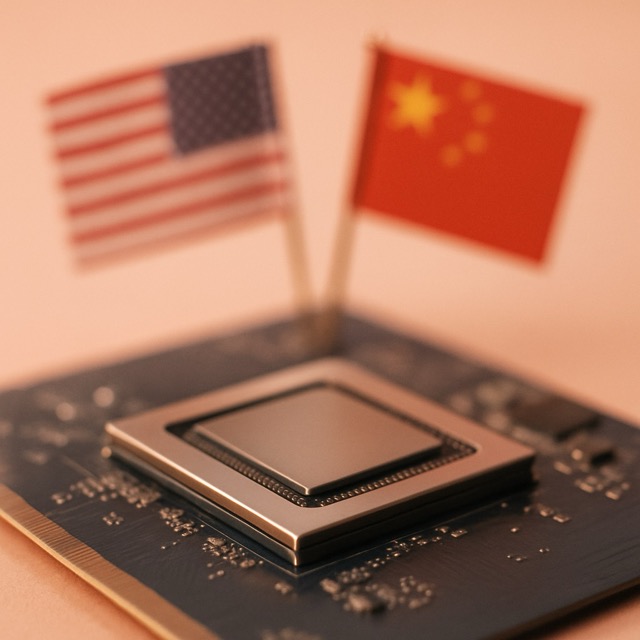
In a move without modern precedent for U.S. industry, Nvidia and Advanced Micro Devices (AMD) have agreed to give the U.S. government 15 percent of revenue from sales of certain artificial-intelligence chips to China as the price of admission to that market. The revenue‑sharing arrangement, reached with the Trump administration, clears the way for export licenses covering Nvidia’s H20 accelerator and AMD’s MI308, products that sit below the most tightly controlled performance thresholds but are still vital to China’s swelling demand for AI computing.
The deal fuses two domains that Washington has long treated separately: national‑security export controls and fiscal policy. In practical terms, it grafts a quasi‑levy on corporate sales abroad in exchange for a regulatory permission slip. U.S. officials have begun issuing licenses tied to the agreement, according to people familiar with the process, even as the government has yet to spell out how the incoming funds will be collected or used. Nvidia has said only that it follows rules set by the U.S. government for operating in worldwide markets; AMD has not publicly commented.
How the scheme will function day‑to‑day remains a work in progress. The percentage is clear; the mechanics are not. Questions abound: Will payments be remitted quarterly or per shipment? Which agency will administer the program—the Commerce Department’s Bureau of Industry and Security, the Treasury Department, or a new interagency vehicle? Will the 15 percent be assessed on gross revenue or on a narrower definition that excludes rebates and channel incentives common in semiconductor distribution? For now, companies and lawyers are reading tea leaves as the first licenses trickle out.
For the White House, the bargain aims to thread a needle. The administration insists that allowing sales of detuned accelerators to Chinese buyers does not compromise national security, particularly when the most advanced chips remain blacklisted. Supporters argue that keeping Chinese cloud providers and research labs dependent on U.S. architectures preserves American influence over global AI stacks, while a revenue skim compensates U.S. taxpayers for the policy risk. The approach also nods to economic realities: China is a critical demand center for accelerators, and cut‑off policies have encouraged rapid homegrown alternatives.
Critics, including former Commerce officials and export‑control scholars, see the arrangement as a dangerous conflation of security and rent‑seeking. If a chip is too sensitive to sell, they argue, no fee should legitimize it; if it is safe, imposing a surcharge implies the controls are a bargaining chip rather than a principled wall. They warn the move could undercut U.S. efforts to persuade allies to adopt aligned restrictions, feeding a perception that Washington is willing to trade away guardrails for cash. Several analysts also worry about the precedent of tying regulatory relief to payments by named firms—a structure that could migrate to other sectors in future disputes.
Beijing’s formal response has so far been muted, but the political optics are sensitive. State‑linked commentary has criticized the U.S.-made accelerators as inefficient or insecure, while Chinese chip and cloud providers continue to juggle a patchwork of sourcing strategies. For China’s policymakers, the question is whether accepting the arrangement—effectively a U.S. toll on domestic compute build‑outs—is preferable to accelerating reliance on local hardware, including next‑generation accelerators and novel system designs built around Chinese high‑bandwidth memory and interconnects.
For Nvidia and AMD, the calculus is stark. China is too large to ignore, yet margins are too precious to surrender lightly. A 15 percent skim on top‑line revenue is a blunt instrument, one that could reshape channel pricing and discount ladders. Vendors may attempt to push some of the burden onto Chinese buyers, squeeze distributors, or rationalize product configurations to minimize cannibalization of higher‑end parts sold elsewhere. At the same time, the licenses promise clarity that investors have craved after a stop‑start year of China policy whiplash.
Market reaction, while volatile, reflects the tug‑of‑war between near‑term sales opportunities and longer‑term policy risk. Access to China could support unit volumes for H20 and MI308 systems, particularly in cloud and enterprise build‑outs tuned to stay below red‑line specs. But the political headline—Washington taking a cut of corporate foreign sales—introduces a valuation overhang. If this experiment spreads, semiconductor firms with meaningful China exposure will be forced to model new policy‑linked costs into their guidance and capital spending.
The legal terrain is equally unsettled. Trade lawyers note that U.S. export controls are traditionally justified on national‑security grounds and administered through licensing, not through transactional payments. The arrangement’s durability could hinge on how it is grounded in statutory authorities and how narrowly it is scoped. A future administration could unwind it, or Congress could weigh in if the levy is portrayed as a de facto tax imposed outside the normal appropriations process. For companies that value predictability above all else, such uncertainty is a strategic risk in its own right.
Technically, the affected accelerators occupy a shifting band of performance. Nvidia’s H20 and AMD’s MI308 are designed to meet—and not exceed—export‑control thresholds on parameters like bidirectional chip‑to‑chip bandwidth and total compute. That positioning allowed vendors to serve Chinese customers even as successive rounds of rules narrowed the lane. Industry engineers say the newest systems increasingly rely on software and network design to extract performance from watered‑down parts, while integrators experiment with novel cluster topologies, memory pooling and sparsity‑friendly training regimes to stretch every teraflop.
Beyond China, allies are watching. Washington has spent three years urging Europe and Asia‑Pacific partners to harmonize on AI‑chip controls under a security banner. A move that looks transactional risks complicating those conversations. If the U.S. publicly frames the 15 percent skim as a temporary bridge to a safer, clearer rule set, partners might be more forgiving. If it appears to be a template for monetizing access, pushback could intensify.
Inside boardrooms, the strategic playbook is already evolving. Expect more intensive supply‑chain mapping to segregate China‑bound configurations, a renewed focus on firmware and feature‑gating to keep products on the right side of thresholds, and contingency planning for abrupt rule changes. Some vendors may seek co‑investment from Chinese customers to offset the U.S. skim, while others could prioritize markets with lower policy friction. Systems integrators, meanwhile, will position themselves as compliance partners—helping clients design architectures that are performant, licensable and upgrade‑ready if rules shift.
What happens next will hinge on implementation details that have not yet been made public. Will the government set sunset clauses or performance reviews? Will a portion of proceeds be earmarked for domestic semiconductor R&D, workforce training or secure‑compute initiatives, recasting the skim as a reinvestment? Transparency will matter: a clearly articulated framework could reduce the perception that policy is being auctioned. Absent that, companies should expect congressional scrutiny, legal tests and louder objections from national‑security voices.
One thing is already clear: AI supply chains are now inseparable from politics—and from fiscal policy. The 15 percent arrangement offers Nvidia and AMD a conditional path back into the world’s second‑largest AI market. It also offers Washington leverage—and responsibility. Whether this becomes a one‑off fix or a new chapter in tech governance will be among the most consequential questions for the semiconductor industry this year.




 The Tower Post