Since Yalta, the postwar order has been punctuated by face‑to‑face showdowns between rival leaders. What those meetings got right, what they broke, and what today’s diplomats can still learn.
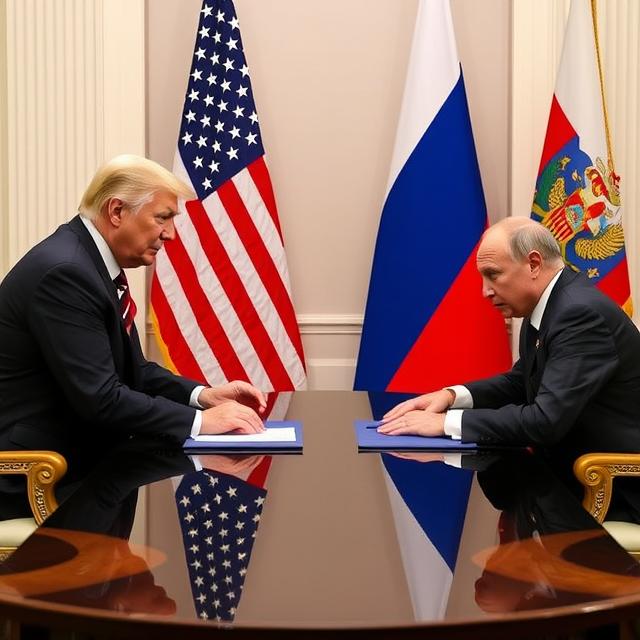
A door shuts, the photographers are ushered out, and two delegations count the minutes on the other side of the wall. For eighty years this has been the essential ritual of great‑power politics: two worlds in one room, betting that personal contact can bend history. From the wartime bargaining of Yalta to the chill of Vienna and the near‑breakthrough at Reykjavík, summitry has offered drama and, occasionally, durable peace.
The modern canon begins at Yalta in February 1945, where Franklin Roosevelt, Winston Churchill and Joseph Stalin tried to choreograph victory and the peace to follow. They agreed on the United Nations, partitioned Germany, and sketched the post‑Nazi settlement. It was, in practice, the opening scene of the Cold War. Poland’s fate, the future of Eastern Europe and the meaning of “free elections” became sources of grievance almost as soon as the ink dried.
If Yalta was the table‑setting, Vienna in June 1961 was the ice bath. A novice John F. Kennedy, still bruised by the Bay of Pigs, met Soviet premier Nikita Khrushchev at the Schönbrunn Palace. The exchange was combative, and within weeks the Berlin crisis escalated; by August the Wall was going up. Kennedy later admitted that Khrushchev “beat the hell out of me.”
Other face‑to‑faces in the 1960s and 70s mixed risk and reward. Lyndon Johnson and Alexei Kosygin’s brief Glassboro summit in 1967 created a friendlier tone but little substance. Richard Nixon’s personal diplomacy in 1972 delivered something concrete: the Moscow summit produced the Anti‑Ballistic Missile Treaty and an interim Strategic Arms Limitation deal (SALT I), while his Beijing trip opened channels with China that reshaped the triangular balance.
Then came the most cinematic pairing of the era: Ronald Reagan and Mikhail Gorbachev. Their 1985 Geneva meeting thawed the ice; their 1986 Reykjavík encounter nearly scrapped nuclear arsenals altogether before collapsing over missile defenses. Failure in Iceland seeded success later: the 1987 Washington summit produced the INF Treaty, eliminating an entire class of nuclear missiles and, for many Europeans, easing the dread of the Euromissile standoff.
Not every summit aged well. The post‑Cold‑War glow did not prevent new breakdowns. Bill Clinton and Boris Yeltsin’s meetings in the 1990s were cordial but could not reconcile NATO expansion with Russia’s security narrative. In 2001, George W. Bush famously looked into Vladimir Putin’s eyes in Ljubljana and “got a sense of his soul,” only for relations to sour over Georgia and then Ukraine. Barack Obama’s reset produced arms‑control progress (the 2010 New START treaty) but eventually ran aground.
Summits matter because they can compress years of bureaucracy into a few hours of leader‑level trade‑offs. The alchemy is part psychology—reading the counterpart, forcing candor, creating political cover back home—and part process. Handshakes only work when the officials behind them have pre‑negotiated the landing zones. Reykjavík did not conjure arms control from thin air; it distilled months of drafts and arguments into make‑or‑break calls.
But the risks are symmetrical. When leaders go in without agreed guardrails, the optics can backfire or, worse, entrench miscalculation. Vienna in 1961 stiffened spines on both sides and helped set the stage for the hair‑trigger confrontations of the next year’s Cuban Missile Crisis. More recently, made‑for‑television summits have sometimes produced communiqués that wilt within days, or they have provided cover for domestic politics while leaving dangerous disputes unaddressed.
What distinguishes the successes from the flops? Three conditions recur. First, a clear theory of change: Why this counterpart, why now, and what concrete step will make tomorrow different from today? Nixon’s 1972 trips had a strategic logic. Reagan’s engagement with Gorbachev rested on a belief that the USSR was reformable—and that talking could accelerate its evolution. Second, disciplined preparation and sequencing.
Third, and most difficult, summits that endure usually acknowledge domestic politics on all sides. Leaders need coalitions at home to implement what they sign. The Helsinki Accords gained teeth only because dissidents used the language of Basket III to pressure their governments. Conversely, agreements that find no constituency beyond the signing room unravel quickly. The past decade has been littered with deals that sounded historic but lacked the follow‑through budgets.
The venue is part of the theater. Vienna and Geneva have long offered neutral ground, discreet hotels and experienced protocol services. Reykjavík’s isolation served the purpose of focus. Camp David’s seclusion helped Anwar Sadat and Menachem Begin work through moments of fury that would have exploded in a grander capital. Today’s summitry is more peripatetic: leaders shuttle between multilateral forums—the G20, NATO, APEC—using short bilaterals to probe for openings.
August 2025 finds diplomacy both more necessary and harder. The return of major‑power rivalry has collapsed many of the arms‑control and confidence‑building habits that once limited risk. Algorithms—not just ambassadors—now shape the pace of crises, while social media collapses the breathing room that older negotiators used to calibrate concessions. At the same time, the planet’s hard math—energy, climate impacts, water stress—creates domains where cooperation is not a luxury but a survival plan.
What should the next generation of summits try to do? One agenda is obvious: rebuild guardrails. That means restarting talks on strategic stability and emerging technologies, insulating crisis hotlines from political theater, and re‑learning the unglamorous craft of verification. Another is to put economic security on the table, honestly acknowledging that supply‑chain politics and sanctions have become as consequential as tanks.
There is also a case for reinventing the room itself. Closed‑door bargaining will remain indispensable, but durable agreements now require buy‑in from actors who never appear in the family photo—sub‑national leaders, private‑sector operators, even platform companies. The choreography could evolve to include parallel “implementation rooms,” where the people who run grids, ports and code repositories can stress‑test pledges before the ink is dry.
A final caution comes from the ghosts of Vienna and Reykjavík. The former shows how a summit can harden mistrust if leaders arrive seeking confirmation rather than compromise. The latter shows how a near‑miss can seed success if negotiators preserve the scaffolding of a failed deal. In both cases the door closed, the world waited, and two teams tried to redraw the future. It remains true in 2025.
Sources
- U.S. Department of State, Office of the Historian — Yalta Conference (Feb. 1945).
- John F. Kennedy Presidential Library — Vienna Summit (June 1961).
- Reagan Presidential Library — Reykjavik Summit (Oct. 1986) and the INF Treaty (Dec. 1987).
- Nixon Presidential Library — 1972 Moscow Summit and SALT I; 1972 visit to China.
- CSCE/OSCE — Helsinki Final Act (1975) background.
- George H. W. Bush Presidential Library — Malta Summit (Dec. 1989).
- White House and Kremlin readouts — Geneva Summit (June 2021).
- White House — U.S.–China leader‑level meetings in 2023–24 (San Francisco APEC and subsequent engagements).

 The Tower Post