After confirming a 15% U.S. take on Nvidia’s China sales of its H20 chip, President Trump said he may allow a more advanced model into the market—stoking a fight over national security, legality and Big Tech strategy.
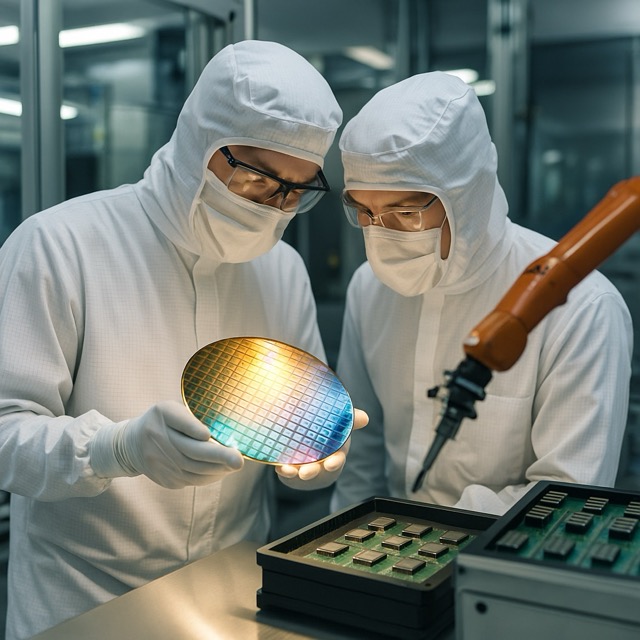
WASHINGTON — President Donald Trump said he may permit Nvidia to sell a more advanced artificial‑intelligence chip in China, hours after confirming he had “negotiated a little deal” under which the U.S. government will collect 15% of the company’s revenue from sales of its China‑compliant H20 processors. The arrangement—unprecedented in modern U.S. export policy—would exchange export licenses for a revenue skim that Trump has cast as a win for taxpayers and industry alike.
The comments widen a policy pivot that began when the administration cleared shipments of Nvidia’s H20 chips to China, reversing an April halt. Officials have argued the H20 does not endanger national security, while critics counter that any relaxation helps China narrow critical AI gaps. Now, by dangling the prospect of a still‑more‑capable chip—described by Trump as an “unenhanced” version of Nvidia’s next generation—the White House is testing how far it can trade market access for money without crossing red lines set by U.S. law and security hawks.
What we know so far
• The deal calls for Nvidia (and AMD, for its MI308) to pay the U.S. Treasury 15% of revenue from approved China sales in exchange for export licenses. Trump has labeled the H20 “obsolete,” saying he initially pushed for a 20% cut before settling at 15%. Agencies have begun issuing licenses for the H20, and the administration says it can do so consistent with export‑control law.
• Nvidia developed the H20 in 2024 to meet earlier guardrails and had sold it to Chinese customers before new restrictions kicked in. Allowing shipments again restores a key line of business—one analysts estimate was worth tens of billions of dollars before the ban—and could blunt China’s pivot to domestic accelerators.
The legal and policy gray zone
The prime controversy isn’t only about performance thresholds; it’s about the mechanism itself. Experts say the Export Control Reform Act does not authorize the government to tax exports or to charge license‑linked fees that resemble a revenue tithe. Supporters frame the 15% as a negotiated condition of access rather than a tax, perhaps tethered to foreign‑manufactured sales or to a fund for U.S. tech leadership. Either way, court challenges look likely.
Beyond legality, the bargain exposes a strategic trade‑off: monetizing access versus degrading an adversary’s AI capacity. Security hawks from both parties warn that even “dialed‑down” chips confer training and inference gains that can spill into military applications. The administration counters that the H20 is several rungs below Nvidia’s top‑end Blackwell line and that structured access—with reporting requirements and a U.S. revenue share—beats a black‑market drift.
Beijing’s reaction—and Chinese demand
Early signals from Beijing are mixed. State guidance has prodded some buyers to steer away from the H20, part message discipline and part leverage for better terms. Yet Chinese cloud and internet groups still covet reliable supply, and analysts note that H20‑class performance remains attractive for inference workloads. How strongly ministries enforce guidance—and how quickly domestic champions can scale—will shape the size of Nvidia’s rebound.
What “more advanced” might mean
Trump’s suggestion that he could green‑light a version of Nvidia’s next‑generation chip for China raises thorny questions. Would Washington apply the 15% revenue share to any such variant? Would it require firmware caps or architectural limits to stay below performance thresholds? And would the license be time‑bound or revocable if China’s military‑civil fusion ecosystem appears to benefit? Even talk of permitting a Blackwell‑derived part has rattled national‑security advocates.
Money, margins and market math
For Nvidia, the calculus is simple: a managed China business, even at a 15‑point haircut, can be better than none. The fee could pass through in pricing, though competitors and regulators will watch closely. Analysts warn of a “pay‑to‑play” precedent that might pressure margins and invite copycat schemes in other sectors. On Wall Street, the near‑term question is whether license clarity lifts guidance for China‑region data‑center revenue—and how investors handicap the risk of policy whiplash.
Allies and supply chains
U.S. allies navigating their own guardrails are watching the experiment with unease. A revenue‑share template could complicate efforts to present a unified front on high‑end chip controls. At the same time, if Chinese buyers regain access to H20‑class accelerators, demand for foundry capacity, substrate supply and memory could ripple across Asia. Any move toward a more advanced Nvidia part would amplify those effects.
What to watch next
• The fine print: licensing conditions, reporting obligations, end‑user checks and program duration. • Legal salvos: industry or public‑interest suits challenging the 15% as an unconstitutional tax or an overreach under export‑control law. • Beijing’s countermoves: administrative guidance to shun H20, procurement pressure on state‑linked firms, or incentives for domestic accelerators. • The “upgrade” question: does Washington codify a path for a limited next‑gen part, and on what terms? • Market share: whether U.S. suppliers claw back orders from Huawei and other Chinese rivals.
The bottom line
Trump’s 15% toll marries transactional politics with tech‑statecraft. If legal and diplomatic headwinds don’t derail it, the policy could reopen China revenues for U.S. chipmakers while cementing Washington’s role as gatekeeper—collector and referee in one. Extending the model to any more advanced Nvidia part would be a far bigger bet, inviting a fresh round of fights over where money stops and national security begins.



 The Tower Post