Resignations foreshadowed a reputational crisis over the U.S.- and Israeli‑backed Gaza Humanitarian Foundation as Boston Consulting Group admits “process failures” and ousts two partners
Vienna — Early Revolt Inside BCG: Four Consultants Walked Off Gaza Aid Project Months Before Public Backlash Resignations foreshadowed a reputational crisis over the U.S.- and Israeli‑backed Gaza Humanitarian Foundation as Boston Consulting Group admits “process failures” and ousts two partners Vienna — August 14, 2025 Four Boston Consulting Group consultants quit a team advising on a new aid system for Gaza at the very start of the engagement — an internal revolt that signaled trouble months before the work exploded into a reputational crisis for the firm.
The departures, confirmed by people familiar with the project and later referenced in internal reviews, came amid the rollout of the Gaza Humanitarian Foundation (GHF), a U.S.- and Israeli-backed initiative that sought to channel food assistance through a small number of distribution hubs rather than the United Nations’ long‑standing network. The consultants who left — three within a day of starting and a fourth soon after — cited unease over coordination with Israeli authorities, concerns about private security contractors at the sites, and doubts about the scheme’s basic viability, according to those familiar with their reasoning.
Their misgivings foreshadowed the backlash that would follow. Within weeks of the GHF’s launch in late spring, major humanitarian organizations and the U.N. criticized the plan as a militarized, high‑risk model that excluded the most vulnerable and undermined established humanitarian principles. Deadly incidents near food hubs intensified scrutiny, and by early June BCG’s chief executive Christoph Schweizer apologized to staff for “process failures,” saying the firm had terminated two partners and opened an independent investigation. At the heart of the dispute is what BCG did, who authorized it, and whether the work aligned with humanitarian norms.
Firm leadership now says some work was initiated and expanded by a small group who failed to disclose the full scope, mischaracterized outside support, and circumvented internal controls. BCG has since withdrawn teams from the field, canceled invoices tied to the effort, and pledged remedial steps. But the questions that prompted those four early resignations remain: Could an aid system overseen alongside military actors and reliant on contractor‑secured compounds protect civilians, uphold neutrality, and deliver at scale in a war zone?
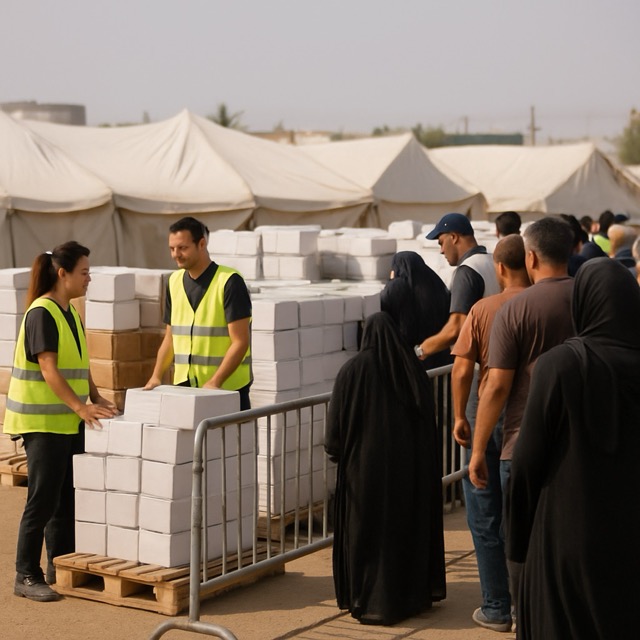
What the project set out to do According to documents and accounts reviewed by multiple news outlets, the new mechanism was designed to create centralized food distribution points run by a private foundation, with crowd‑control measures, identity checks, and closely managed supply chains intended to “deconflict” operations with the Israel Defense Forces. Proponents argued the set‑up would bypass Hamas interference and speed delivery by consolidating sites. Critics countered that concentrating desperate crowds at a few hubs invited chaos, that the vetting blurred the line between civilian aid and security screening, and that sidelining UN agencies would reduce reach just as hunger intensified across the strip.
Consultants on the engagement mapped cost structures, supply routes, staffing ratios, and facility designs. In parallel, according to subsequent reporting, a separate stream of “post‑war” analysis modeled reconstruction scenarios — work that later drew particular fire when elements were interpreted as enabling or normalizing displacement. BCG says that modeling was neither sanctioned nor paid and that key communications took place outside official systems, further complicating oversight.
Inside the early walk‑offs The four consultants who exited did so before the project’s public rollout. Three U.S.‑based staffers resigned a day after joining, telling colleagues they were uncomfortable with the degree of coordination with Israeli officials and the operational reliance on private security at distribution points. A fourth consultant, a U.S. military veteran brought in for logistics expertise, withdrew soon after, expressing skepticism that the model could function without creating crowd‑safety hazards and reputational risk for the firm. While early dissent is not unusual on sensitive crisis assignments, the speed and unanimity of these departures were striking.
Several team members who stayed say they flagged similar worries, including whether the foundation — incorporated and funded through opaque channels — had sufficient multilateral backing to be legitimate. Those warnings, they say, did not halt the work, which accelerated toward a May launch even as mainstream aid groups declined to participate. A test that failed in public As the first hubs opened, aid seekers reported long waits, crush‑risk queues, and tense interactions with armed personnel around the sites. U.N. officials and advocacy groups said the arrangement predictably placed civilians in harm’s way, and data collected by humanitarian monitors documented a rising toll of people killed or injured near the hubs or along routes to them.
Israel and foundation representatives rejected claims of systematic wrongdoing and said attacks were the work of militants or uncontrollable crowd dynamics. Either way, confidence eroded quickly. The reputational damage for BCG mounted as internal emails and planning slides surfaced, painting a picture of a project pushed forward by a tight circle of senior staff, sometimes over the objections of colleagues. Within days of a high‑profile apology to employees in early June, the firm dismissed two partners connected to the work and retained WilmerHale to examine how the engagement was initiated, what controls failed, and which communications were kept off‑system. BCG has since said individuals “did not disclose the full nature of the work,” that some activities “were unauthorized,” and that it would not be paid for any of the assistance provided.
The governance gap Industry veterans say the episode exposes a structural weakness in how global partnerships police high‑risk pro bono initiatives. Humanitarian engagements often begin informally, with influential clients or well‑connected intermediaries seeking rapid analytical help in the fog of crisis. That informality can bypass the very checks designed to weigh legal exposure, conflict‑of‑interest, and reputational harm. It also complicates consent: communities ostensibly served by a technocratic solution are rarely the ones asked whether they want it — especially when access to food is on the line. For consultants, the Gaza controversy also reopens long‑running debates about the profession’s role in conflict zones. The difference between mapping a supply chain and shaping who receives aid under which conditions is not academic.
As several NGOs suspended cooperation with the firm pending clarity, current and former BCG staff described an agonizing split between a desire to alleviate suffering and a fear that the project’s design and governance made harm more likely. What comes next The firm has pledged to reinforce approval processes, tighten controls around side‑channel communications, and clarify red‑lines for work that touches on security and population movement. It has also faced calls — from lawmakers, clients, and its own staff — to publish more of the WilmerHale findings. Whether or not those details become public, the early resignations are likely to loom large in any future reckoning.
They suggest that the risks now debated in op‑eds and committee rooms were visible to practitioners on day one. For Gaza, the bigger question remains how to restore a humanitarian architecture capable of reaching people where they are, at the speed need dictates, without entangling civilians in security objectives. For global firms, the lesson is as much about humility as it is about governance: if a project’s core assumptions prompt your own experts to walk away, that is less a staffing hiccup than a flashing red light.




 The Tower Post