As Jim Sanborn turns 80 and moves to auction the K4 solution, a 35‑year mystery reaches a crossroads—and raises a bigger question about who owns secrets.
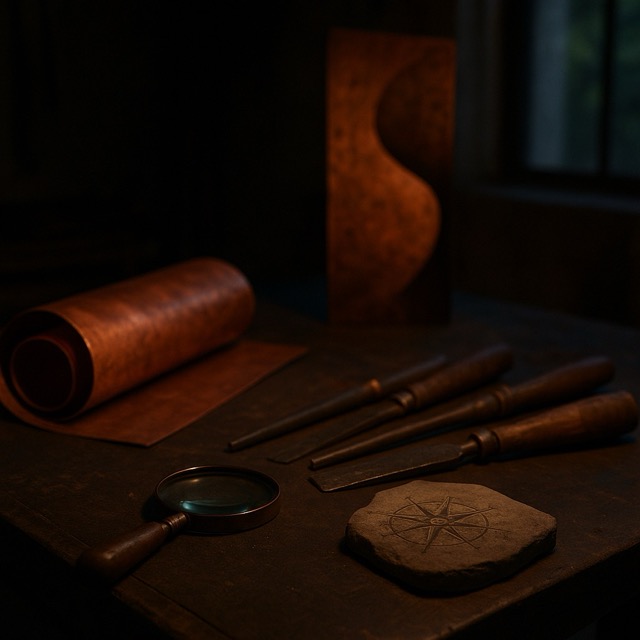
LANGLEY, Va. — The most famous unsolved code in the world is etched in copper, curled like a paper scroll in the courtyard of the CIA. “Kryptos,” the 1990 sculpture by artist Jim Sanborn, has taunted professional cryptanalysts and amateur sleuths for thirty‑five years. The first three of its four passages yielded long ago; the fourth—just 97 characters known as K4—refuses to give up its meaning. Even the agency that hosts the work at its Langley headquarters has failed to crack it.
Now the mystery’s guardian is confronting time. Sanborn, who turns 80 this November, has announced that he will auction the plaintext solution to K4 this fall through Boston‑based RR Auction. The lot—handwritten pages and supporting artifacts—is expected to fetch $300,000 to $500,000, with a portion of proceeds earmarked for disability programs. The sale, scheduled for November 20, effectively outsources the sculpture’s last secret to a private steward. In recent statements, Sanborn has emphasized the value of reticence—“Power resides with a secret, not without it,” he wrote—and framed the transfer this way: the burden of knowledge will pass from artist to keeper.
The move jolts a community that has grown up around Kryptos since its dedication on November 3, 1990. The piece comprises an S‑shaped screen of copper punched with some 1,800 characters and flanked by stone, water and a compass rose. Working with former CIA cryptographer Ed Scheidt, Sanborn embedded four messages—K1 through K4—in a progression of ciphers. K1 and K2 were solved internally at the CIA by analyst David Stein in the late 1990s and publicly by California computer scientist Jim Gillogly in 1999; the National Security Agency, it later emerged, had also deciphered the first three passages back in 1992. The fourth section, K4, remains stubbornly opaque.
Over the years Sanborn has thrown out breadcrumbs. In 2010 he confirmed that the ciphertext sequence NYPVTT (positions 64–69) decodes to “BERLIN.” In 2014 he added that MZFPK (positions 70–74) becomes “CLOCK,” pointing many sleuths toward the Berlin Clock, a timepiece whose rows of blinking lights encode numbers. In 2020 he revealed that positions 26–34 spell “NORTHEAST,” and later that positions 22–25 read “EAST.” Those fragments—EAST, NORTHEAST … BERLIN, CLOCK—have yet to unlock the whole. Sanborn has also teased the existence of a meta‑puzzle, “K5,” that would reveal itself only after K1–K4 are fully solved.
The auction changes the calculus. If a bidder buys the plaintext, the mystery’s center of gravity shifts from an open, communal chase to the discretion of a private owner. Will they publish? Will they sit on it? Will they license it, reveal it after a set date, or hoard it like a trophy? Sanborn says he hopes the buyer will preserve the secret; RR Auction’s teaser casts the transfer as a rite, not a leak.
What would that mean for the thousands who have spent nights and weekends combing through frequency tables, transposition grids and Berlin horology? Opinions split. Some fear a privatized solution undermines the democratic spirit that made Kryptos a global pastime. Others argue that art is not a math contest and that Sanborn—who retained intellectual control even as the CIA acquired the physical object—has always staged Kryptos as theater about secrecy itself.
There are practical questions, too. The CIA’s courtyard sculpture is public art on a secure campus; the code’s plaintext, by contrast, is Sanborn’s private intellectual property. Auctioning that text is not the same as selling the sculpture. Yet the juxtaposition is jarring: a riddle embedded in a public place whose answer may become private for the first time. The law offers little guidance beyond contracts and copyright. Ethics do more work: is a secret more authentic when it remains scarce, or does the meaning of a public artwork demand public access to its final layer?
And what happens if the crowd solves K4 anyway? That possibility hangs over the sale like a sword. The fragments “EAST,” “NORTHEAST,” “BERLIN,” and “CLOCK” have spurred countless hypotheses—from directional bearings to clock arithmetic to a hybrid cipher that changes method mid‑stream. Scheidt has hinted that a “change in methodology” lies in wait, and the right answer could still emerge independently. If that happens before the gavel falls, a buyer acquires provenance more than exclusivity. After the sale, a separate race would begin: proving or disproving proposed solutions against the authentic plaintext the buyer holds.
Sanborn’s decision is also a personal act. In recent profiles he comes across as weary and wary: a reclusive artist on a Chesapeake island, fielding threats, reinforcing doors, and watching people insist that artificial intelligence has cracked his life’s work. He is at once proud of Kryptos and burdened by it. Auctioning the solution is a way to curate the ending while he can, to secure his finances, and to reassert a principle—that secrecy has value even in an age that demands disclosure.
If the buyer keeps the plaintext locked away, Kryptos becomes a paradoxical heirloom: a public sculpture whose final meaning is privately held. Museums and archives have lived with such arrangements before. The recorded contents of a sealed envelope can be owned, embargoed, even willed to an heir. Sanborn has mused about the afterlife of the secret—the possibility that his estate (or now a buyer) will become the switchboard for claims, cranks and credible solutions, using the authentic plaintext as a verification oracle. That gatekeeping could last years.
There is another path. The buyer could release the solution under terms that preserve the performance. They might publish the text but not the final “K5” riddle; they could stage a timed reveal; they might donate the documents to an institution with a future opening date. Any of those choices would keep Kryptos alive as an artwork about time as much as about text. Even a full disclosure would not end the story. Those 97 characters sit within a larger installation that still asks: What is worth hiding? What is gained by revealing? The copper scroll would continue to whisper—between subtle shading and the absence of light—that meaning is not just in letters but in the games we play with them.
Perhaps the least satisfying outcome is also the most faithful to Sanborn’s thesis: that a secret, like energy, does work simply by existing. In that reading, K4’s unresolved status is not a flaw but the machine’s engine. Passing the plaintext to a private party does not break the artwork; it extends the performance into the market, where possession and silence are instruments as potent as alphabets. After all, Kryptos has always been a collaboration between art and environment, between a sculptor who works with copper and stone and an institution built to keep and parse secrets.
As the auction date approaches, one thing is certain: Kryptos no longer belongs only to Langley or to the small circle of classical cryptographers. It belongs to a broader, messier public that includes collectors, museums, puzzle‑hunters, and people who simply like the idea that the world still contains a few secrets that resist the blunt force of computation. Whether the buyer hides the plaintext, shares it, or turns it into performance, the question that Sanborn has forced on all of us will remain after he is gone: who, if anyone, should own the last word of a public mystery?


 The Tower Post