After doubling its common-law financial hub to 7,700 active firms in just four and a half years, Dubai now faces a two-front challenge from Abu Dhabi and Riyadh. The next phase of the Gulf’s finance race has begun.
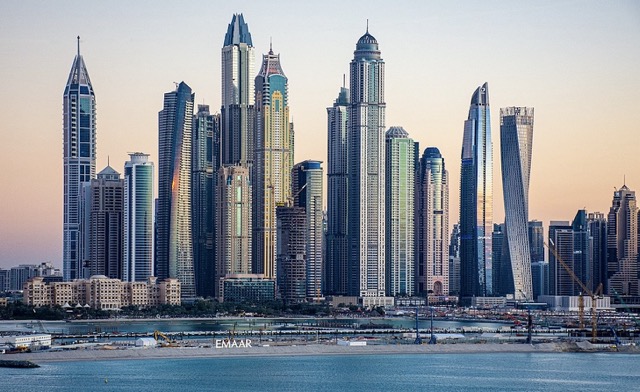
DUBAI — On a midsummer morning in August 2025, the walkways under the Gate building at Dubai International Financial Centre (DIFC) hum with languages, deal chatter and caffeine. It is more than a vibe: the numbers are emphatic. As of July 2025, the DIFC counts roughly 7,700 active registered companies — more than double the tally four and a half years ago — after a record 1,081 new firms joined in the first half of this year. Its workforce has swelled to nearly 48,000 professionals. For an experiment launched two decades ago to plant a common-law, English-language financial jurisdiction in the desert, the city-state’s bet has paid off.
The pandemic proved a surprising accelerant. Dubai reopened early, test-piloted long-term visas and aggressively courted wealth managers, hedge funds, family offices and fintechs. It leaned into its geographic arbitrage — liveable time-zone overlap with Asia and Europe — and built connective tissue to sovereign wealth capital across the Gulf. In 2024, the centre booked record revenues and profits; in 2025, registrations accelerated again. The result is a financial ecosystem that, while still smaller than global titans, now has depth across banking, asset management, insurance, markets infrastructure and a thriving advisory and legal services base.
Three policy pillars help explain the momentum. First, regulatory clarity: Dubai carved out a ring-fenced jurisdiction with its own independent regulator and courts, modelled on common law and familiar to global finance. Second, a pragmatic fiscal mix: the UAE introduced a 9% federal corporate tax in 2023, but still offers a comparatively light overall tax burden and a clean, simple regime by regional standards. Third, talent and mobility: a battery of long-term residency options — capped by the 10-year Golden Visa — gives executives and their families stability. The country’s removal from the Financial Action Task Force grey list in February 2024 further eased bank compliance frictions and burnished Dubai’s status with global institutions.
Fueling the engine is wealth. The UAE is projected to attract a net inflow of around 9,800 millionaires in 2025, the most of any country, according to widely tracked migration data. That influx is not only juicing prime property but also seeding private capital pools, family offices and boutique investment firms that often choose the DIFC as their legal and regulatory home.
But the city’s dominance across the Middle East is no longer uncontested. Fifty minutes down the E11 highway, Abu Dhabi is quietly — and increasingly loudly — executing its own playbook. Abu Dhabi Global Market (ADGM), the capital’s financial free zone, has emerged as an asset management magnet: assets under management surged by well over 200% last year, and new licences and operational entities continued to leap in early 2025. A roster of global names — from private equity groups to hedge funds and law firms — have opted to plant their MENA headquarters on Al Maryah Island, lured by proximity to some of the world’s most formidable sovereign investors (ADIA, Mubadala and ADQ), a deepening funds regime, and a friendly pipeline for managers registering funds.
The pitch in Abu Dhabi is distinct. If Dubai sells scale, speed and lifestyle, the capital offers concentration: direct lines to capital allocators, a calmer cost base and abundant new office supply designed for institutional needs. The growth data are impressive — and so is the intent. Abu Dhabi’s financial authorities tout double-digit growth in operational entities and an expanding roster of licensed financial firms, while the wider emirate’s business ecosystem swells alongside. It still trails Dubai in overall headcount and breadth, but it is now an obvious corridor rather than a sideshow.
The other challenger is Riyadh. Saudi Arabia’s Regional Headquarters (RHQ) program — fully enforced since January 2024 — requires multinationals to establish a regional HQ in the kingdom to be eligible for public-sector contracts. The stick has been complemented by carrots: tax incentives, regulatory streamlining and a maturing capital market. Global banks have taken notice; several have secured RHQ licences, and the flood of infrastructure and industrial projects is tilting boardroom travel schedules toward King Khalid International. The Tadawul exchange, meanwhile, is shaping up for another big year of listings, and Riyadh’s Grade-A offices are effectively full, with planned expansions at King Abdullah Financial District (KAFD) to absorb demand.
Saudi’s rise is not linear. 2025 has reminded investors that macro cycles still bite: oil price wobbles, tighter domestic liquidity and volatile IPO aftermarket performance have cooled animal spirits at times. Building a global financial centre also requires patient plumbing — rulemaking, dispute resolution, market infrastructure and trust — that cannot be conjured by decree. But the direction of travel is unambiguous: more headcount, more listings, more capital formation in the Gulf’s biggest economy, and therefore more reasons for firms to maintain significant on-the-ground capabilities in Riyadh.
For Dubai, the competitive map points to a polycentric future. The question is less whether it ‘loses’ to Abu Dhabi or Riyadh than how it evolves to remain the indispensable hub. On current evidence, network effects still favour Dubai. The DIFC has a critical mass of service providers, deal originators and specialist courts; its schools, hospitals and airlines are a draw; and the city’s neutrality and connectivity are valued by executives who want to hedge geopolitical risk. The recent boom in hedge funds and family offices — helped by a surge in authorisations this year — hints at further clustering effects.
There are vulnerabilities. Costs are rising: Dubai is now the Middle East’s costliest city for expatriate professionals, and rents have outpaced salaries for many mid-career workers. Infrastructure strains — from traffic to school places — are a frequent coffee-line gripe. The embrace of digital assets and other frontier finance brings growth but also reputational risk should regulatory guardrails lag market innovation. And as the UAE beds in its corporate tax and global minimum tax rules, the easy narrative of ‘tax-free Dubai’ is fading, even if the jurisdiction remains competitive in aggregate.
Policy will therefore matter as much as pipelines. Maintaining an agile, predictable rulebook, investing in transport and social infrastructure, and calibrating housing supply to population growth can keep costs from eroding the talent dividend. The visa regime will continue to be a key lever: expanding and streamlining long-term residency, spousal employment and pathway-to-citizenship options for exceptional contributors would reinforce Dubai’s magnetism. So would deeper ties with global markets — dual listings, mutual recognition for funds and smoother cross-border fund distribution.
Even under pressure, Dubai has optionality. If Abu Dhabi becomes the Gulf’s capital-allocation headquarters and Riyadh its corporate command centre, Dubai can entrench itself as the region’s dealmaking floor — the place where bankers, lawyers, investors and founders actually meet. The DIFC’s growing innovation district, coupled with continued expansion of fund managers and private capital firms, suggests that outcome is already in motion. The crown, in other words, may look different — shared, or at least contested — but for now it still fits.
By the numbers:
• 7,700 — Active registered companies in DIFC as of mid-2025, up 25% year-on-year after a record 1,081 additions in H1.
• ~47,900 — Professionals working in the centre.
• >200% — Growth in assets under management at Abu Dhabi Global Market in 2024; double-digit growth continued into early 2025.
• 2024–25 — Full enforcement of Saudi Arabia’s RHQ requirement for public contracts; global banks secure licences as Riyadh’s office market runs near capacity and IPOs keep queues long.
• 9,800 — Net inflow of millionaires the UAE is projected to attract in 2025, topping global wealth migration charts.
The race is ultimately additive. A decade ago, the idea of three competing Gulf financial hubs sounded like duplication. Today, it looks more like critical mass. For global finance, that means more capital to raise, more projects to finance and more optionality on where to base teams. For Dubai, it means doubling down on the mix that made its rise possible — openness, competent administration and relentless execution — while reinventing at the edges. The Gulf’s finance map is getting redrawn. Dubai, for now, still sits at the centre of the page.


 The Tower Post