Big Tech’s $350bn splurge in 2025 and a projected $400bn-plus in 2026 are just the down payment. Utilities, private credit, sovereign wealth, and taxpayers are all being drawn into one of the largest capital mobilisations in modern history.
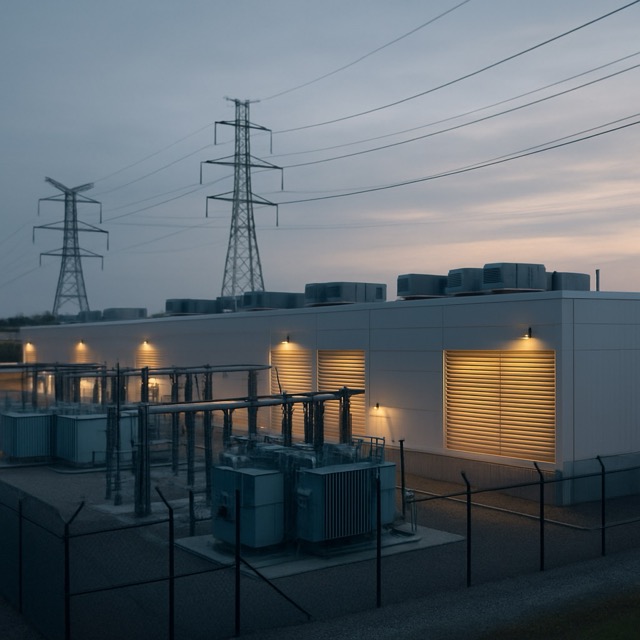
The numbers are now too big to ignore. Amazon, Google, Microsoft and Meta are on track to spend more than $350bn on data centres and related AI infrastructure in 2025—and analysts expect their combined outlay to exceed $400bn in 2026. Those figures are staggering by any standard. Yet they amount to only a slice of the total cheque required to build, power and connect the data‑centre capacity implied by today’s artificial‑intelligence ambitions. Banks including Morgan Stanley put the global price tag for the AI buildout at close to $3tn by the end of the decade—a sum that will be financed far beyond Silicon Valley’s balance sheets.
The down payment
For the hyperscalers, 2025 is the year the spending supercycle went mainstream. Amazon has telegraphed roughly $100bn of capital expenditure this year, the bulk of it aimed at AWS and AI‑ready servers. Microsoft has guided toward an $80bn‑plus build programme focused on cloud and AI capacity. Google expects capex of about $75bn in 2025, largely for data centres, networking and servers. Meta, whose CEO Mark Zuckerberg now talks openly about a race to build artificial general intelligence, has lifted its 2025 capex outlook to as much as $72bn.
But the balance sheets of Big Tech, however muscular, will not cover the entire tab. A single state‑of‑the‑art campus can now require billions of dollars in real estate, substations, transformers, long‑lead switchgear, miles of high‑voltage line—and a firm supply of power that often exceeds 500 megawatts. The constraints are no longer just about GPUs; they are about grid access, turbines and land.
The new financiers of compute
If the last decade’s cloud rise was equity‑light and margin‑rich, the AI era is debt‑heavy and infrastructure‑intensive. Private credit has rushed in to narrow the funding gap, often alongside sovereign wealth funds and pension plans.
Blackstone led a $7.5bn debt facility for CoreWeave in 2024 and lenders have since arranged additional billions as the AI cloud upstart races to stand up more capacity for customers such as OpenAI and Microsoft. Brookfield recently extended a $750m credit line to Crusoe to bankroll “AI factories,” while Blue Owl Capital and other investors have lined up multi‑billion‑dollar joint ventures for megaprojects in Texas. The structures range from build‑to‑suit leases and sale‑leasebacks to asset‑backed loans that—unusually for tech—are sometimes secured against racks of Nvidia accelerators.
Colocation specialists are also scaling with outside capital. Equinix has assembled a series of xScale joint ventures with GIC and CPP Investments to raise more than $15bn for 100‑MW‑plus campuses, while Digital Realty has teamed with institutions from Blackstone to Middle Eastern funds to finance multi‑gigawatt pipelines. For investors willing to accept lower IRRs than software but higher than traditional utilities, long‑term leases with AA‑rated tenants look like rare yield in a high‑rate world.
The power behind the racks
Nothing about the AI boom is possible without a parallel surge in power infrastructure. U.S. utilities from Dominion Energy to Duke Energy have increased their five‑year capital plans to connect and serve data‑centre load. Dominion now intends to spend roughly $50bn through 2029, citing an “accelerating” backlog in Northern Virginia, the world’s largest data‑centre cluster. Duke this month lifted its investment plan to about $87bn to reinforce the Carolinas’ grid and add generation. NextEra, Constellation and independent power producers like Calpine are signing long‑dated supply deals with data‑centre developers and plotting new capacity.
Regulators and consumers are feeling the knock‑on effects. Studies from the International Energy Agency suggest that global data‑centre electricity consumption could roughly double by the end of the decade, with AI loads the fastest‑growing component. In places where the grid is already tight—Dublin, Northern Virginia, parts of the U.S. Southeast—utilities warn that new capacity must arrive faster than in prior planning cycles. Who pays for the pipes, wires and peaker plants is becoming a political fight: several states are debating whether data‑centre builders should shoulder more of the grid upgrades they trigger, while rate cases foreshadow higher bills for households and small businesses.
Taxpayers and tariff‑payers
Public money is entwined in this story. At the federal level, the U.S. CHIPS and Science Act is underwriting tens of billions of dollars in fab construction for the chips and advanced packaging that feed AI servers. States and counties are competing with lavish sales‑tax exemptions, property‑tax abatements and workforce grants to win data‑centre campuses. In Virginia, official tallies show data‑centres have become the single biggest beneficiary of incentive spending; in Texas, the Comptroller’s estimates for data‑centre tax breaks ballooned from about $130m to roughly $1bn for FY2025 in a single year. The sums add up: watchdogs reckon the total public bill could run into the many billions by 2030.
The chip‑and‑kit industrial base
AI’s appetite does not stop at buildings and electrons. Foundries and equipment makers are deep into their own capex cycles. TSMC has reiterated a capex budget in the high‑$30bn range for 2025 and is adding advanced packaging (CoWoS) capacity as fast as suppliers can deliver tools. Intel, Samsung and others are tapping subsidies and customer pre‑payments to accelerate leading‑edge nodes in the U.S., Europe and Japan. The upstream winners include ASML (lithography), Applied Materials and Lam (deposition and etch), and KLA (inspection)—all financed by mammoth orders from AI‑hungry customers downstream.
The energy mix re‑enters the chat
With fossil‑fired capacity still doing much of the heavy lifting, tech companies are scrambling to line up low‑carbon megawatts. Nuclear is back in vogue: long‑term power contracts are being signed for existing reactors, while advanced‑nuclear developers court data‑centre hosts with small‑modular designs. Equinix, for instance, has announced agreements aimed at securing more than a gigawatt of nuclear‑sourced power in the years ahead; Microsoft has contracted for electricity tied to a planned restart at Three Mile Island; Amazon and Google have backed next‑gen nuclear ventures. None of these efforts is simple or cheap—but they hint at how far compute leaders will go to derisk their power.
Risk, repriced
Is all this investment rational? Bulls say yes: AI productivity gains will eventually justify enormous infrastructure outlays, much as the smartphone era did a decade ago. Equity investors have already rewarded the biggest spenders. But the capital stack is shifting risks. Utilities build to regulated returns; ratepayers ultimately carry cost over‑runs and load shortfalls. Private‑credit lenders are betting that multi‑year GPU cycles will not render collateral obsolete before loans are retired. Colocation developers face timing risk if grid delays push out energisation dates. And policymakers must calibrate incentives so that public support crowds in private capital without socialising downside.
Who, then, is on the hook?
Start with Big Tech: they will still write the largest cheques. Layer on private capital: the BLKs, BXs, KKRs and Apollos of the world are underwriting tens of billions in dedicated facilities and loans. Add utilities and power producers, whose capex plans now run to many tens of billions of dollars more. Include chipmakers and equipment vendors financing fabs and packaging lines. Finally, recognise taxpayers and bill‑payers, who fund the grid upgrades, incentives and—if forecasts prove overly rosy—the stranded assets.
The AI era may indeed become one of the biggest movements of capital in modern history. But it will not be financed by Silicon Valley alone. The true patrons of the age of compute will be pension savers, sovereigns and households—plus a cast of regulators deciding how to divide the bill.
—
Sources (selected)
• Financial Times, “’Absolutely immense’: the companies on the hook for the $3tn AI building boom,” Aug 2025.
• Financial Times, “Inside the relentless race for AI capacity,” Jul 2025.
• DataCenterDynamics, multiple reports on 2025 capex guidance for Amazon (~$100bn), Microsoft (~$80bn), Google (~$75bn) and Meta ($64–72bn).
• Reuters, on Dominion ($50.1bn 2025–29) and Duke (raised to ~$87bn) capex plans driven by data‑centre load.
• International Energy Agency, “Energy and AI — Energy demand from AI,” 2025; “Electricity 2025” outlook.
• Equinix press release and DCD coverage of xScale JV(s) >$15bn with GIC/CPP.
• Blackstone press release on CoreWeave $7.5bn debt financing (2024); Brookfield credit line to Crusoe ($750m, 2025).
• CSIS analysis, “How Tariffs Could Derail the United States’ $3 Trillion AI Buildout,” Aug 2025.




 The Tower Post