Clashes surge across Indonesia’s Papua region as security operations intensify; airports and mining sites are hit, villages empty out, and civilians face mounting risks
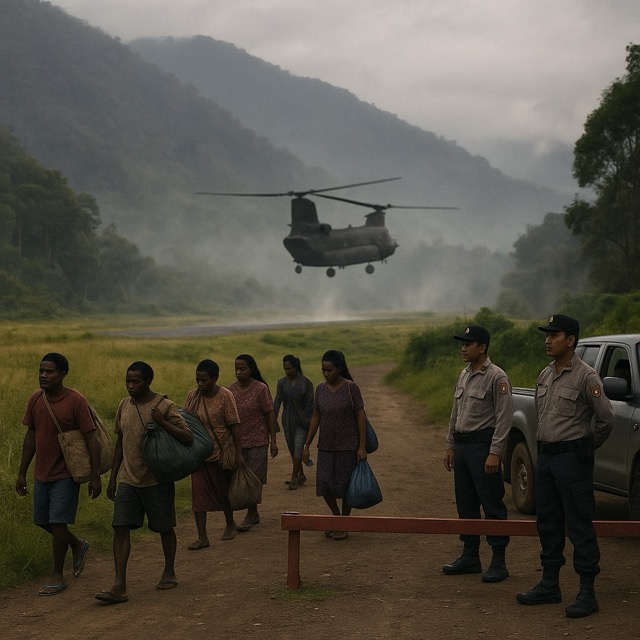
JAYAPURA/JAKARTA — Indonesia’s long-simmering conflict in Papua entered a bloodier phase in 2025. Through the first half of the year, firefights between the West Papua National Liberation Army—the armed wing of the Free Papua Movement, known locally as TPNPB/OPM—and Indonesian security forces spread across the Central Highlands and beyond. The tempo was markedly higher than in late 2024, and the human toll more visible: airstrips and mining camps came under fire, remote valleys emptied as families fled, and reports of killings and injuries mounted on both sides. For civilians, especially Indigenous Papuans living far from paved roads and formal health care, the danger is rising.
Independent conflict tracking underscores the spike. In May alone, researchers recorded a sharp jump in clashes between TPNPB units and the security forces compared with April—evidence of a widening battlespace from Yahukimo and Puncak to Intan Jaya and Jayawijaya. Officials in Jakarta say intensified operations are necessary to protect communities and critical infrastructure; insurgent spokespeople counter that Indonesia has quietly surged troops and escalated a ‘covert war.’
The turbulence has been punctuated by headline-grabbing attacks. On June 18, gunmen opened fire at Aminggaru Ilaga Airport in Puncak, sowing panic among passengers before Indonesian forces re-secured the strip. Two weeks earlier in Jayawijaya, fighters under Egianus Kogoya—whose faction held a New Zealand pilot hostage until September 2024—were accused of killing two construction workers in a drive-by shooting. And in April, TPNPB units struck informal gold panning sites in Yahukimo and nearby highland districts; Indonesian authorities say the victims were civilians, while insurgents claimed they were undercover personnel. The pattern is consistent: targets straddle the blurry line between state presence and local livelihoods, drawing frontline communities into the crosshairs.
Jakarta’s response has mixed police-led counterinsurgency with a heavier military footprint. Commanders tout kills and captures of TPNPB cadres and the seizure of weapons; in mid-May the army said its forces had killed more than a dozen fighters during operations around Intan Jaya, while acknowledging that civilians also died in crossfire. Human rights groups, church networks and local monitors, meanwhile, have documented raids and aerial bombardments across portions of the Central Highlands since late March—allegations the military disputes or frames as legitimate use of force against armed groups embedded in difficult terrain. The fog of war is thickened by limited independent access: journalists and aid workers often struggle to verify competing claims.
The civilian fallout is unmistakable. Displacement has climbed through the second quarter of 2025 as skirmishes ripple across highland regencies. Humanitarian trackers estimate the number of internally displaced people in Papua at well over ninety thousand by June, with new flight reported from districts like Intan Jaya, Yahukimo, Puncak and Nduga. Local officials and community leaders speak of emptied villages, shuttered schools, and health posts running on fumes. For many, safety means trekking for days to find relatives in larger towns—or crowding into church compounds ill-equipped to host hundreds of new arrivals.
One flashpoint stands out: Intan Jaya’s Sugapa and Hitadipa districts, where multiple operations since March have left homes destroyed and civilians dead or missing, according to rights monitors and church sources. In Puncak, Papuan leaders and activists allege fresh airstrikes in May around Ilaga; the TNI has rejected claims of indiscriminate force but acknowledges using drones and helicopters in support of ground units. Absent timely, independent investigations, residents are left to navigate rumors and fear. The longer verification takes, the harder it becomes to separate battlefield truth from propaganda.
Politics in Jakarta have also shifted. Since taking office in late 2024, President Prabowo Subianto has paired an assertive internal security stance with overtures—among them a plan floated in January to extend pardons to some Papuan prisoners who renounce violence. His administration has promised faster development under expanded special autonomy structures and tasked senior officials with accelerating programs across the new provinces carved out since 2022. Yet development projects have their own fault lines: in southern Papua, UN experts have criticized ‘food estate’ agribusiness schemes for displacing Indigenous communities and inviting militarization, reinforcing the perception that security and business interests too often trump local rights.
On the insurgent side, the movement remains decentralized and fractious. TPNPB’s area commands oscillate between high-visibility attacks and quiet periods to regroup. The United Liberation Movement for West Papua (ULMWP), a political umbrella active abroad, continues to press for international scrutiny—calling for a long-delayed visit by the UN Human Rights Office and denouncing arrests of pro-independence organizers. But the gap between armed units in the forests and political advocates overseas remains wide; each claims to speak for ‘Papua,’ yet neither can control the other’s tactics.
For civilians, three risks dominate. First is proximity to fighting: when gun battles erupt near villages or airstrips, stray fire and explosive ordnance can kill indiscriminately. Second is displacement: long treks to safer areas bring exposure, food insecurity, and lost schooling, with women and children bearing the brunt. Third is the shrinking space for neutral actors—teachers, health workers, and church mediators—who are sometimes misidentified as combatants, or harassed for suspected loyalties. Each new incident deepens mistrust, making humanitarian access—and, crucially, de-escalation—harder.
What could bend the curve? Analysts and rights advocates outline a familiar toolbox. The security forces should issue and enforce strict rules of engagement that minimize civilian harm; all credible allegations of unlawful killings and property destruction require transparent, time-bound investigations. Insurgent commanders must end attacks on noncombatants and public facilities, and stop using populated areas as cover. Both sides should agree to humanitarian pauses where fighting has displaced large numbers of people, so aid can reach those most in need. In parallel, the government could allow greater independent access for journalists and UN human rights experts—a step that would build trust and help verify facts in an opaque conflict zone.
None of this will be easy. Papua’s highlands are vast, mountainous and thinly governed; legacy grievances run deep, from contested histories of integration to uneven benefits from resource extraction. Yet the alternative is a slow-boil war that imposes collective punishment on the very people all sides claim to protect. The trend lines in 2025—more firefights, more flight, and more fear—suggest that without urgent measures to reduce harm, Papua’s flashpoint will burn hotter still.


 The Tower Post