At least ten senior investment bankers defect from JPMorgan Chase as Citi’s Vis Raghavan accelerates an aggressive talent raid, reshaping Wall Street’s competitive landscape.
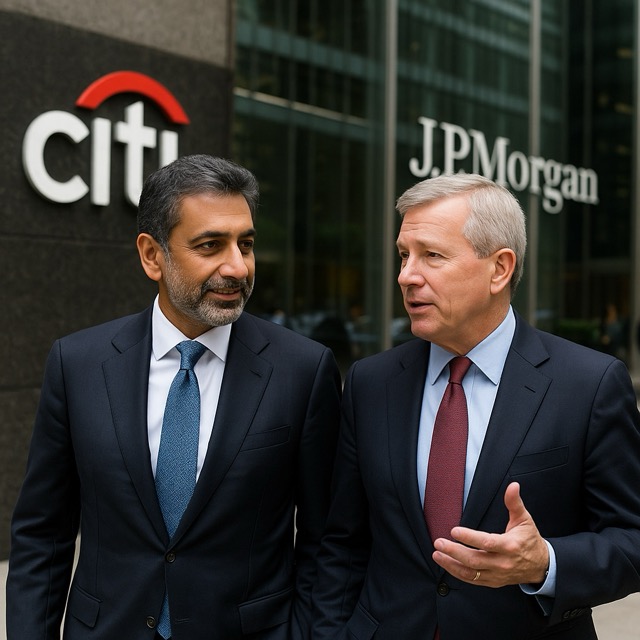
New York, August 2025 – Citigroup has launched one of Wall Street’s most ambitious hiring offensives in recent memory, pulling top dealmakers from its fiercest rival, JPMorgan Chase. The move, orchestrated by Citi’s recently appointed banking chief Vis Raghavan, signals the bank’s determination to reclaim lost ground in investment banking and challenge the dominance of long-established titans.
According to people familiar with the matter, at least ten senior JPMorgan investment bankers have agreed to join Citi over the past three months, marking a decisive step in what many insiders describe as a “full-scale raid” on JPMorgan’s upper ranks. The hires span across mergers and acquisitions, equity capital markets, and industry coverage teams, underscoring Citi’s bid to strengthen both its global reach and execution firepower.
A Personal Stamp
Raghavan, who joined Citi earlier this year after a decades-long career at JPMorgan, appears intent on bringing his former colleagues into the fold. Known for his ability to cultivate talent and maintain deep client relationships, Raghavan is widely viewed as one of Wall Street’s most influential rainmakers.
“Vis is moving quickly to reshape Citi’s investment bank in his own image,” said one senior banker at a rival firm. “He’s betting that loyalty, trust, and familiarity will help Citi punch above its weight.”
For years, Citigroup’s investment bank has trailed behind competitors such as JPMorgan, Goldman Sachs, and Morgan Stanley. The bank has struggled with inconsistent performance, regulatory setbacks, and leadership turnover. Raghavan’s appointment was seen as a statement of intent by Citi CEO Jane Fraser, who is under pressure to boost profitability and restore investor confidence.
Shockwaves at JPMorgan
JPMorgan, the world’s largest investment bank by revenue, has sought to downplay the departures. Internally, executives have reassured staff that the losses, though visible, will not materially affect the bank’s ability to serve clients.
Still, the wave of exits highlights the delicate challenge of retaining senior talent in an era of heightened competition and shifting allegiances. Several insiders note that JPMorgan’s bench remains deep, but acknowledge that the symbolism of losing high-profile rainmakers to Citi is hard to ignore.
“JPMorgan is a machine, but even the best machines need their operators,” remarked a former executive now in private equity. “If Raghavan keeps pulling senior people, it forces a rethink on succession and client continuity.”
Wall Street Realignment
The moves come amid a broader shake-up in global banking. Deal volumes, which slumped in 2023 and early 2024, have rebounded sharply this year as markets stabilize and corporate confidence returns. Mega-mergers, cross-border deals, and technology sector financing are again driving competition among banks.
Citi’s aggressive play is seen as an effort not just to capitalize on the rebound but to reposition itself structurally for the next decade. By importing trusted lieutenants from his JPMorgan days, Raghavan is betting on cultural alignment and speed of execution. Analysts suggest the strategy could help Citi leapfrog rivals in specific sectors where it has historically underperformed.
“Poaching talent alone won’t fix Citi’s challenges,” warned one industry analyst. “But with deal activity rising, having experienced bankers who already know how to work together could be a catalyst for stronger results.”
Risks and Rewards
The poaching spree is not without risks. Integration challenges, client conflicts, and potential retaliation from rivals could complicate Citi’s gambit. JPMorgan, in particular, has a long track record of aggressively protecting client relationships and rebuilding teams swiftly.
Moreover, the costs of hiring senior bankers – often involving multi-million-dollar pay packages and deferred compensation buyouts – could weigh on Citi’s bottom line before revenues materialize. Critics argue that Citi needs to balance talent acquisition with broader structural reforms, including technology upgrades and operational streamlining.
Still, early indications suggest that the strategy is resonating with Citi’s stakeholders. Shares in Citigroup rose modestly in early August, reflecting investor optimism that Fraser and Raghavan are finally positioning the bank to compete on more equal terms with Wall Street’s elite.
Looking Ahead
The coming months will test whether Citi’s hiring spree translates into tangible results. Investment banking league tables – the scorecards of global finance – will be closely watched for signs of Citi climbing the rankings.
For now, the symbolic impact is undeniable: Citi, long seen as lagging behind its peers, has turned itself into one of the most aggressive recruiters on Wall Street. And with Vis Raghavan at the helm, the message is clear: Citigroup is no longer content to play defense.
As one veteran banker put it: “Wall Street hasn’t seen Citi this hungry in years. Whether it pays off, we’ll know soon enough.”




 The Tower Post