Eight months after Bashar al-Assad’s ouster, Damascus navigates Kurdish integration, sectarian wounds, and the politics of reconstruction.
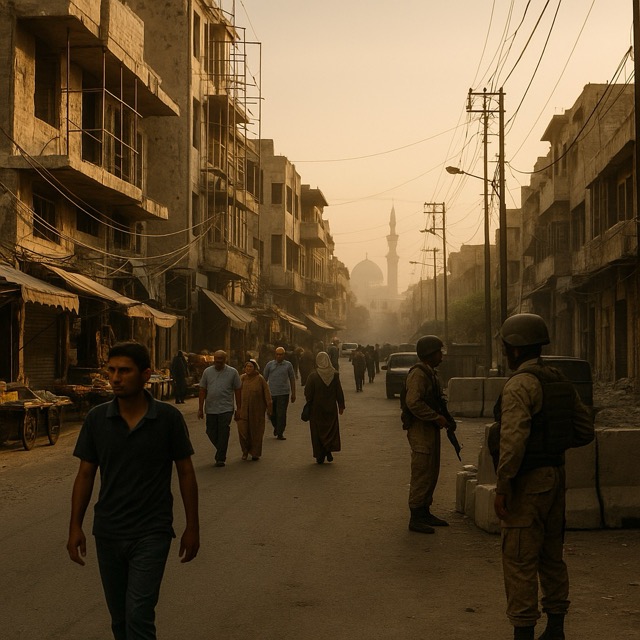
DAMASCUS/AMMAN — Eight months after Bashar al-Assad fled Syria amid a lightning rebel advance, the country is in the uneasy, improvised reality of a post-Assad transition. The interim president, Ahmed al‑Sharaa, has moved quickly to wrap the symbols of state around a movement forged in war, announcing a transitional cabinet in late March and promising to knit together a country splintered by front lines, flight, and fear. Yet the tasks ahead are daunting: integrating rival armed structures, containing sectarian violence, and turning pledges of reconstruction into functioning institutions and jobs.
A new power structure has taken shape in Damascus. On March 29, al‑Sharaa unveiled a 23‑member cabinet, framed as a milestone in the break with decades of Assad family rule and a step toward rebuilding ties abroad. The government includes figures from several communities and civil society, and created new portfolios — including an emergencies ministry — to respond to disasters and war damage. Still, skeptics note how much authority remains concentrated in the presidency under a transitional framework approved in mid‑March and how far the cabinet’s inclusivity falls short of the country’s diversity.
Nowhere are the gaps more visible than in the northeast, where U.S.-backed Kurdish-led forces administer a swath of territory rich in oil and agriculture. A deal struck in March to fold the Syrian Democratic Forces (SDF) into a national chain of command was meant to end years of de facto separation. But implementation has faltered this summer, with sporadic clashes and dueling accusations over who is dragging their feet. Ankara — which brands the SDF a terrorist front — has warned it could act if integration stalls, while Damascus insists it will not tolerate partition. For now, the front lines hold, brittle and tense.
Regional diplomacy has raced to keep pace. Turkey has thrown political weight behind Damascus’s new authorities and signed a defense training and advisory accord, betting that a stronger central state, aligned with its interests, can constrain Kurdish militants along the border and open space for trade. The United States and Jordan, meanwhile, have convened talks to stabilize Syria’s south and support reconstruction planning, even as Washington nudges Damascus and the SDF back to the table. These efforts illustrate a rare convergence: key external actors now prioritize preventing a relapse into all‑out war.
The fragility of the moment was exposed in the southern province of Sweida, where deadly sectarian clashes last month killed hundreds and shook confidence in the government’s ability to protect minorities and rein in allied fighters. Activists circulated shocking videos from a local hospital; authorities have promised investigations and acknowledged abuses by security personnel, while blaming armed Druze factions for reprisals. The province has since quieted, but it remains a bellwether: if Sweida cannot be stabilized through credible accountability and local dialogue, similar flashpoints may erupt elsewhere.
Economically, Syria faces a mountain that politics alone cannot move. Reconstruction needs are commonly put at $400 billion or more, a figure that dwarfs current resources. Gulf states have signaled readiness to invest, and Damascus has explored reviving energy links — including discussions with Iraq about the battered Kirkuk‑to‑Baniyas pipeline. At home, electricity is patchy, inflation bites, and a generation of skilled workers has scattered across the region and Europe. The cabinet’s pitch is straightforward: anchor security, normalize internationally, and channel pledges into projects that create visible improvements — lights on, roads paved, jobs created. But early wins are hard to find in neighborhoods where war damage is layered atop years of economic freefall.
Humanitarian need remains vast. Aid agencies estimate that more than 16 million people require assistance in 2025, the highest since the conflict began. Even with front lines largely static, new displacement in the northeast earlier this year underscored how fragile the landscape remains. Refugee return — once imagined as the clearest dividend of Assad’s fall — is halting and uneven. Security vetting, property disputes, missing documentation, and fears of retribution or conscription continue to slow the process. Communities that do return often find schools and clinics still shuttered and basic services scarce.
Inside Syria, a hybrid governance model is emerging by necessity. The state is re‑asserting itself in provincial capitals and along major corridors, but it relies on a patchwork of local councils, tribal mediators, and armed commanders to administer outlying districts and keep order. In some places, these arrangements have quieted extortion and checkpoint shakedowns; in others, they have entrenched fiefdoms. The risk is familiar to anyone who has studied post‑conflict transitions: pragmatic deals that buy calm today can calcify into a new architecture of unaccountable power tomorrow.
Justice and legitimacy are the twin tests. Rights groups have urged the authorities to launch credible truth‑seeking, open mass‑grave sites, and prosecute perpetrators from all sides — not only the old regime. That call intersects with a legal tangle abroad. European magistrates continue to probe atrocities committed during the Assad years, even as courts wrestle with jurisdiction and immunity questions. Inside Syria, authorities say they will cooperate with international mechanisms but insist that sovereignty and stability come first. How the government balances these pressures will shape whether minorities, dissidents, and refugees believe the new order is fundamentally different.
Elections scheduled for September are intended to give the transition procedural legitimacy. Opposition figures and some analysts counter that polls held before security sector reforms and an inclusive constitutional process risk cementing wartime hierarchies. Al‑Sharaa’s supporters argue that a mandate from the ballot box would strengthen the center and create incentives for armed groups to accept the rules. For now, the campaign season is subdued, with state media emphasizing reconstruction and sovereignty, and critics warning against majoritarian triumphalism.
Beyond the Kurdish question, the new authorities must navigate fraught borders. Israel’s strikes on Iranian‑linked assets in Syria have not stopped, and any miscalculation along the Golan could pull Damascus into escalation it cannot afford. In the northwest, Turkish‑backed factions remain powerful, creating both leverage and liabilities for Ankara. Russia, which offered asylum to Assad after his ouster, retains limited influence but far less than before; Iran is recalibrating. Diplomats describe a window in which Syria’s war could finally end — or reconfigure into a mosaic of localized conflicts.
What will determine the trajectory over the next six months? Three variables stand out. First, whether Damascus and the SDF can revive the integration timetable and agree on a security architecture that reassures Kurds and neighboring Turkey alike. Second, whether authorities address the grievances laid bare in Sweida through transparent justice and empowered local governance, not only force. Third, whether reconstruction financing moves from donor conferences to job‑creating projects that Syrians can see and touch — and whether those projects are distributed fairly across regions and communities.
Syria’s post‑Assad phase is neither a clean break with the past nor a foregone relapse. It is a negotiated present, improvised daily by leaders in Damascus, commanders in the field, and communities rebuilding street by street. If 2011 was the year the old order cracked and 2024 the year it finally collapsed, 2025 is a year of testing: of institutions, of promises, and of whether a fractious nation can exchange the logic of victory for the discipline of governance.
Sources (selected)
— Reuters reports on Assad’s fall (Dec. 8, 2024) and on the formation of a transitional cabinet (Mar. 29, 2025).
— Reuters interview/remarks by President Ahmed al‑Sharaa on Kurdish integration efforts (Aug. 17, 2025).
— AP coverage of Turkey’s support and defense cooperation with Damascus (Aug. 2025).
— AP reporting on the Sweida clashes and trilateral talks in Amman (Aug. 2025).
— Amnesty International brief urging truth and justice measures (May 16, 2025).
— UK House of Commons Library brief on humanitarian needs and displacement (Jul. 23, 2025).
— Carnegie analysis on hybrid governance in post‑Assad Syria (Jul. 15, 2025).
— Al Jazeera opinion on September elections and stability risks (Aug. 17, 2025).

 The Tower Post