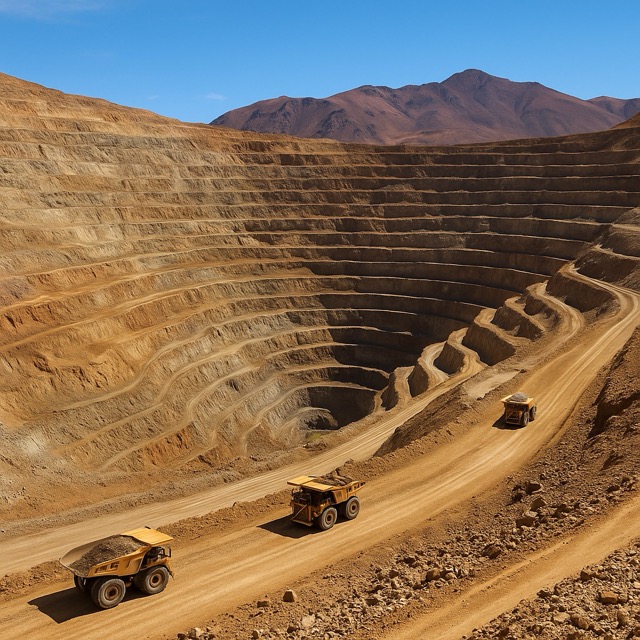
A ‘merger of equals’ creates Anglo Teck, a Canada‑headquartered copper heavyweight, in the sector’s second‑largest deal—capping a whirlwind 48 hours that began with reports of a ~$20bn Anglo bid for Teck.

LONDON/VANCOUVER — Anglo American and Canada’s Teck Resources have agreed to combine in a no‑premium, all‑share merger to form “Anglo Teck,” a copper‑heavy mining group with a market value north of $50 billion. The agreement, unveiled on Tuesday, sets the stage for the industry’s most consequential consolidation since Glencore tied up with Xstrata in 2013 — and comes just a day after reports suggested Anglo was nearing a roughly $20 billion takeover of Teck.
Under the terms, Anglo shareholders will own about 62.4% of the combined company and Teck investors 37.6%. Headquarters will be in Canada, with a primary listing in London and additional listings on the TSX and, via American Depositary Receipts, on the NYSE; the JSE listing will also be maintained. The companies expect to close within 12–18 months, pending approvals in Canada, the U.K., South Africa and key Latin American jurisdictions where their flagship copper mines operate.
The pivot from a mooted straight acquisition to a zero‑premium “merger of equals” reveals the chess match behind big‑cap mining deals. For Anglo, the tie‑up is a strategic riposte to last year’s unsolicited approach from BHP and the culmination of an 18‑month portfolio overhaul that trimmed coal and platinum and put copper at the center. For Teck, long a target of Glencore, the arrangement preserves a Canadian corporate center while placing the company at the heart of the energy transition.
Management says the merger will deliver around US$800 million in annual pre‑tax cost and efficiency savings by the fourth year after completion, with most realized by year two. Beyond that, adjacency between Teck’s Quebrada Blanca (QB) complex and Anglo’s stake in Collahuasi in northern Chile offers a longer‑dated opportunity: the partners forecast average annual underlying EBITDA uplifts of about US$1.4 billion (100% basis) from 2030 through 2049 through operational integration across those neighboring districts, implying roughly 175,000 tonnes of additional annual copper production potential.
Investors cheered the shift. Anglo’s London‑listed shares rose sharply on Tuesday, while Teck advanced in North American trading. Copper—up double‑digits year‑to‑date—has firmed on expectations for structural demand from electric vehicles, grid build‑out and a wave of power‑hungry data centers supporting artificial‑intelligence workloads. A larger, more diversified copper pipeline gives the merged company added leverage to that thesis.
The combination is a true share‑for‑share deal, sweetened by a US$4.5 billion special dividend to Anglo shareholders before completion. The board will draw equally from both companies; Anglo American’s Duncan Wanblad is slated to become CEO of Anglo Teck, with Teck’s Jonathan Price serving as deputy CEO and John Heasley as CFO. Keeping the headquarters in Vancouver, together with an explicit commitment to maintain substantial roles in South Africa and the U.K., is designed to smooth the path with Ottawa and other regulators while respecting each company’s legacy.
On paper, the new Anglo Teck becomes a top‑five copper producer overnight, with six ‘tier‑one’ copper assets spanning Chile and Peru and an expanded pipeline of brownfield options. It also retains high‑quality iron ore and zinc exposure, plus marketing clout across key hubs. The companies say more than 70% of the merged entity’s exposure will be to copper—an unusually pure play for a diversified major.
Regulators will scrutinize the merger from multiple angles. Ottawa will review it under the Investment Canada Act and critical‑minerals framework. Chilean and Peruvian authorities are likely to look closely at operational integration plans in the copper heartlands, particularly around tailings, water use and environmental performance. In London, the Competition and Markets Authority could examine marketing overlaps, while South African authorities will weigh employment and empowerment commitments.
Analysts note the ‘interloper risk’ remains alive. A zero‑premium exchange can tempt rivals to gate‑crash; BHP and Glencore are the obvious names watching. The agreement includes a break fee and leaves room for unsolicited proposals, but the political and governance concessions embedded in the merger—Canadian headquarters, balanced board, defined leadership roles—would be hard for a cash‑rich predator to replicate quickly.
Even a copper super‑major can’t summon new ore bodies overnight. But the merged group should be able to accelerate throughput and de‑bottlenecking at existing assets, improve procurement and logistics, and rationalize overlapping capital programs. The QB‑Collahuasi corridor in Chile is the headline synergy because it concentrates world‑class resources within trucking distance. If the integration plan delivers, the partnership could lift regional output by roughly 175,000 tonnes a year in the 2030s and 2040s.
Price formation will still be dictated by global macro swings—China’s grid upgrades, U.S. industrial policy, AI‑linked data‑center build‑outs and Europe’s electrification pace—rather than any one company. But with permitting hurdles stalling new greenfield mines, consolidation that wrings more copper from existing districts can cushion supply shortfalls without stoking the political backlash that pure takeovers sometimes trigger.
Mining’s last megamerger cycle climaxed with Glencore’s $90 billion tie‑up with Xstrata twelve years ago. Since then, boards have preferred cautious buybacks and dividends to grand combinations. The Anglo‑Teck deal stands out because it is both defensive—insulating each against raiders—and growth‑seeking, by knitting together adjacent copper systems and presenting investors with scale against BHP, Southern Copper and Freeport‑McMoRan.
Only 24 hours earlier, it appeared the two sides were heading toward a classic premium takeover near $20 billion. The final structure suggests both boards judged that a paper‑for‑paper deal, an equalized board and a Canadian domicile would defuse nationalist opposition and preserve strategic flexibility while still unlocking cost and adjacency benefits. If regulators nod it through on the current timeline, the transaction would close in 2026—just as the next up‑cycle in copper spend begins to crest.
The Watch‑List From Here: Timing—expect 12–18 months for clearances and shareholder votes. Synergies—track both near‑term run‑rate savings and the longer‑dated Chilean adjacency program; integration milestones should be transparent by 2027. Balance sheet and payouts—watch for updated capital allocation frameworks and how the special dividend and de‑leveraging targets affect growth capex. Interlopers—any move by BHP or Glencore would test market appetite for a fresh premium. ESG and communities—tailings, water and Indigenous engagement are potential bottlenecks; early, credible commitments will matter for approvals.
Bottom line: If consummated, Anglo Teck will mark the industry’s second‑largest combination in more than a decade and a defining bet on copper. It would transform two storied miners into a single, Canada‑anchored champion built for the electrification age—without paying a headline premium, a sign of how eager both sides are to bank scale and certainty in a tight market for new copper tonnes.
Sources
• Reuters, Sept 9, 2025: Anglo American, Teck Resources to merge in second-largest mining deal ever.
• Teck Resources news release, Sept 8–9, 2025: Teck and Anglo American to combine through a merger of equals; details on ownership split, listings, $800m synergies, $1.4bn adjacency uplift, leadership and HQ.
• Reuters, Sept 8–9, 2025: FT report that Anglo American was nearing a ~$20bn acquisition of Teck before the merger announcement.
• Market context: Copper price and shareholder reaction reported across Reuters, Barron’s and company statements.